

Welcome to Our Blog

How to Research the Cincinnati Market in Two Hours a Week

$110,000 from a wholesaler, $21,000 of work, a $200,000 appraisal. Ben Austin on the West Side streets he won't cross, and why he buys every property with two exits so he can decide later whether to flip or hold.

Cincinnati ranked fifth nationally for home price growth in April 2026, but the number that matters is replacement cost: whole neighborhoods still sell for less than it costs to build. Ian Cruz and Slocomb Reed answer the questions out-of-state investors ask first.

Venture has gone full cycle 32 times without missing pro forma. This year it offered rent concessions for the first time in 13 years. Robbie Hendricks on new supply, an 18-month soft stretch, and why every underwrite now assumes 0% rent growth.

How to Find Cash-Flowing Furnished Rentals in the Cincinnati Market in 2026

Contingent offers are back for the first time in five years and showings have slowed. Rebecca Sequeira, who has made money on every flip since 2016, on what she still buys, what she puts in every house, and when she cuts the price.

Self-manage if you're trying to save money. Hire out if you're trying to save time. Bri Leichliter built a Cincinnati property management company, sold it, and still owns five units — here's the math behind that split.

Houses that sold for $30,000 in Madisonville now trade at $125,000 to $150,000 still needing full renovations. A property manager with 700-plus units on where the next wave is going, and why the 12-unit building is the target.

Suburban office trades near a 10 cap while retail and industrial compress to six and seven. Tanh Truong on why half-empty office in Blue Ash is the one Cincinnati asset class where basis is still negotiable.
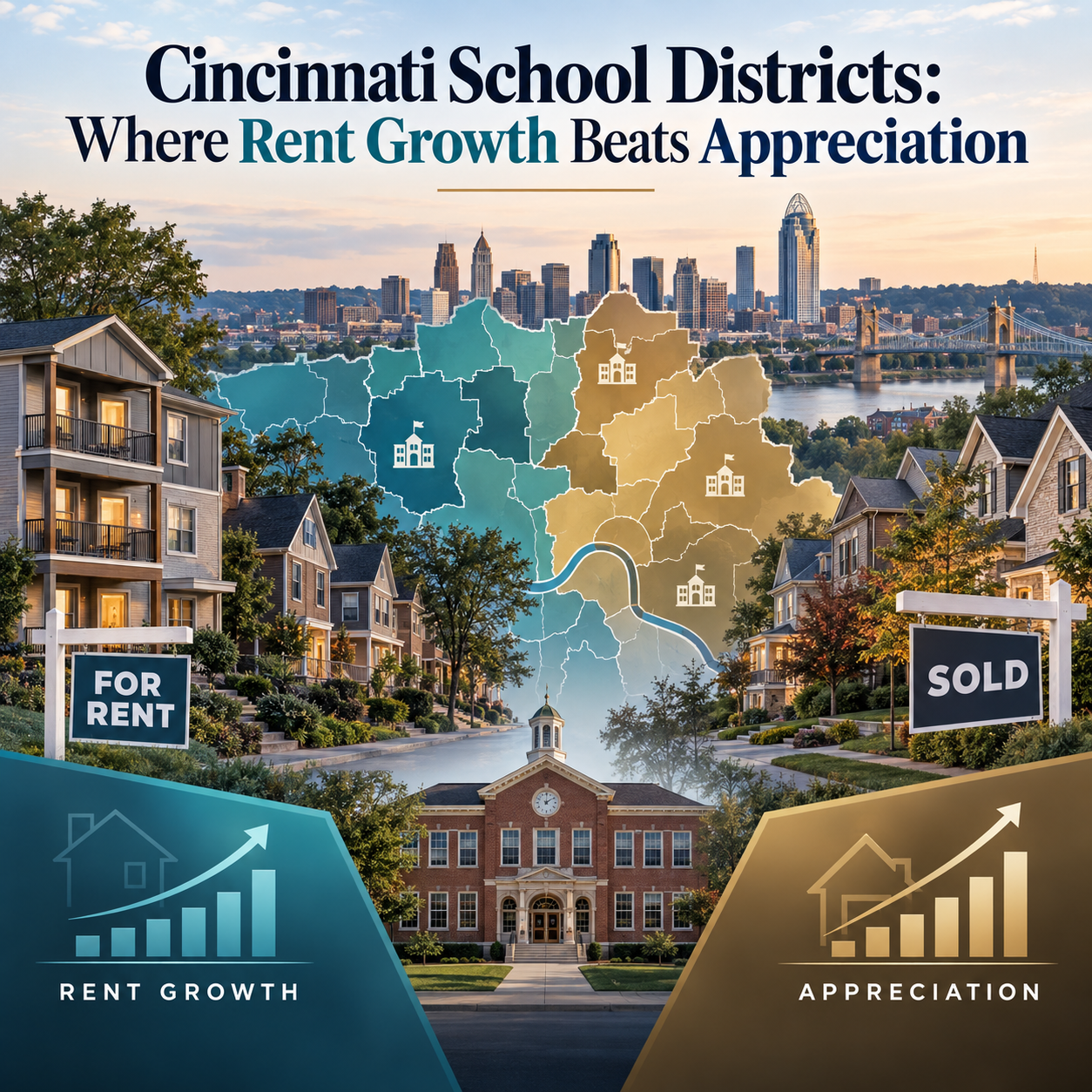
$1,900 in Winton Woods, $1,643 in Oak Hills, same bedroom count. What a 100-plus unit portfolio across nine districts reveals about which Cincinnati houses should stay rentals and which should be sold.

The renovation ran 2.5x over budget and produced 3x the rent bump. John Casmon on the Boone County data behind an 81-unit Florence buy, and the census-tract tool he uses instead of radius reports.

Cincinnati built almost no new apartments for 24 years. Gil Richards on the abatement math, which buildings qualify for historic credits, and why downtown is formally classified as Difficult to Develop.
Section 8 in Cincinnati: Why CMHA and Butler Metro Produce Different Returns

A rate cap that cost $30,000 renewed at $1.3 million. Joe Fairless on the first two losing sales in Ashcroft Capital's history and why Greater Cincinnati never had the spread to lose.

A $180,000 all-in flip selling for just under $270,000, with no cash out of pocket. Slocomb Reed breaks down four Greater Cincinnati deals, and why none of them depended on the market going up.

West Newport houses sold for $10,000 in 2016 and now go for $80,000 needing full rehabs. Garth Kukla on why proximity to a walkable corridor predicts Northern Kentucky value better than which city a property sits in.

The Hamilton County timeline from a missed rent payment to a set-out; and why TLP's Izzy Ong treats every case that reaches a magistrate as a failure of the process, not a win.

A $450,000 Loveland listing sold for $570,000 cash. Ethan Bishop on which Greater Cincinnati submarkets are drawing multiple offers, which have quietly cooled, and the two-generation demand pattern driving both.

Off-street parking, galvanized plumbing, school district lines that don't follow township borders, and a tax bill that can quadruple at closing. The Cincinnati-specific due diligence most investors skip.
JD Schmerge brokers Greater Cincinnati multifamily and operates a 7-unit in South Covington. Why tenants aren't paying for upgraded finishes, why insurance and taxes now outweigh interest rates, and how much to renovate before selling.
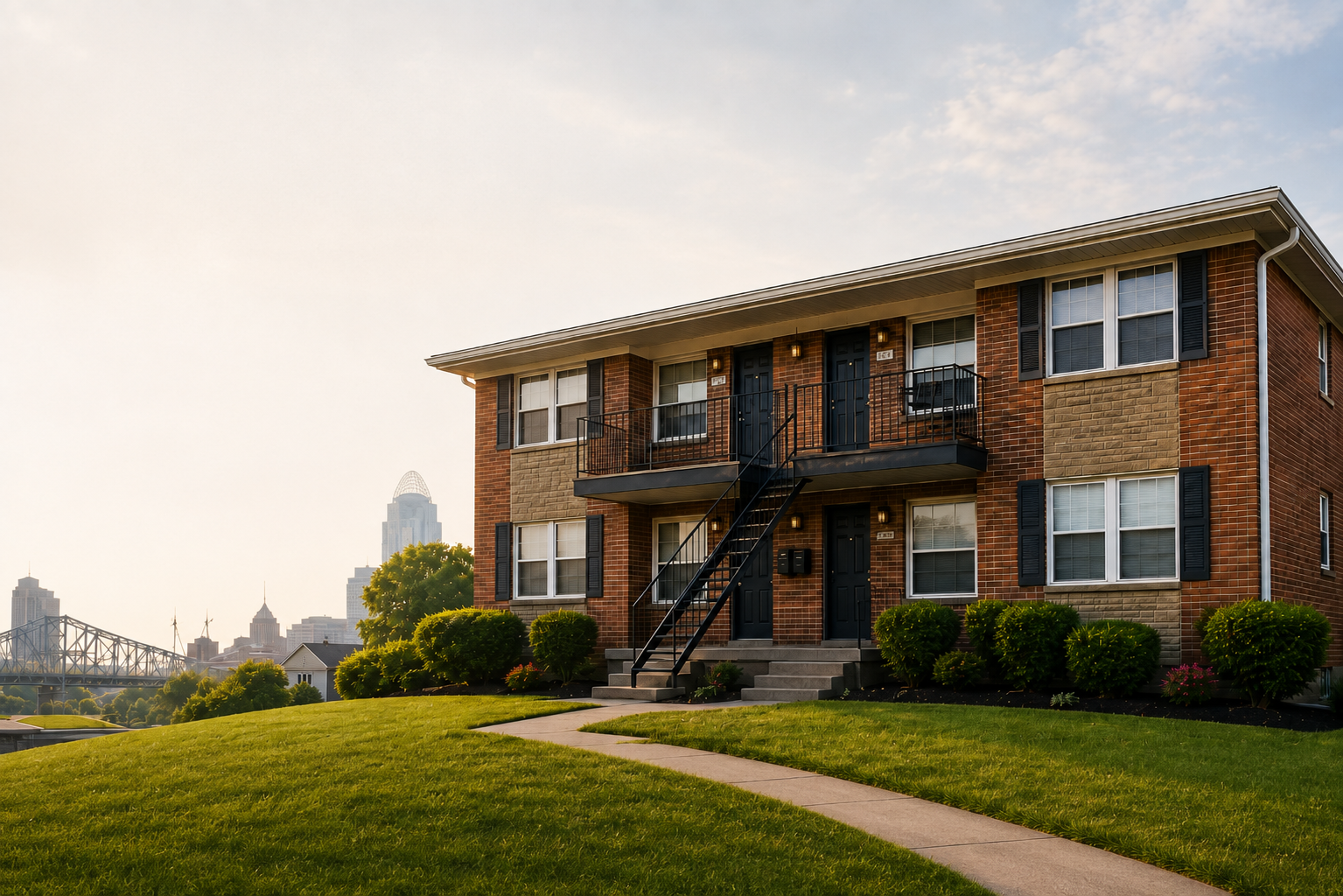
Bret Halsey went from pro soccer to 70-plus units in under three years, 14 of them fourplexes. How Cincinnati's repeating 1960s floor plans make the city's most common multifamily building the easiest one to underwrite.
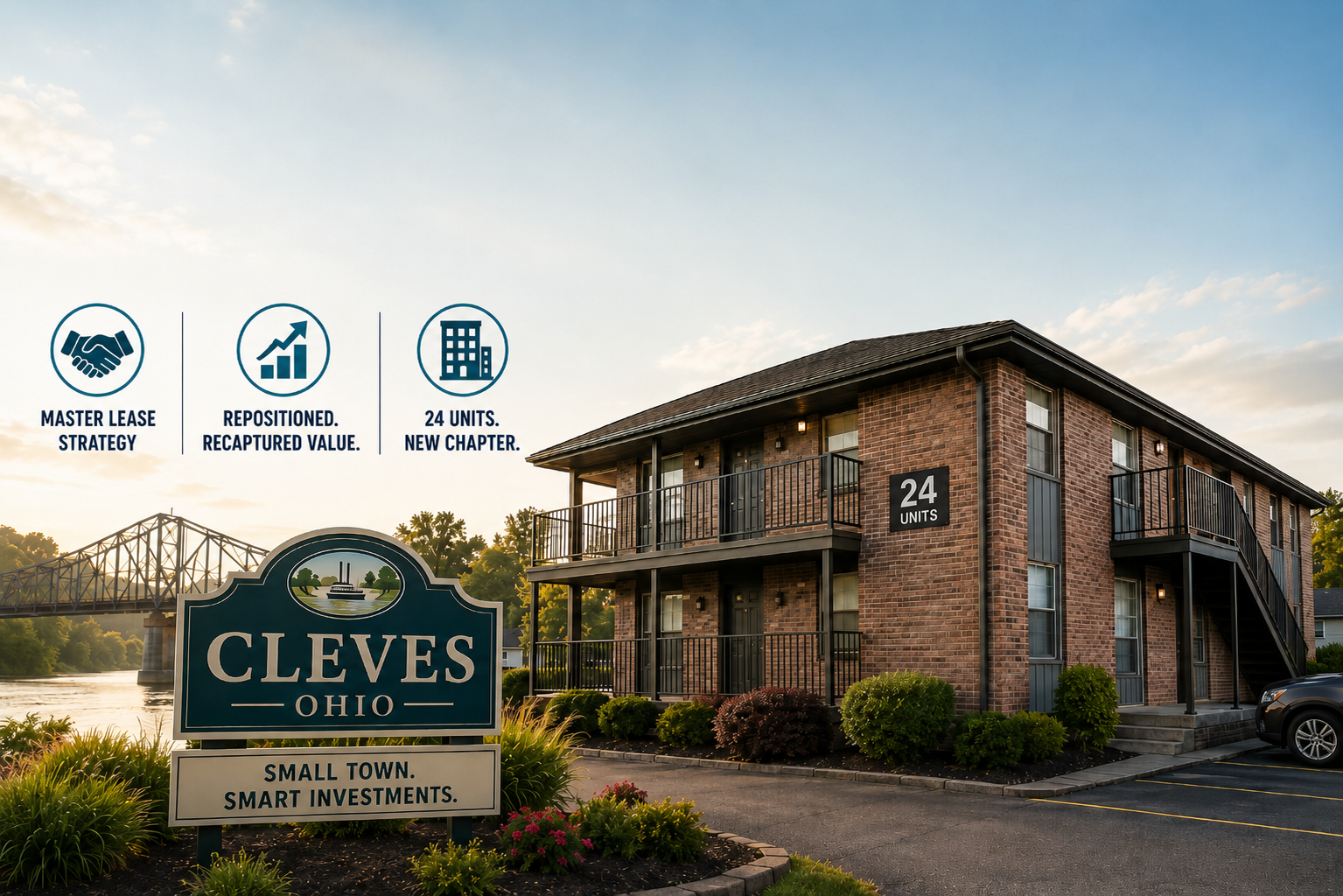
Nine of 24 units were paying rent. Slocomb Reed took over management three months before closing, cleared the building, and proved higher rents; all before owning a share of it.

Reading, Ohio: Cincinnati's Unlikely Development Hotspot
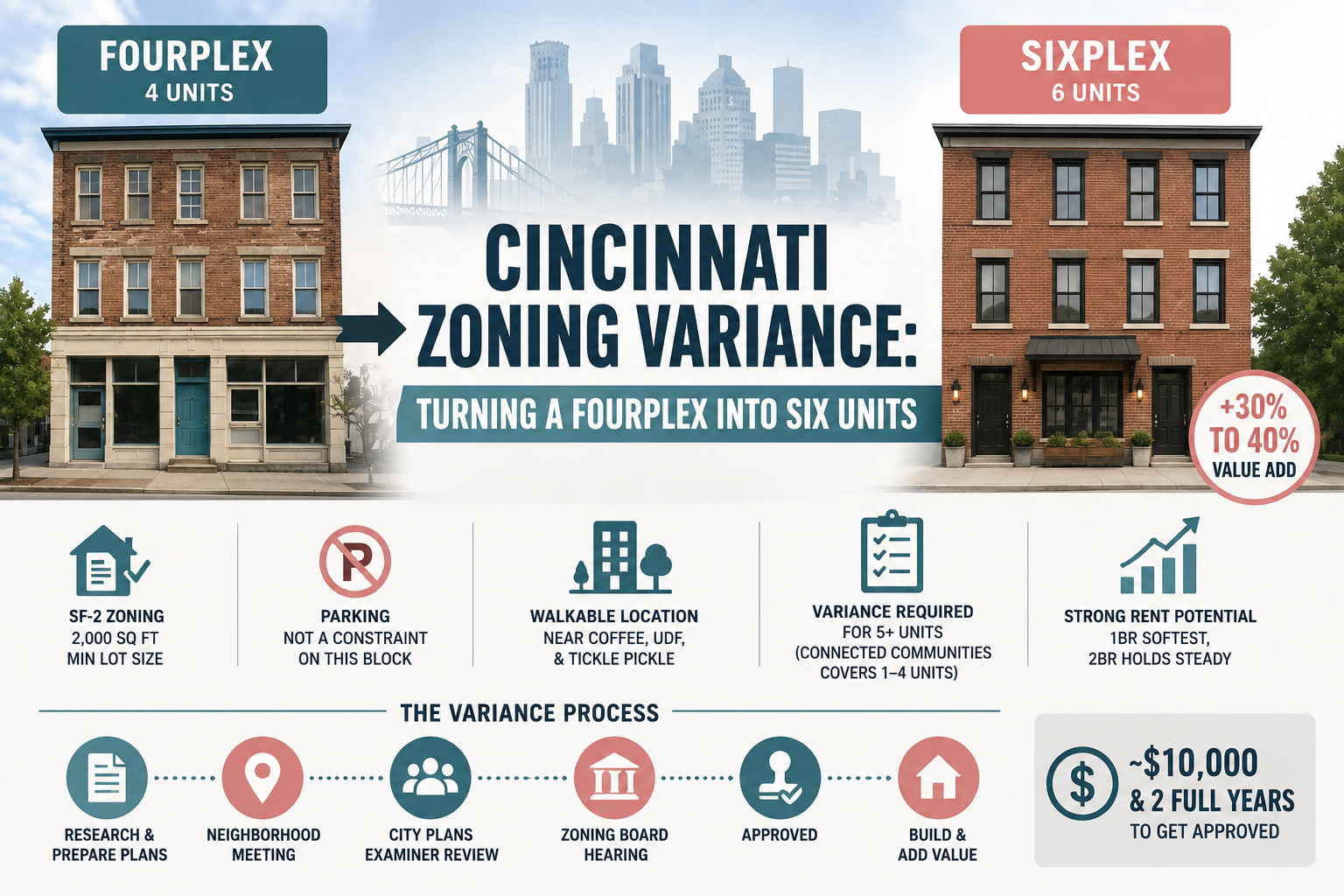
Two years, roughly $10,000 in zoning costs, and about 40 neighbor signatures. What Jeremy Komer's Northside conversion reveals about Cincinnati's variance process and the gap in Connected Communities.
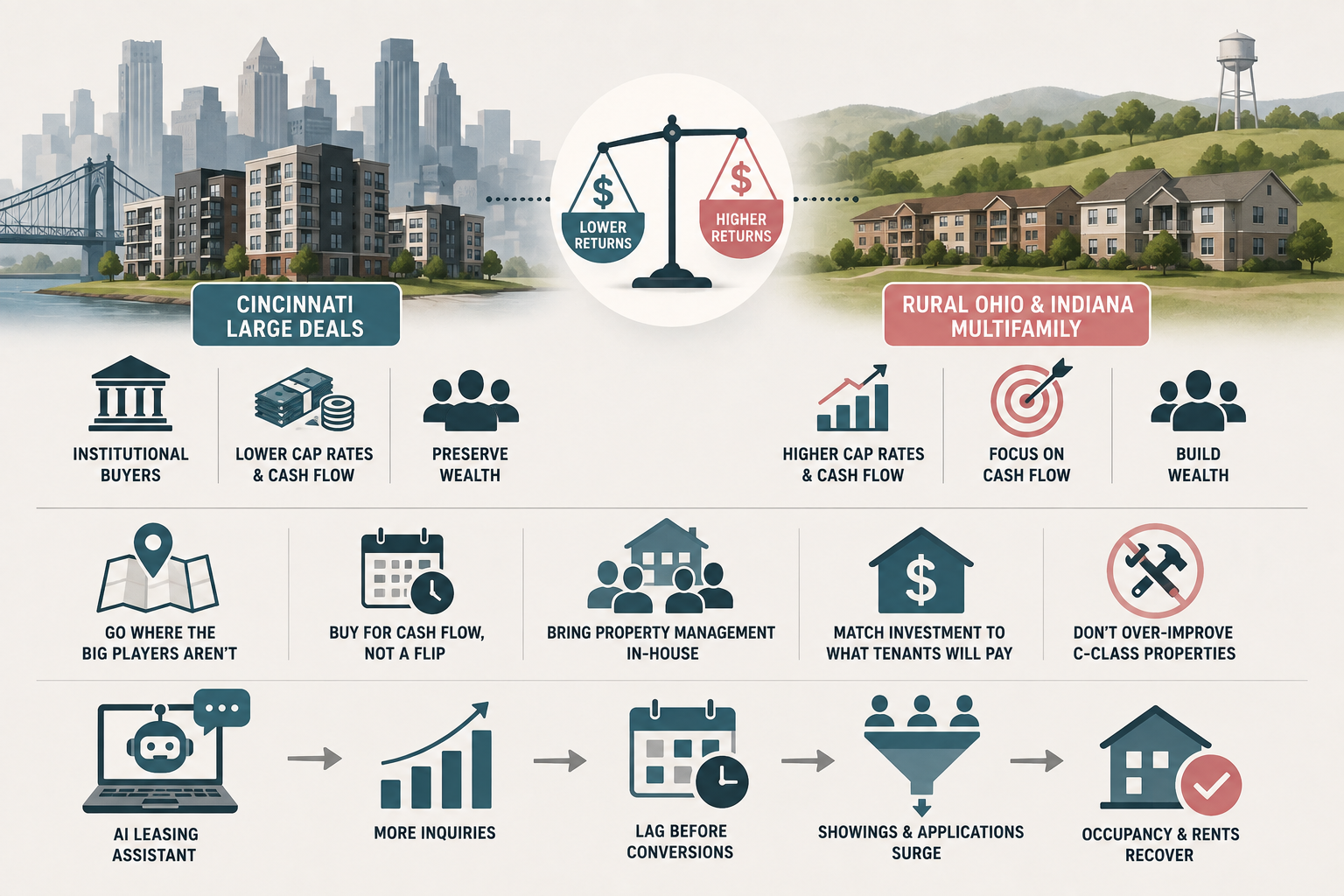
Lee Yoder holds 930 units, and almost none of them are near Cincinnati. Why institutional capital compresses returns above 100 units, and what he found in rural Ohio and Indiana instead.

How Ian Cruz and Slocomb Reed used four defined roles to scale from an 8-unit Northside deal to 73 units in under two years — plus what Cincinnati's rental data shows right now.

Hedge funds are gone, rates broke the buy-and-hold math, and Cincinnati's off-market deal flow now turns block by block. Where the deals are and what buyers inherit when they sign.
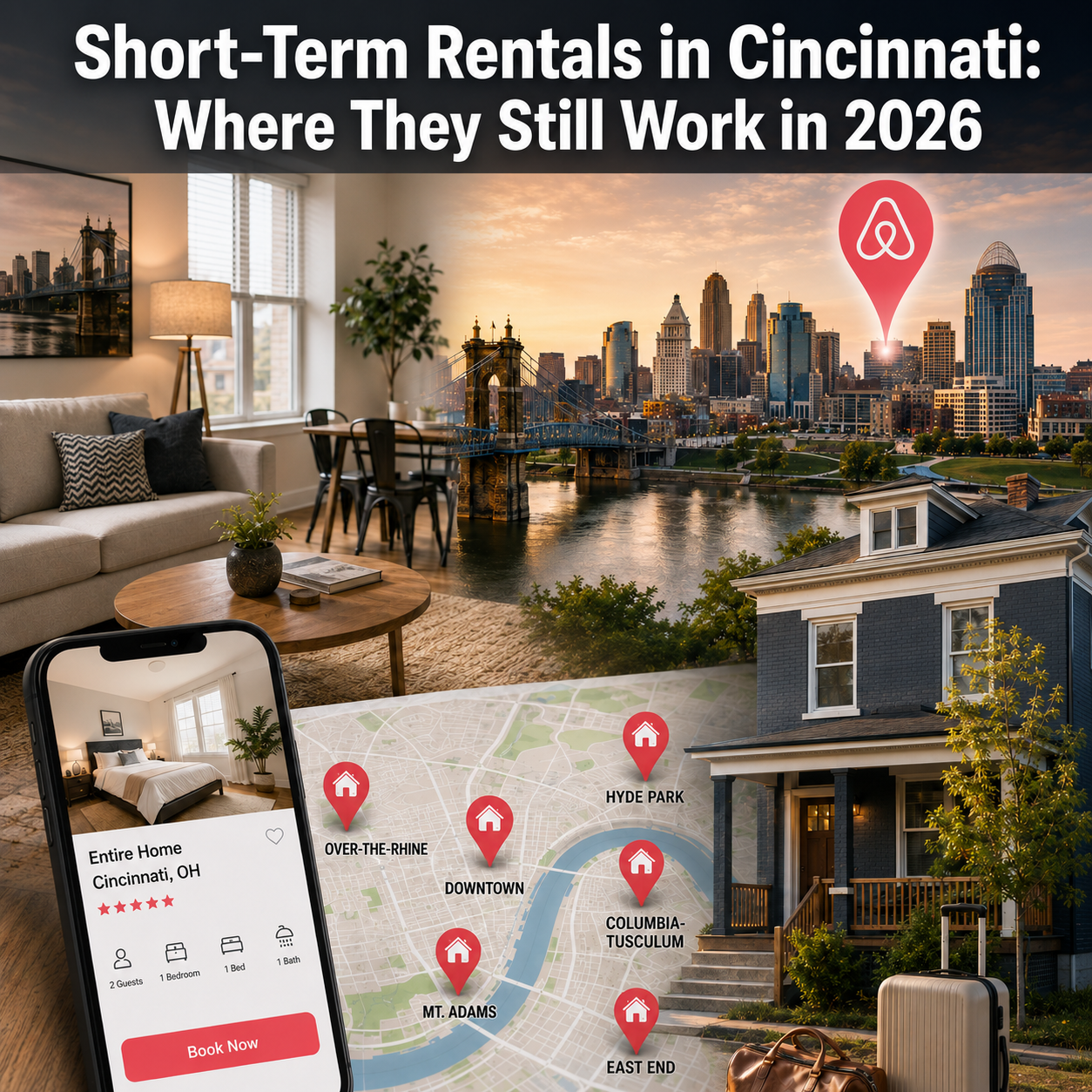
A neighborhood-by-neighborhood map of where short-term rentals are legal in Greater Cincinnati; and what the flattening market means for the ones that are.
Where Cincinnati Investors Are Still Finding Margin

What 300+ Transactions Reveal About Cincinnati’s Best Investment Strategies

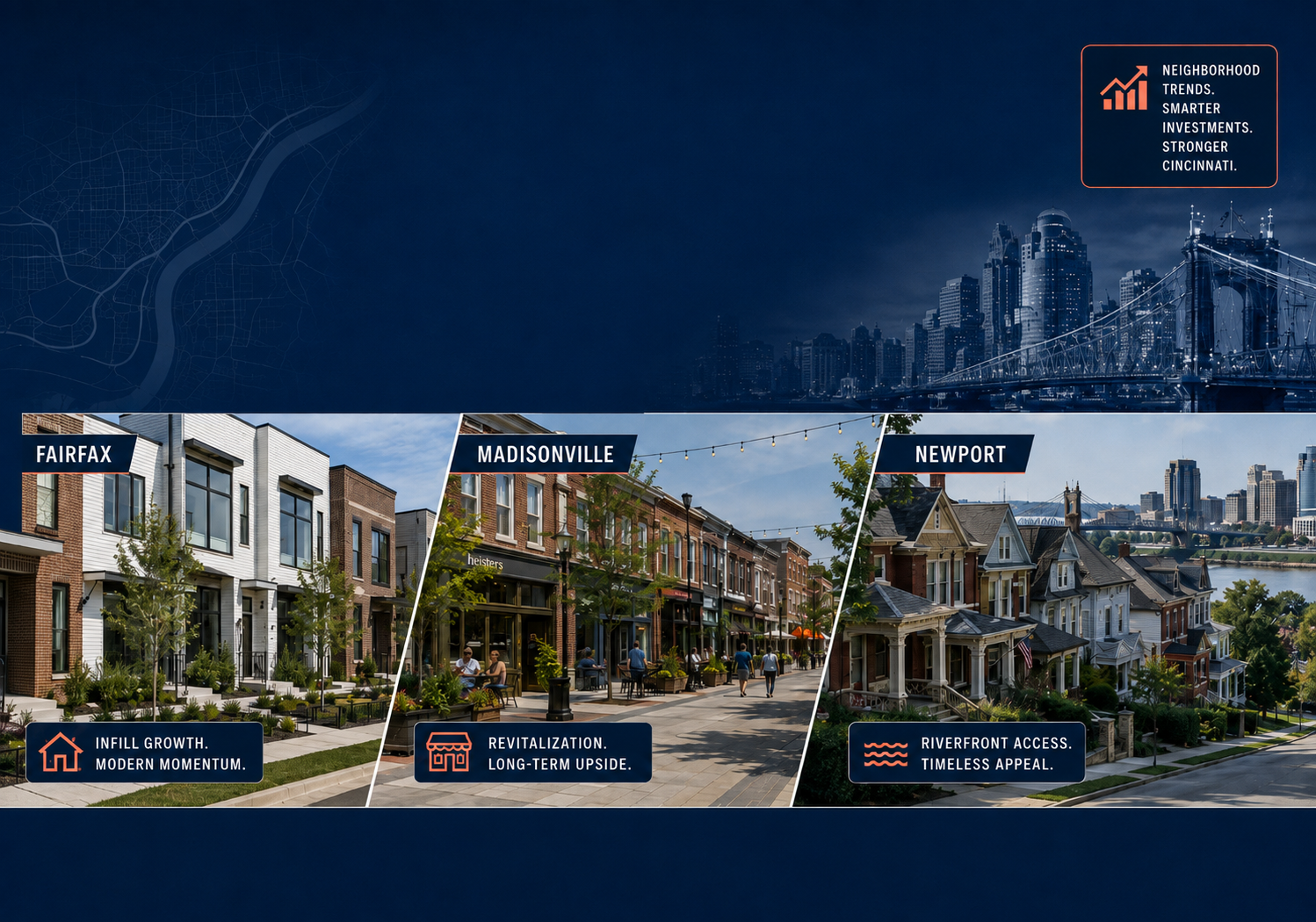
Madisonville, Fairfax, and Newport: Where Cincinnati Investors Are Finding Margin in 2026

Flip vs. BRRR: Which Cincinnati Neighborhoods Favor Which Strategy