The Hamilton County timeline from a missed rent payment to a set-out; and why TLP's Izzy Ong treats every case that reaches a magistrate as a failure of the process, not a win.
TLP Property Management has a 100% success rate when eviction and small claims cases actually reach a Hamilton County magistrate, but that number is almost beside the point. Izzy Ong, director of operations for TLP, is direct that appearing in court at all is a loss, not a win, and the entire process TLP has built is designed to resolve delinquency before a filing ever becomes necessary.
About This Post
This analysis draws from a conversation with
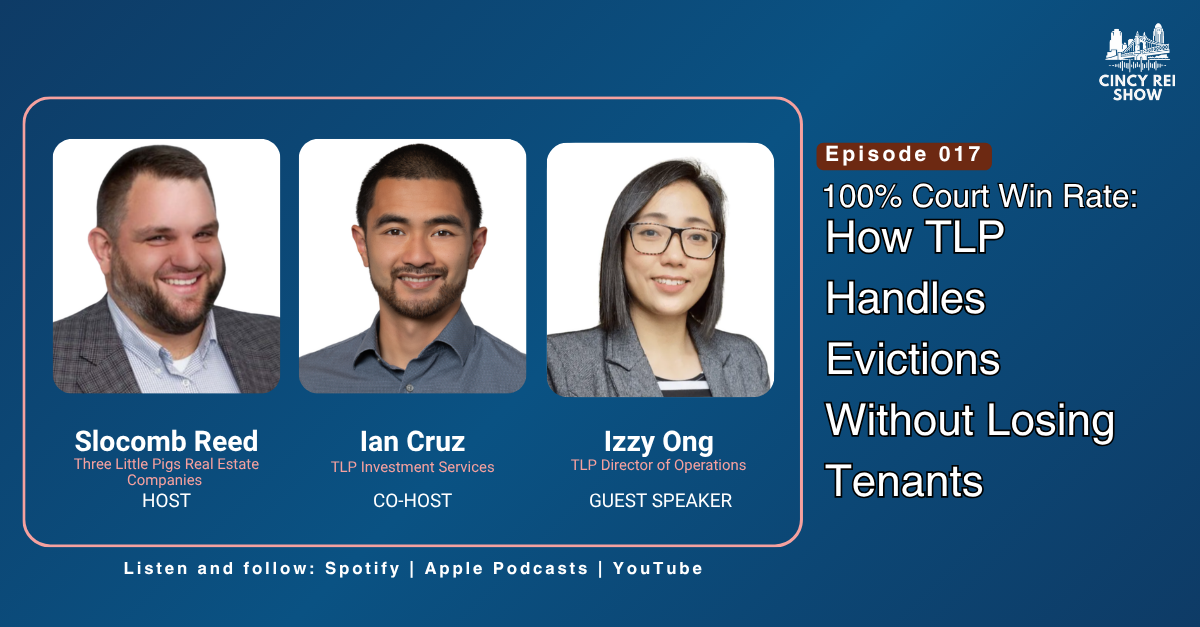
Izzy Ong, director of operations for TLP Property Management, who has run the company's tenant relations and eviction process since 2021 and now oversees the property management division for both TLP's own portfolio and its third-party clients across Greater Cincinnati. Ong's operational, day-to-day view of the eviction process, handled largely through a team based in the Philippines, gives this episode unusually specific detail on how the legal and rental-assistance mechanics actually play out in Hamilton County.
Listen to the full conversation on
Spotify,
Apple Podcasts, and
YouTube. The full episode also covers TLP's approach to shielding landlord clients from direct tenant conversations during the process, and more detail on post-eviction collections.
The Cincy REI Show publishes every Monday. New episodes cover neighborhood-level analysis, local investor strategies, and real deal stories from operators active in Greater Cincinnati.
How the Eviction Process Actually Works in Hamilton County
The legal timeline in
Greater Cincinnati runs on a specific, predictable schedule that most first-time landlords never see mapped out in full. Rent is due on the first, considered late on the second, but TLP's leases build in a five-day grace period before late fees apply on the sixth. On the fifth, every tenant without a logged payment gets an automated reminder. After the late fee kicks in, dedicated tenant relations officers begin calling, texting, and emailing every delinquent tenant directly, not to threaten action, but to find out what's actually happening and give the tenant a chance to explain.
Notices are typically posted around the tenth or twelfth, always on a pre-announced date the tenant has already been told about, so the notice itself is not a surprise. In Ohio, a three-day pay-or-vacate notice gives the tenant three business days to cure the balance before the case is endorsed to an attorney, who files immediately. That filing appears on the tenant's landlord-tenant history and background check the moment it's filed, regardless of the eventual outcome, a detail TLP makes a point of communicating clearly upfront.
What's Working in Cincinnati
TLP's process is built around a small number of deliberate operational choices that consistently produce better outcomes than moving straight to legal action.
- Reach out personally before any notice is ever posted. TLP's tenant relations officers call, text, and email every delinquent tenant individually in the days after a late fee applies, rather than moving directly to a three-day notice. This single step, more than any automation, is what TLP credits with resolving the majority of delinquencies before they ever require legal filing.
- Give tenants a specific, prior-announced date for when notices will post. Tenants are told in advance which day notices go out, and every tenant with a balance gets one on the same day, reducing the shock and hostility of an unannounced notice appearing on the door.
- Keep landlord clients insulated from direct tenant conversations. TLP does not involve the property owner in the emotional back-and-forth of a delinquency case. The landlord is notified once a case is formally endorsed to the eviction attorney, not before, which protects both the tenant's dignity during a difficult conversation and the landlord's time.
- Proactively connect tenants to rental assistance rather than waiting for them to find it. TLP's automated messaging includes direct references to St. Vincent de Paul, Hamilton County JFS, and similar organizations from the very first late notice, and once a tenant applies, TLP's own team takes over the paperwork, since they know the process well enough to move it faster than a tenant navigating it alone.
- Collect employment, vehicle, and identification details wherever possible, especially from inherited tenants. TLP encourages lease renewals partly because the free renewal application captures Social Security number and date of birth, information that materially improves the odds of collecting on a post-eviction judgment, and works with an eviction attorney whose firm also handles collections.
What is not working: assuming a court appearance represents success. TLP's 100% record when cases reach a magistrate is real, but the team treats every filing that reaches that point as a process failure, not a win, since the entire system is designed to resolve delinquency long before a courtroom becomes necessary.
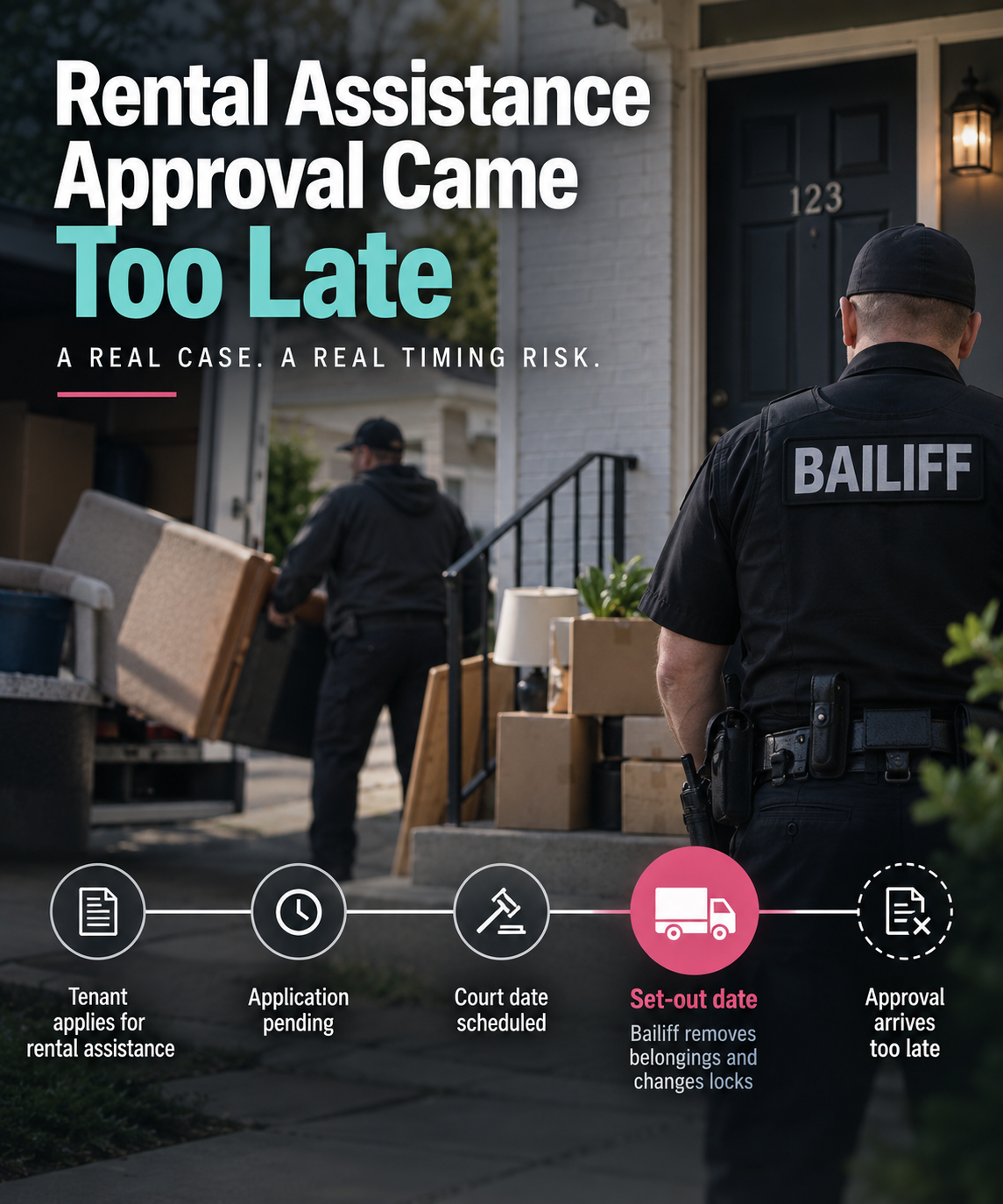
Lessons From the Field: A Rental Assistance Approval That Arrived on the Day of Set-Out
The outcome, in this specific case, was that assistance funding came through just before the scheduled set-out, allowing the case to be resolved without the tenant losing their home. Ong describes it as a close call precisely because the timing worked out, not because the system reliably works that way.
- Rental assistance timing can run right up against the final eviction deadline. Approval arriving on the day of a scheduled set-out is not a hypothetical risk, it is something TLP has experienced directly.
- Written confirmation from the assistance organization, not the tenant, is what allows a case to pause or be dismissed. TLP will not delay legal proceedings based on a tenant's word alone that assistance is coming; they require direct written confirmation from the organization itself.
- A tenant's application being in process does not guarantee protection from set-out. The process moving forward on its own legal timeline, independent of a pending assistance application, is exactly why TLP pushes tenants to apply as early as possible in the delinquency period.
- Close calls like this reinforce why proactive outreach matters from day one. Ong and Slocomb both frame the earliest phase of the process, personal outreach before any notice is even posted, as the highest-leverage point for avoiding this kind of last-minute risk entirely.