Two years, roughly $10,000 in zoning costs, and about 40 neighbor signatures. What Jeremy Komer's Northside conversion reveals about Cincinnati's variance process and the gap in Connected Communities.
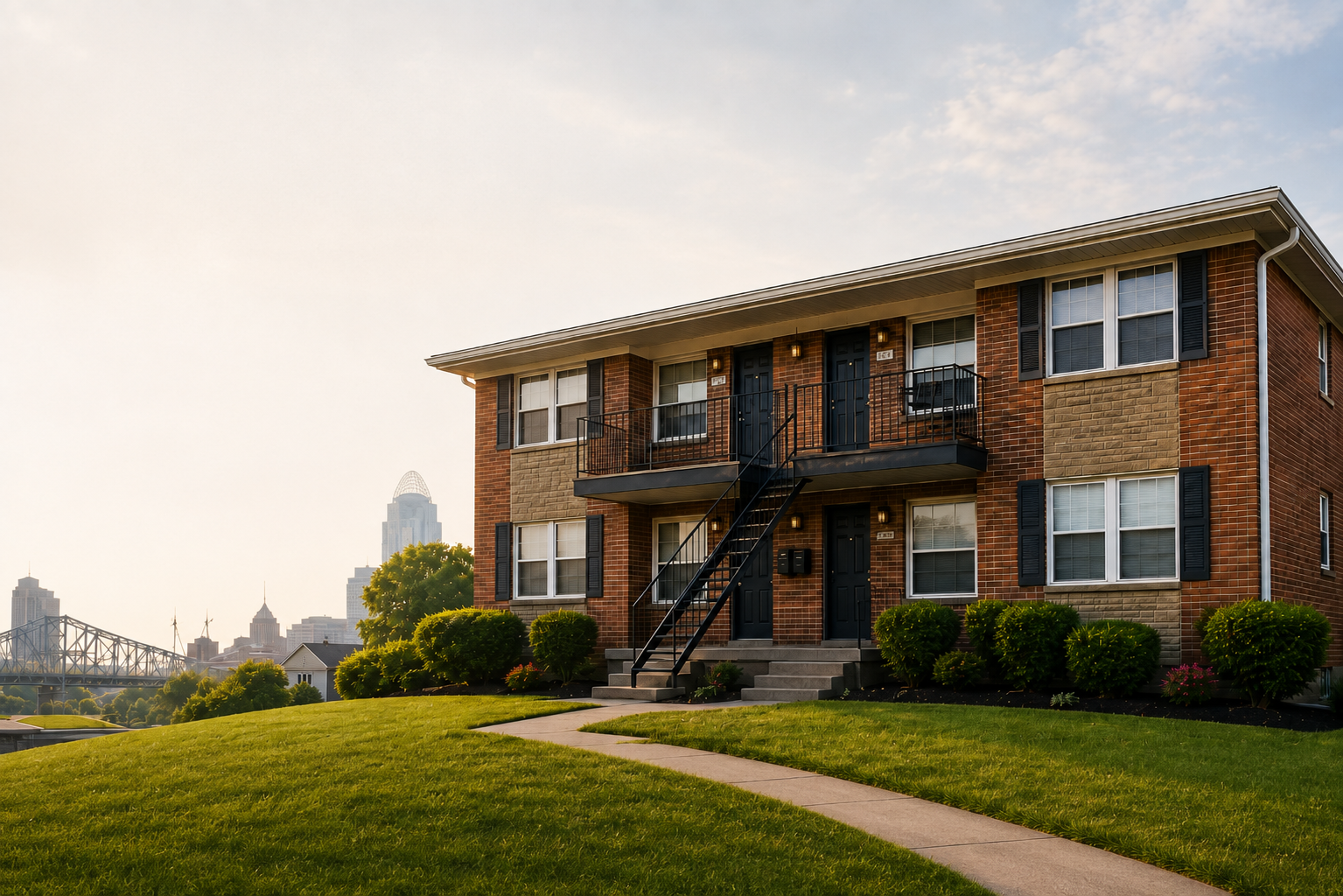
Jeremy Komer spent close to $10,000 and two full years navigating Cincinnati's zoning process to convert a neglected fourplex on Chase Avenue in
Northside into six rentable units, a project that added 30% to 40% to the property's value. His deal is a working case study in how Cincinnati's single-family zoning collides with its own missing-middle housing goals, and what it actually costs in time and money to push a property through that process.
About This Post
This analysis draws from a conversation with
Jeremy Komer, a Northside-based real estate investor who has been active in Cincinnati since 2020, financing deals through everything from FHA house-hacking loans to hard money and commercial construction loans. Komer's direct-to-seller sourcing and his firsthand experience navigating Cincinnati's zoning variance process give this episode unusually specific, step-by-step detail that most investors never see documented.
Listen to the full conversation on
Spotify,
Apple Podcasts, and
YouTube. The full episode also covers Komer's earlier experience managing a distressed Over-the-Rhine property under third-party management, and more detail on how he split the original parcel before closing.
The Cincy REI Show publishes every Monday. New episodes cover neighborhood-level analysis, local investor strategies, and real deal stories from operators active in Greater Cincinnati.
Northside's Zoning Mismatch: Single-Family Rules on Multifamily Buildings
Northside was largely built as tenement housing in the population boom that followed the Civil War, with most buildings originally holding one unit per floor. As plumbing arrived, those buildings consolidated down to a single shared kitchen and bathroom per structure, eventually functioning as single-family homes even though the physical buildings were built for multiple households. The neighborhood's zoning, designated SF-2 with a 2,000-square-foot minimum lot size, was written more than a century after much of that housing stock existed, meaning most Northside parcels are zoned for a use they were never physically built to match. Records for many of these buildings only go back to 1890, since a labor riot that year destroyed the city's earlier property records.
Cincinnati's Missing Middle Housing Push, and What It Actually Covers
Northside was largely built as tenement housing in the population boom that followed the Civil War, with most buildings originally holding one unit per floor. As plumbing arrived, those buildings consolidated down to a single shared kitchen and bathroom per structure, eventually functioning as single-family homes even though the physical buildings were built for multiple households. The neighborhood's zoning, designated SF-2 with a 2,000-square-foot minimum lot size, was written more than a century after much of that housing stock existed, meaning most Northside parcels are zoned for a use they were never physically built to match. Records for many of these buildings only go back to 1890, since a labor riot that year destroyed the city's earlier property records.
The city's Connected Communities legislation is the policy backdrop for deals like this one. It reduces parking requirements and density restrictions near transit and business districts, and it allows one-to-four-unit conversions by right in single-family zones like SF-2, something that previously required the same variance process Komer went through. The stated goal is restoring what planners call missing middle housing, the multifamily housing stock that neighborhoods like Northside lost as buildings were down-converted to single-family use over the decades.
The gap in that policy is exactly where Komer's project fell. Connected Communities covers going from one unit up to four. Komer needed to go from four units to six, which still requires the full variance and plans examiner process rather than a by-right approval, even though the project fits the spirit of the same missing-middle policy.
This sits inside a broader
Cincinnati real estate rent pattern worth tracking for any investor considering a similar unit-count increase: since the market shift that began in August 2024, C-class one-bedroom apartments have seen the sharpest and most persistent rent softening of any segment, with two-bedroom C-class rents holding roughly flat. A location with strong walkability and character, like Komer's Chase Avenue building, is one of the few conditions that can still command premium rent on a one-bedroom unit despite that broader softness.
What's Working in Cincinnati
Komer's approach breaks down into a few distinct, repeatable moves.
- Build the seller relationship over time, not urgency. Komer met the seller by chance on the street and kept following up every month or two for roughly a year before the seller was ready to sell. No pressure, just consistent, low-friction contact.
- Structure the deal around what each side actually values. The seller believed the single-family portion of the property was worth more than Komer did, and Komer wanted the fourplex the seller undervalued. Splitting the parcel let each side keep the piece they valued more, with Komer taking on all the risk and cost of getting the split approved and no obligation to close until the split was confirmed.
- Use a construction loan that rolls into permanent commercial financing. Komer financed the acquisition with a standard 25% down loan, then used a Community Trust Bank product that combined the renovation loan with the commercial property loan in a single closing, avoiding a second full closing cost, which he estimated would have added roughly $10,000 to the deal.
- Keep existing units generating revenue during a long entitlement process. With three of the building's units still rentable throughout the two-year zoning and permitting timeline, Komer covered his holding costs while waiting on approvals rather than carrying a vacant building.
- Bring community support to the zoning fight. When the zoning committee rejected the variance application, as expected, Komer went door-to-door and collected about 40 signatures from neighbors supporting the additional housing. That petition, presented at the plans examiner hearing, became the deciding factor in getting the variance approved.
What is not working, or at least consistently underestimated: assuming Cincinnati's zoning timeline moves quickly. Komer expected the zoning process to take one or two months. It took six to seven months to move through the zoning committee rejection, the variance application, and the plans examiner hearing, on top of a separate multi-month permitting process once the zoning was approved.
Lessons From the Field: What It Actually Takes to Go From Four Units to Six
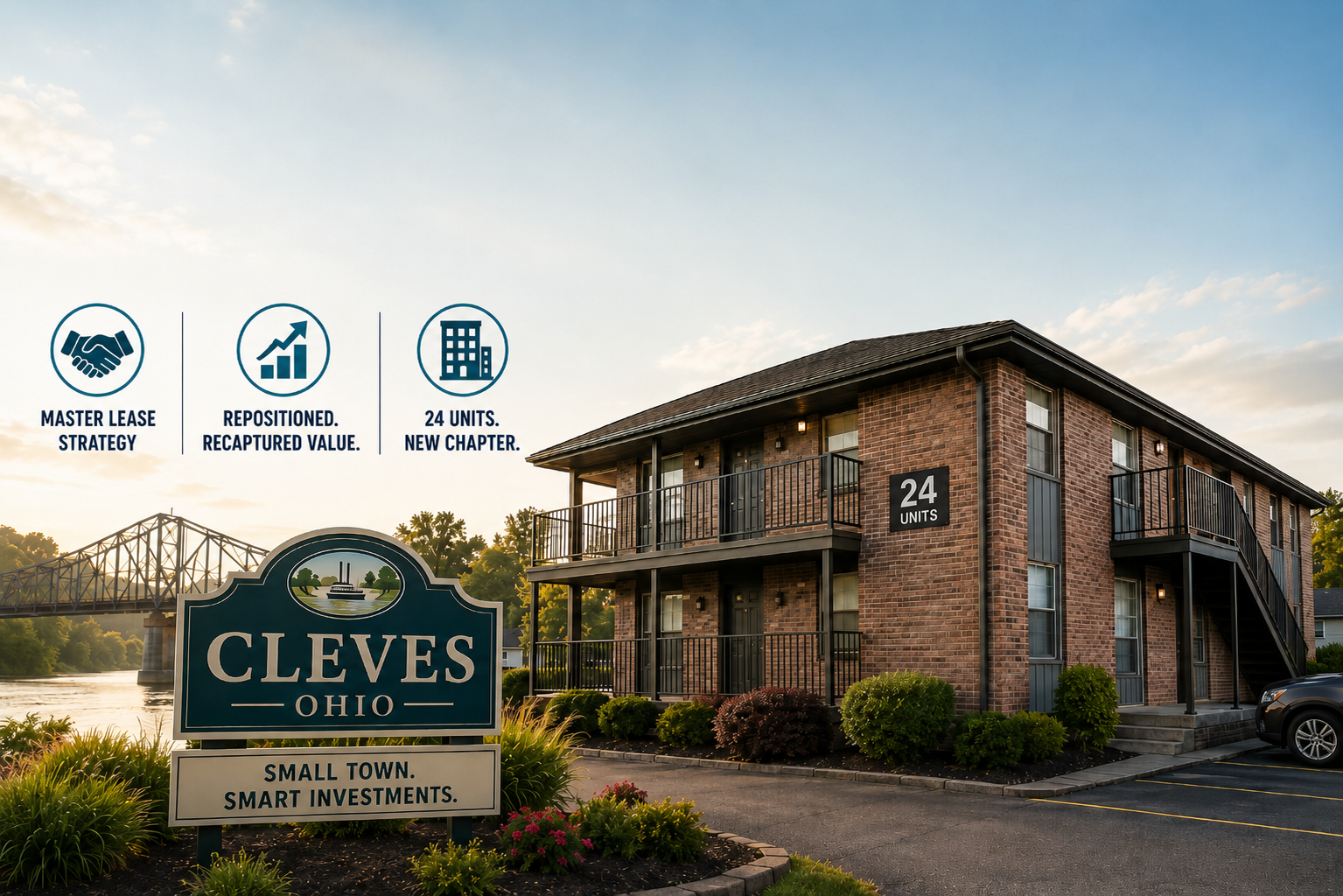
Komer's plan going into the deal was simple: buy the neglected fourplex, keep it as-is, and improve the rent roll. That changed a few months before closing, when he realized the building's mechanical access on the first floor made it feasible to convert a single two-bedroom, two-bathroom unit into three separate one-bedroom apartments.
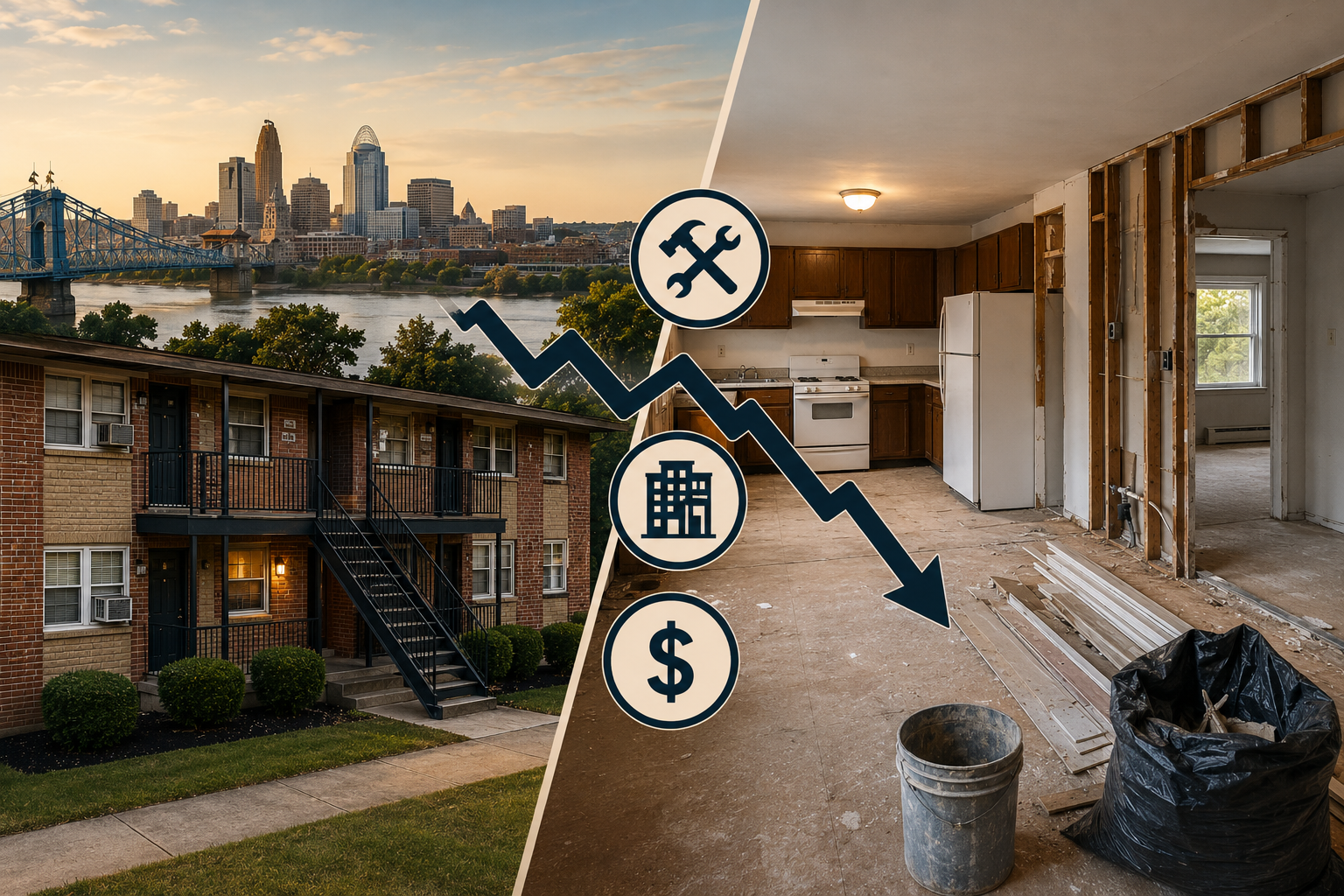
The outcome was a $130,000 to $140,000 interior renovation and a separate six-to-eight-month exterior renovation, including a DOT permit and $750 bond to close the sidewalk and street during masonry work, all layered on top of roughly $10,000 in zoning-specific costs. The result was a 30% to 40% increase in property value, driven by the shift from limited fourplex comps to a cap-rate valuation on six units, with the interior renovation financed through the same construction loan and later refinanced through Community Trust Bank.
- Expect the first zoning application to be rejected as a matter of course. A rejection at the initial zoning relief stage is close to automatic, not a signal the project is flawed.
- Community support can outweigh a zoning committee's opposition at the plans examiner stage. Forty signatures gathered door-to-door became the single biggest factor in Komer's approval.
- Structure acquisition terms around due diligence risk, not just price. Making closing contingent on zoning approval let Komer pursue an upside project without being stuck owning it on the seller's terms if the split or variance failed.
- Commercial code applies once a building crosses four units, with real cost implications. Requirements like architect-stamped drawings, additional fire blocking, and mandatory outlets near HVAC units do not apply to smaller residential permits, and missing them causes inspection failures.
- A revenue-generating property can absorb a long entitlement timeline. Keeping three units occupied throughout the two-year process kept Komer roughly break-even on holding costs while he waited on approvals that were entirely outside his control.