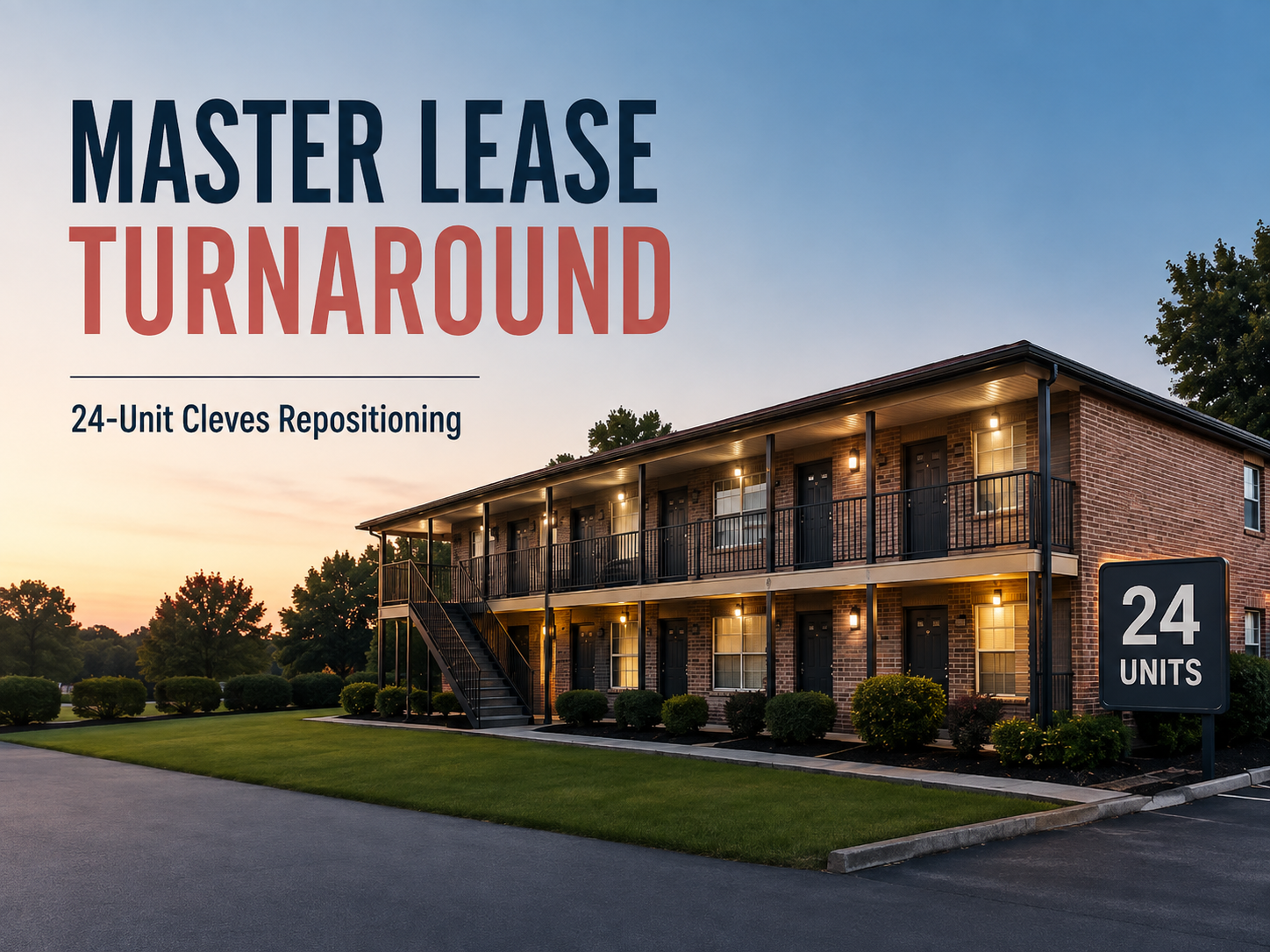
Nine of 24 units were paying rent. Slocomb Reed took over management three months before closing, cleared the building, and proved higher rents; all before owning a share of it.
A cold email to Brandon Turner's BiggerPockets address led to a 24-unit property in
Cleves, Ohio changing hands twice, first as a sale, then years later as a repurchase structured entirely around a three-month master lease. Slocomb Reed, co-host of the Cincy REI Show and operator of the property since 2019, used that window to take a building with 9 rent-paying tenants out of 24 units and reposition it before he owned a single share of it.
About This Post
This analysis draws from a conversation with
Slocomb Reed, co-host of the Cincy REI Show and a Cincinnati-based real estate investor and property manager who has self-operated multifamily properties across Greater Cincinnati for over a decade. Reed's firsthand account of buying, selling, and later repurchasing the same 24-unit Cleves property gives this episode an unusually complete before-and-after view of one deal across seven years.
Listen to the full conversation on
Spotify,
Apple Podcasts, and
YouTube. The full episode also covers Reed's early transition from full-time realtor to full-time operator, and more detail on onboarding tenants during a disorganized property management handoff.
The Cincy REI Show publishes every Monday. New episodes cover neighborhood-level analysis, local investor strategies, and real deal stories from operators active in Greater Cincinnati.
Cleves, Ohio: Cincinnati's Tertiary Market Inside the Beltway
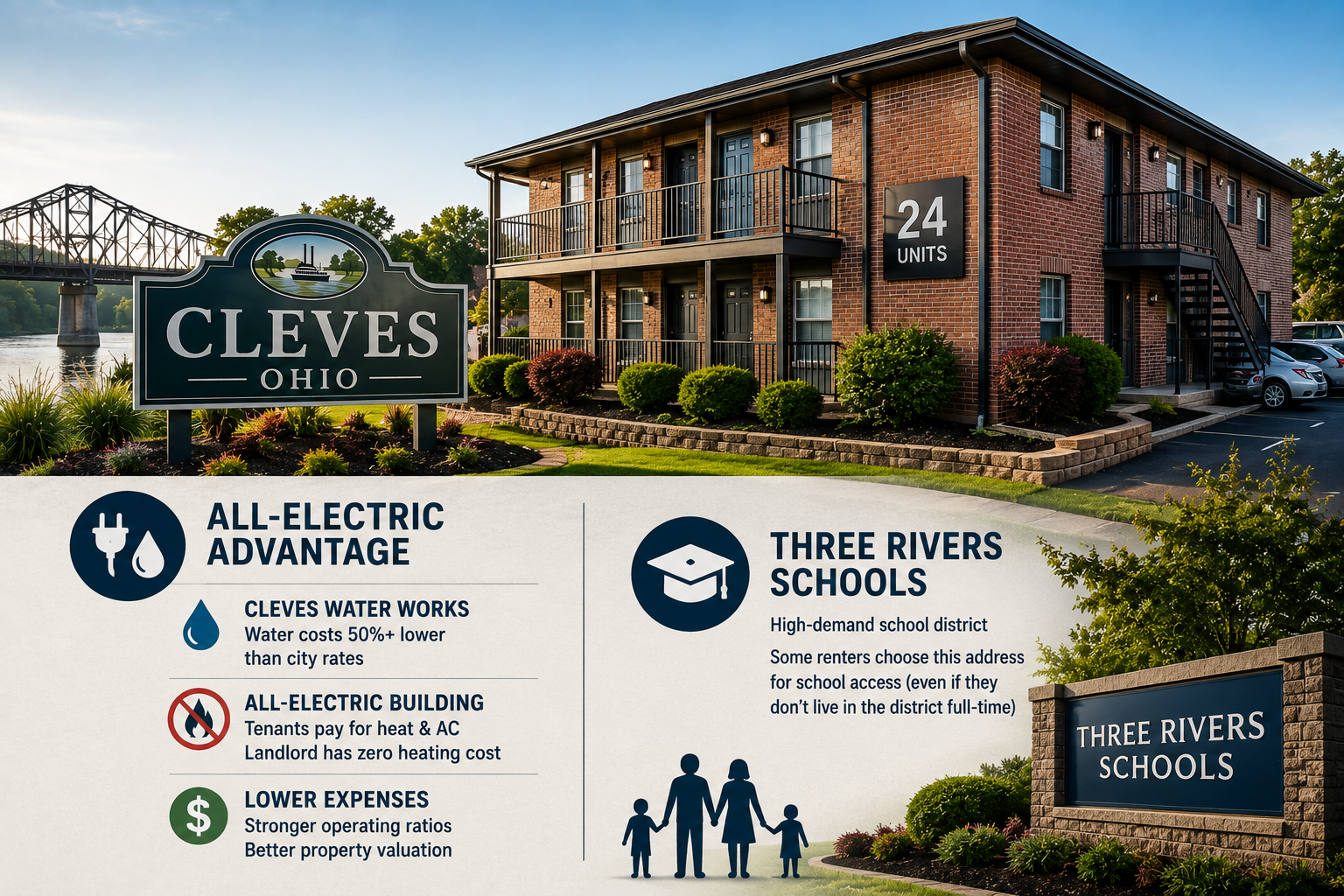
Cleves sits far enough west inside I-275 that it behaves more like its own small tertiary market than a piece of Cincinnati proper. Reed describes it as geographically separate from the rest of the metro, reached either via Columbia Parkway and Highway 50 along the river, or via I-74 to I-275, exiting at Highway 125 south through Whitewater before connecting to Highway 50 into town.
The property's isolation from other multifamily buildings turned out to be a genuine asset rather than a limitation. With no neighboring apartment complexes visible from the site, and single-family homes surrounding it instead, Reed's team controls the entire perception of the property. Prospective tenants driving past see no comparable buildings signaling a lower rent ceiling or a rougher reputation, unlike properties on streets lined with multiple older four-family buildings where a single owner has little control over collective neighborhood perception.
Why a $775 One-Bedroom Works in Cleves but Fails in Westwood
The core lesson from this property is that a given rent number only makes sense relative to its specific submarket, not in isolation. Reed's Cleves one-bedrooms rent for $775 a month as of 2026, up from an assumed $575 ceiling when the deal closed in 2019. In a denser, higher-income Cincinnati neighborhood like
Westwood, that same $775 for a comparably sized unit would represent a discount deep enough to attract only the most budget-constrained, least stable tenant pool, since better-qualified renters would simply pay $100 to $150 more for a nicer comparable unit down the block.
This is the kind of submarket-specific dynamic that separates successful
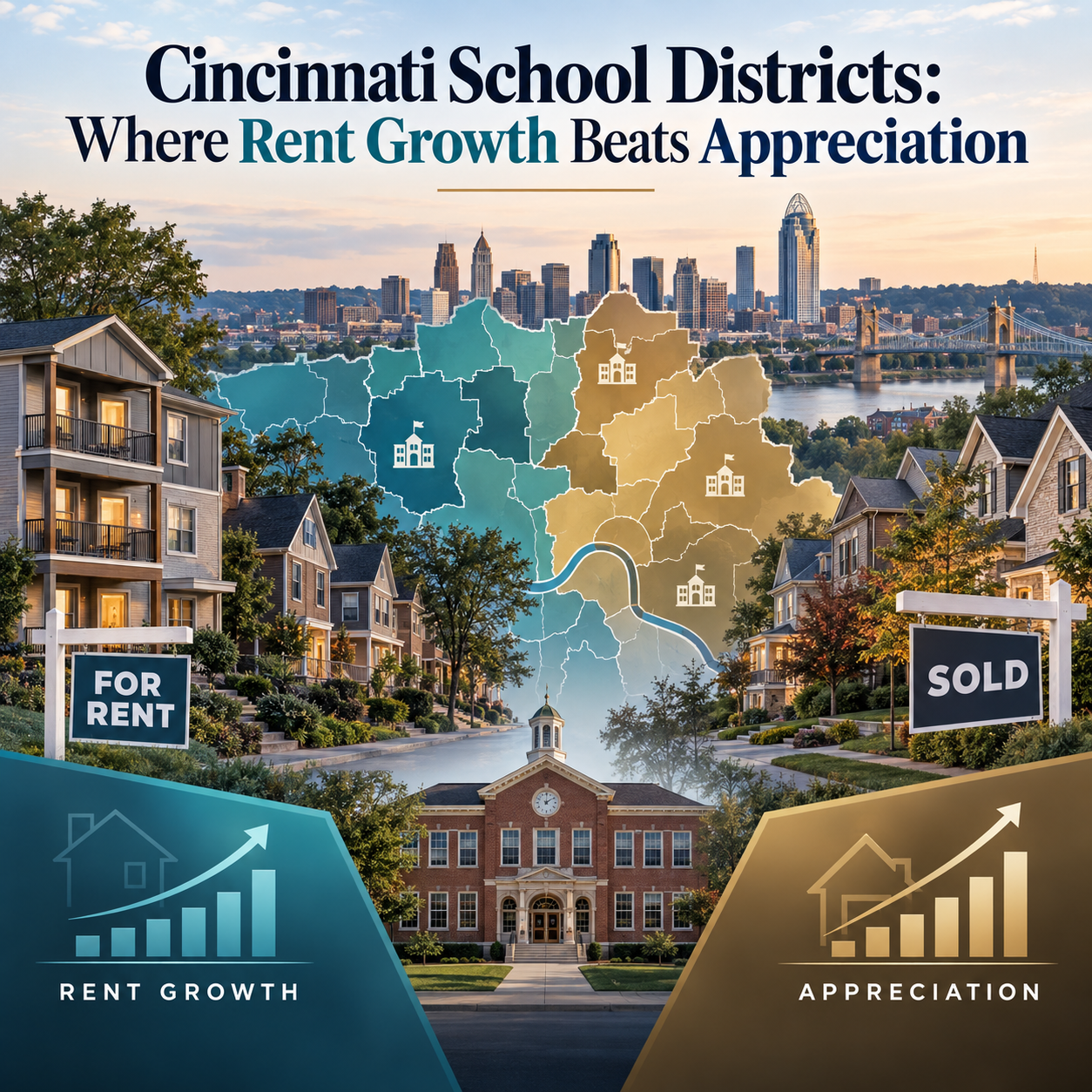
Cincinnati real estate underwriting from a simple citywide rent comparison. A rent figure that would signal trouble in one neighborhood can represent a healthy, stable position in another, and the difference often comes down to utility structure, wage trends among the local employer base, and school district boundaries rather than anything visible in a standard market comp.
What's Working in Cincinnati
Reed's approach to smaller, geographically isolated properties comes down to a few consistent principles.
- Self-manage when a property is too small for on-site staff but too far out for third-party interest. At 24 units and roughly 20 to 25 minutes from Reed's other holdings, the property was not large enough to justify dedicated payroll staff, and its lower rent base meant proportionally lower management fees, making it unattractive to higher-caliber third-party property managers.
- Underwrite utility structure explicitly, not just rent. Water provider and heating fuel type can materially change a property's operating expense ratio. All-electric construction with tenant-controlled heat removes a major landlord cost that a comparable gas-heated building elsewhere would carry.
- Treat isolation from other multifamily as a control advantage, not a drawback. A standalone building surrounded by single-family homes lets an operator fully control leasing standards and reputation, free from the comps and perception set by neighboring buildings.
- Match qualification standards to the true local rent ceiling, not a citywide average. Rentometer, Zillow, and similar tools rarely have adequate comps for a submarket like Cleves. Reed's own leasing history became the most reliable comp source once enough data existed.
What is not working: assuming a rent figure that works in one submarket translates directly to another. A $775 one-bedroom that represents market rate in Cleves would represent a distressed, tenant-quality-compromising rent in a denser neighborhood like Westwood or Northside.
Lessons From the Field: The Master Lease That Repositioned a Property Before Closing
Reed had originally sold this same 24-unit property to Brandon Turner years earlier, acting as Turner's buyer's agent after a cold email pitch built from a BiggerPockets analysis report. By 2019, Turner had cycled through three property managers while building Open Door Capital and relocating out of state, and reached out publicly on the BiggerPockets podcast looking for a buyer.
The outcome was a property substantially repositioned before Reed ever owned it. By the time closing arrived three months later, only a handful of units remained vacant, market testing had already shown $650 rents were achievable against an assumed $575 ceiling, and Reed's team benefited from the single period in the property's ownership history with the lowest possible expenses, no debt service, insurance, or property tax, layered against improving revenue.
- A distressed occupancy rate does not have to be solved before a deal structure is agreed to. The master lease let both sides address the property's core problem, chronic underperformance from a series of disengaged managers, without either party bearing the cost alone.
- Increasing the purchase price to cover a seller's carrying costs can still net a better deal than a lower price with no head start. Reed's team gained three months of unencumbered cash flow and stabilization work in exchange for a purchase price increase equal to those carrying costs.
- The seller benefits from this structure even if the buyer walks away. Since Turner's mortgage payments were happening regardless of the sale's outcome, the property arrived at closing in better condition and with better tenants than if the deal had fallen through, protecting his position either way.
- The lowest-revenue period of a turnaround is also, structurally, the lowest-expense period, if the deal is built that way. Taking over management before assuming any debt service meant every dollar collected in that first month could go toward stabilization work rather than covering a mortgage payment.
- A responsive relationship built years earlier can resurface unexpectedly. Reed's original cold outreach to Turner, unrelated at the time to any intent to eventually buy the property back, put him in position as the only person who responded when Turner later asked publicly for a buyer.