A $450,000 Loveland listing sold for $570,000 cash. Ethan Bishop on which Greater Cincinnati submarkets are drawing multiple offers, which have quietly cooled, and the two-generation demand pattern driving both.
A buyer in
Loveland waived inspection, put 20% down, and escalated to $536,000 on a house listed at $450,000, then still lost to an all-cash offer at $570,000 closing in 10 days. Ethan Bishop, a top-producing agent with the Chabris Group at Keller Williams Seven Hills Realty who has sold over 200 properties across
Greater Cincinnati in six years, watched that bidding war firsthand, and it's a clear signal of where 2026 demand is concentrating hardest.
About This Post
This analysis draws from a conversation with
Ethan Bishop, a real estate agent with the Chabris Group at Keller Williams Seven Hills Realty who has sold over 200 properties across Greater Cincinnati since going full-time in 2020. Bishop's active client base, concentrated among millennial buyers competing for starter and move-up homes, gives him real-time visibility into which submarkets are seeing genuine bidding wars versus which have quietly cooled.
Listen to the full conversation on
Spotify,
Apple Podcasts, and
YouTube. The full episode covers additional detail on new construction pricing across the eastern Cincinnati suburbs and more on how street-level variation plays out in specific neighborhoods.
The Cincy REI Show publishes every Monday. New episodes cover neighborhood-level analysis, local investor strategies, and real deal stories from operators active in Greater Cincinnati.
Where Cincinnati Buyers Are Competing Hardest in 2026
The Two-Generation Demand Pattern Reshaping Eastern Cincinnati
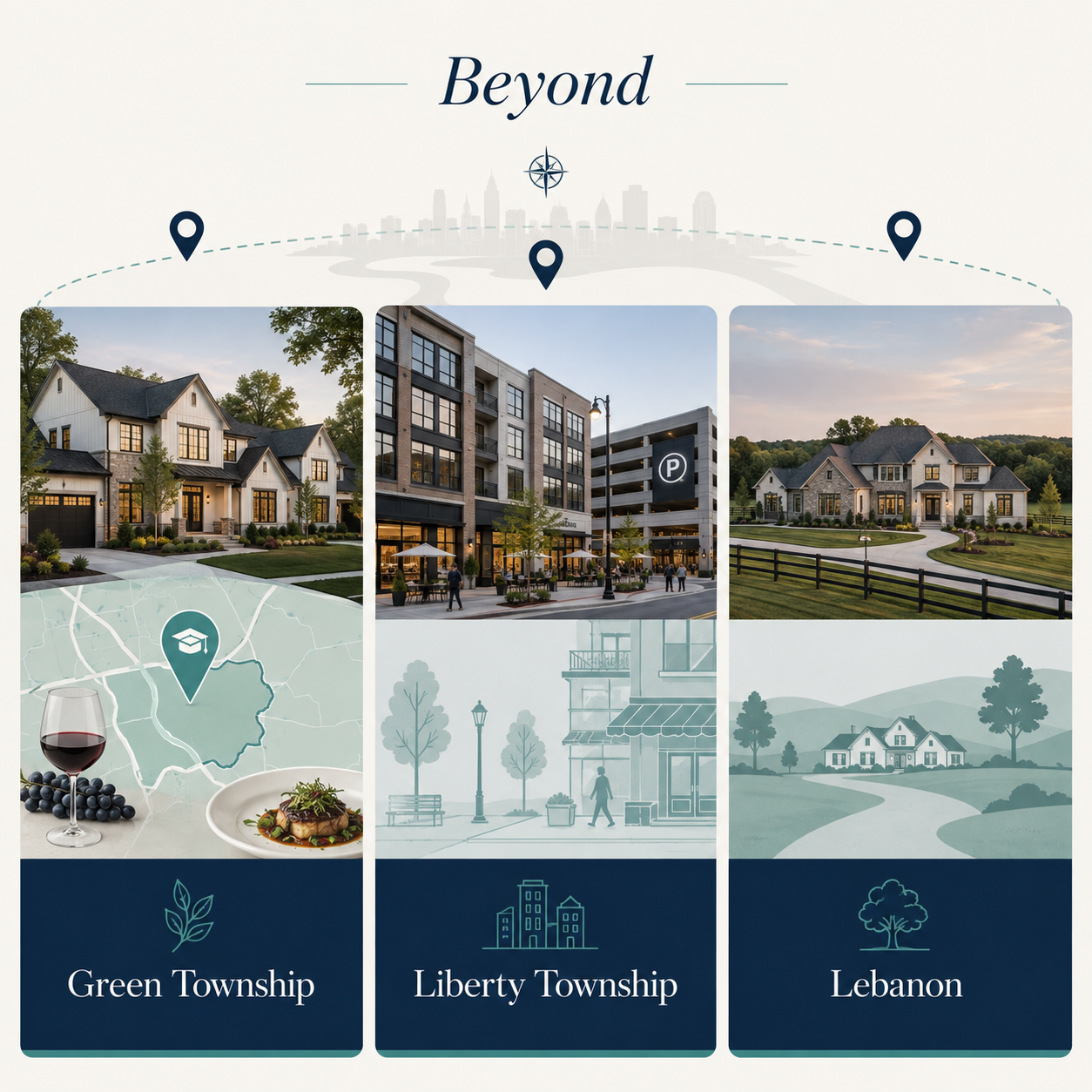
A consistent thesis runs underneath most of the growth Bishop is describing: baby boomers looking to downsize out of oversized homes while staying near adult children, and millennials looking to upgrade into more space, are both converging on the same handful of walkable, small-town-feeling submarkets east of I-275. Milford, Loveland, and Lebanon each offer a version of the same formula, a charming, often century-old downtown corridor with retail, dining, and bars on the ground floor and apartments above, paired with genuinely developable agricultural land just 10 to 15 minutes away where new construction can meet contemporary buyer expectations.
What's Working in Cincinnati
Bishop's read on the current market surfaces a few clear, repeatable patterns for buyers and investors evaluating specific submarkets.
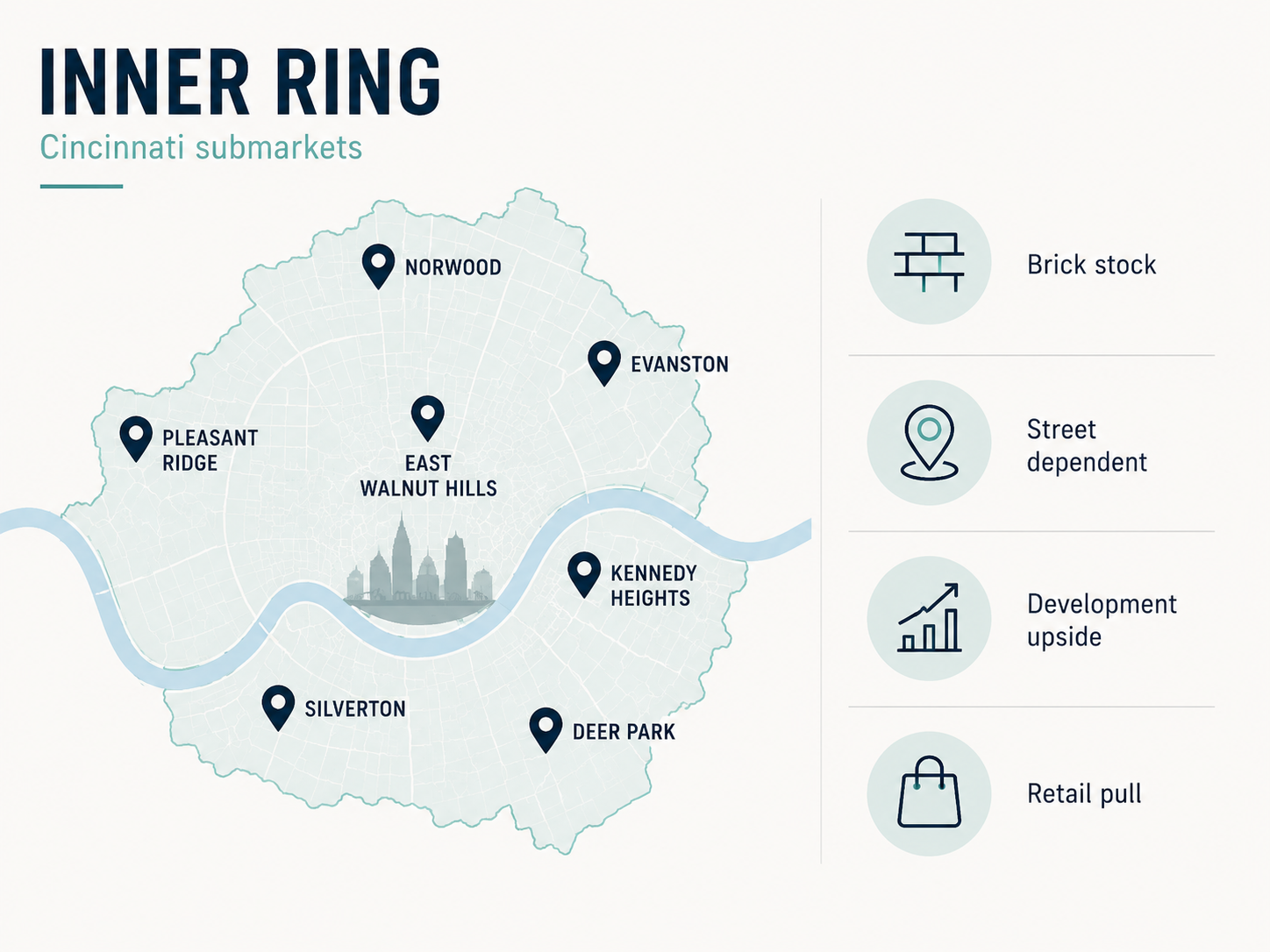
- Three-plus bedroom homes are moving dramatically faster than two-bedroom product. A Mount Washington-area listing on the Anderson Township border generated eight offers within 36 hours, all above asking, while comparable two-bedroom listings in Norwood and Pleasant Ridge sit on market considerably longer.
- Street-level due diligence matters more than neighborhood reputation, everywhere in Greater Cincinnati. Evanston and East Walnut Hills are the most extreme examples, where a single street can separate a stable, appreciating block from one with active safety concerns, but Bishop notes even Loveland has specific streets worth avoiding despite the submarket's overall strength.
- A single aggressive cash offer can reset comps for an entire submarket, even at a price the property may not objectively be worth. Bishop's Loveland example illustrates how one buyer's willingness to pay $570,000 for a property he valued closer to $500,000 to $525,000 becomes the new data point future appraisals and listings will reference.
- New construction pricing displays differently by builder, and that matters for underwriting affordability. D.R. Horton's advertised prices tend to reflect actual final cost, while builders like Fisher Homes often show a base price well below what most buyers end up paying once upgrades are included.
- Baby boomer downsizing demand is an underexploited multifamily development opportunity in Milford, Loveland, and Lebanon. These buyers want walkable proximity to a small-town downtown without maintaining a large single-family home, but Bishop notes there is limited existing ground-level rental or small-multifamily product built specifically to meet that demand.