
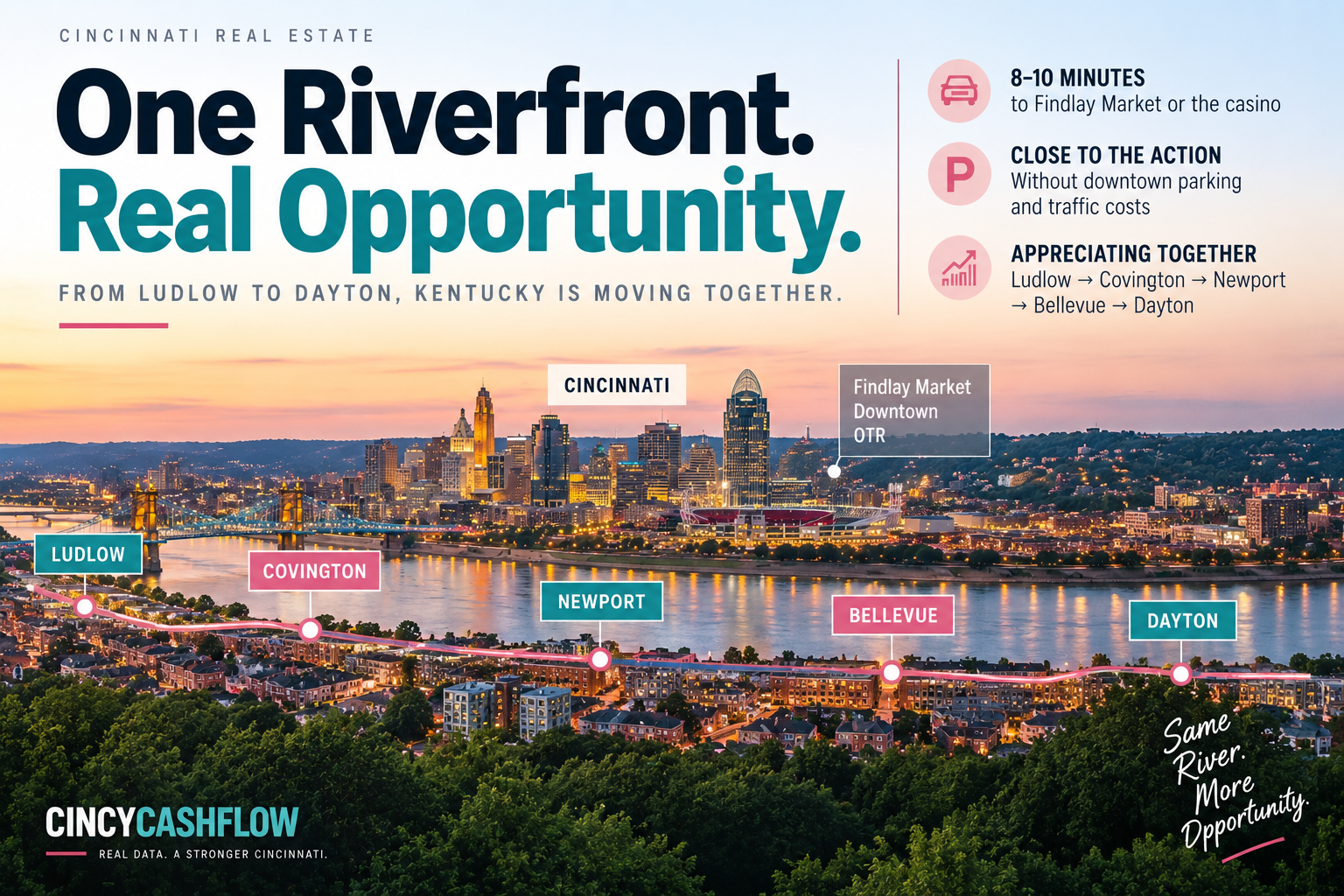
This has a direct implication for Cincinnati real estate investors evaluating the Kentucky side of the river: the entire riverfront strip, from Ludlow through Covington, Newport, Bellevue, and Dayton, has been appreciating largely in tandem, driven by proximity to Cincinnati's urban core (Findlay Market, downtown, OTR) without downtown's parking and traffic costs. Kukla, having lived in the area since he was 18, cites his own commute times, roughly 8 to 10 minutes to Findlay Market or the casino, as the practical driver behind decades of sustained demand for this corridor, independent of any single flagship development.
Northern Kentucky Real Estate: Reading Covington and Newport Block by Block
West Newport houses sold for $10,000 in 2016 and now go for $80,000 needing full rehabs. Garth Kukla on why proximity to a walkable corridor predicts Northern Kentucky value better than which city a property sits in.
A house on Hodge Street in Newport, once considered a rough address, is now listed on Zillow for $300,000. Garth Kukla bought his own Newport home for less than that in 2012, on what he calls one of the best streets in town. Kukla spent nearly a decade as a full-time wholesaler across Northern Kentucky, closing hundreds of off-market deals in Covington, Newport, and the surrounding riverfront cities, and his read on these neighborhoods runs down to individual streets and railroad crossings.
About This Post
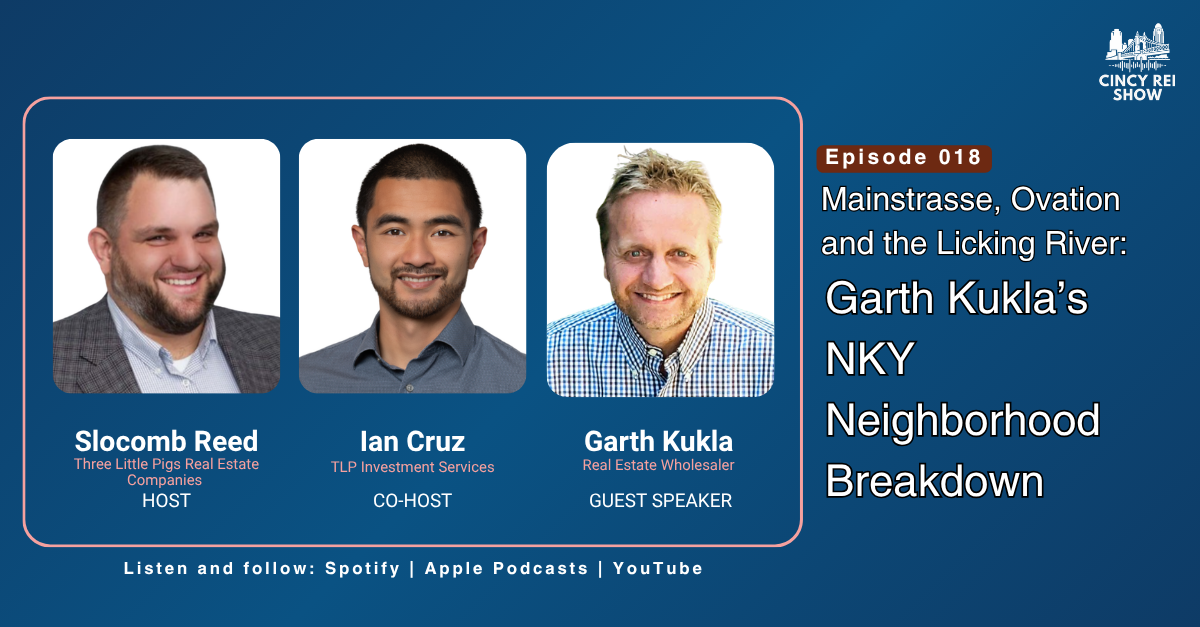
This analysis draws from a conversation with Garth Kukla, a Northern Kentucky-based investor who worked as a full-time wholesaler from 2016 to 2024, transacting hundreds of off-market deals primarily in Covington and Newport. Kukla's near-decade of hands-on wholesaling, combined with actually living in several of these neighborhoods, gives him block-level pricing and boundary knowledge that most Cincinnati-focused investors never develop for the Kentucky side of the river.
Listen to the full conversation on Spotify, Apple Podcasts, and YouTube. The full episode also covers Kukla's transition from cold-calling and direct mail to an entirely referral-based wholesaling business, and more detail on how he qualified motivated sellers over the phone.
The Cincy REI Show publishes every Monday. New episodes cover neighborhood-level analysis, local investor strategies, and real deal stories from operators active in Greater Cincinnati.
Covington and Newport: Reading Northern Kentucky Block by Block
Covington is Northern Kentucky's largest city and, in Kukla's description, laid out like a gerrymandered congressional district, with sharp value swings between adjacent pockets. Latonia, technically absorbed into Covington years ago, remains a distinct and solid neighborhood in local usage. Near the river, 10th and Greenup has historically carried a serious crime reputation, while just four blocks away, 6th and Greenup, part of the Licking Riverside area, holds five- to eight-thousand-square-foot mansions built roughly 120 to 150 years ago, some subdivided into apartments but many still maintained as single-family homes worth several million dollars.
Mainstrasse Village, Covington's dense bar and restaurant corridor, runs along Main Street roughly from 5th Street to 9th Street, bounded on one side by Philadelphia Street, with no clear parallel boundary on the other side of Main. South of 9th Street down to Martin Luther King Boulevard (12th Street) has gentrified enough recently that Kukla considers it an extension of the Mainstrasse effect, comparable to how Pendleton has absorbed spillover redevelopment from OTR in Cincinnati proper. The appeal driving this corridor's value is straightforward: proximity to downtown Cincinnati without downtown parking and traffic, plus a walkable concentration of restaurants and bars including Bouquet, Otto's, and Cock & Bull near 6th and Main.
Newport has been reshaped almost entirely by the Ovation development, a large-scale riverfront project on land that once held public housing, purchased and cleared before the 2008 recession stalled it, then restarted roughly five to seven years ago. Kukla is direct that he never tracked a specific radius of "Ovation effect" pricing; instead, the entire city of Newport has appreciated as a result of the broader momentum Ovation created. West Newport, anything west of York Street, sold for as little as $10,000 per house when Kukla started in 2016. The same houses, needing full rehabs, now sell for $80,000. Streets like Hodge, Ketura, and Linsenu, once considered rough, have all seen significant appreciation, though Kukla is careful to note none of them were ever truly bad streets to begin with.
Newport's dividing lines are more nuanced than they first appear. The railroad tracks near Monmouth Street, where it butts up against Southgate, mark a genuine shift, but crossing 9th to 12th Street doesn't represent a hard drop-off the way it might elsewhere. Beyond 12th Street, the market reaccelerates: 13th Street hosted a Home-A-Rama with million-dollar new construction on land that was, a decade earlier, available for a fraction of that. Streets on the river-view (downhill) side, like Beale Street, consistently command higher rents than their non-view counterparts on the uphill side, a pattern driven purely by sightlines rather than any formal neighborhood boundary.
Bellevue, the next city east of Newport, was among the first Northern Kentucky riverfront communities to appreciate significantly. Its primary access point, Fairfield Avenue, becomes genuinely congested during evening rush hour as the sole route in and out toward Cincinnati. A meaningful stretch of Bellevue, roughly the first 15 houses along Ward and Foot heading toward the river, sits inside the 1997 flood zone, meaning mandatory flood insurance and, historically, actual water in basements during that flood. Kukla notes the market's relationship to that flood zone has flipped: difficult to sell in 2016, now an accessible, comparatively affordable entry point into a desirable riverfront location by 2026.
Dayton, Kentucky, further east, stalled for over a decade after an ambitious marina redevelopment (once called the Manhattan Project, now the Riverside Marina area) drove speculative pricing well ahead of actual construction. That development has finally begun delivering in recent years, producing riverfront mansions outside the flood wall and a broader wave of home and apartment sales. The rough dividing line between Bellevue and Dayton sits around Ward and Foot near Vine Street, with Fairfield Avenue functioning as Dayton and Bellevue's version of Mainstrasse: proximity to it is a clear value driver, while areas further south climb into hillier terrain with older Cape Cod-style homes carrying their own foundation considerations.
Ludlow and Bromley, west of Covington, have seen some appreciation as well, though Kukla did comparatively little business there and is more cautious generalizing about that corridor.
Why Riverfront Proximity Drives Northern Kentucky Value More Than City Lines
The clearest pattern across every Northern Kentucky riverfront community Kukla discussed is that proximity to a walkable commercial corridor, Mainstrasse in Covington, Ovation and downtown Newport, Fairfield Avenue in Bellevue and Dayton, matters more to pricing than which specific city a property sits in. Municipal boundaries (Covington versus Newport versus Bellevue) are administratively real but don't reliably predict value the way distance from these corridors does.
What's Working in Cincinnati
Kukla's wholesaling career surfaced a specific, repeatable framework for qualifying sellers and closing off-market deals in Northern Kentucky.
- Ask directly how long a seller has been thinking about selling, and only pursue two answers. Kukla's qualifying question filtered for sellers who wanted to sell right now or at some defined point in the future. Any other answer, particularly someone shopping his offer against a competing one, signaled a seller who wasn't a fit for a wholesale transaction.
- Require a specific price from the seller before proceeding. Kukla's rule of thumb: he had never successfully bought a house from a seller who couldn't or wouldn't name a number, comparing it to a grocery store cashier never asking a customer what they'd like to pay for milk.
- Tell sellers directly they'll make more money with a realtor. Counterintuitively, stating this plainly and pausing for a reaction diffused sellers' defensiveness about being taken advantage of, often making them more willing to proceed with a wholesale sale on its actual merits: speed and convenience.
- Identify motivation as some combination of speed, price, or convenience, since sellers rarely get all three. Sellers choosing speed and convenience were Kukla's wholesale clients. Sellers wanting a specific price were better served listing with an agent instead.
- Shift from marketing spend to referral-based deal flow once a reputation is established. Kukla ran bandit signs, direct mail, and cold calling for roughly three years before transitioning almost entirely to referrals by 2021 to 2022, including referrals from other investors who found deals outside their own market knowledge and needed someone who specifically understood Northern Kentucky.
What is not working: assuming a single flagship development creates value only in its immediate radius. Kukla explicitly rejected the idea of drawing a fixed boundary around Ovation's effect on Newport, since the appreciation touched the entire city rather than tapering predictably with distance.
Lessons From the Field: The House Garth Sold Twice, Three Years Apart
Early in his wholesaling career, Kukla got a house under contract from a seller but was ultimately unable to move the deal, one of only two times in his career this happened, and the only case where the outcome wasn't a closed sale on the original terms.
The complication was straightforward: despite Kukla's rule of never taking on a contract he couldn't close, this particular deal didn't work out at the time, and the contract was cancelled. Most wholesalers might have written the seller off permanently at that point.

The decision Kukla made was to stay in touch, and roughly three years later, he came back to the same seller. Market conditions and his own network had shifted enough in the intervening years that he was able to purchase the property himself outright, rather than wholesale it, and then sell it.
The outcome was a completed transaction on a property that had originally fallen through, three years after the fact, illustrating that a failed deal in Kukla's world wasn't necessarily dead, just delayed.
- A cancelled contract doesn't have to mean a permanently lost relationship with a seller. Kukla's willingness to revisit the deal years later turned an early failure into an eventual success.
- Market timing can resolve a deal that didn't work under the original terms. What made sense as a purchase-and-resale three years later hadn't worked as a straightforward wholesale assignment at the time.
- A near-perfect track record still allows room for one real exception. Kukla's rule that he never took a contract he couldn't move held almost universally, but the one exception became, eventually, still a closed deal rather than a total loss.
- Long-term relationship maintenance with sellers has real payoff, even after a failed transaction. The eventual purchase depended entirely on the seller still being reachable and willing to transact with Kukla years later.

A $180,000 all-in flip selling for just under $270,000, with no cash out of pocket. Slocomb Reed breaks down four Greater Cincinnati deals, and why none of them depended on the market going up.

The Hamilton County timeline from a missed rent payment to a set-out; and why TLP's Izzy Ong treats every case that reaches a magistrate as a failure of the process, not a win.

A $450,000 Loveland listing sold for $570,000 cash. Ethan Bishop on which Greater Cincinnati submarkets are drawing multiple offers, which have quietly cooled, and the two-generation demand pattern driving both.
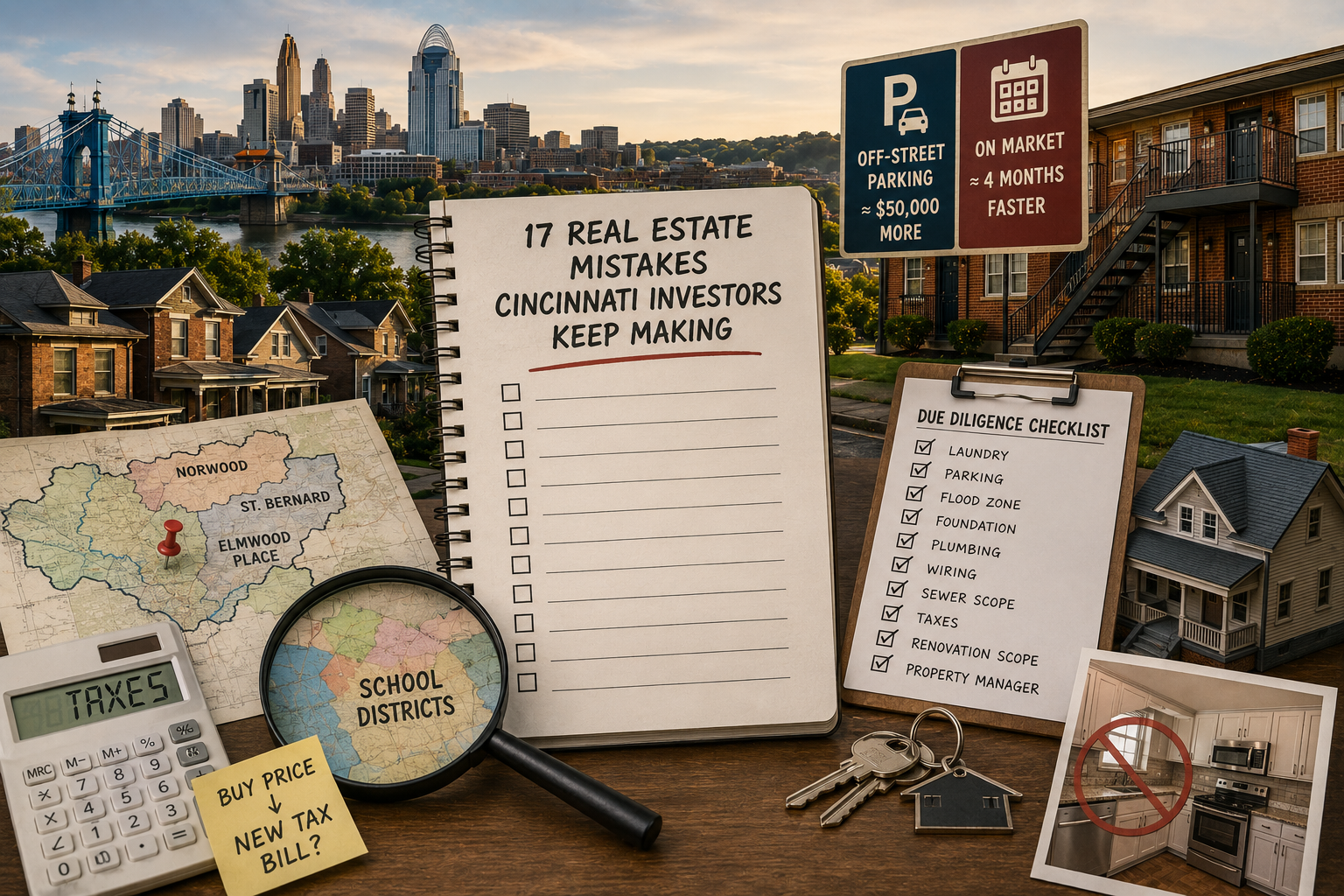
Off-street parking, galvanized plumbing, school district lines that don't follow township borders, and a tax bill that can quadruple at closing. The Cincinnati-specific due diligence most investors skip.
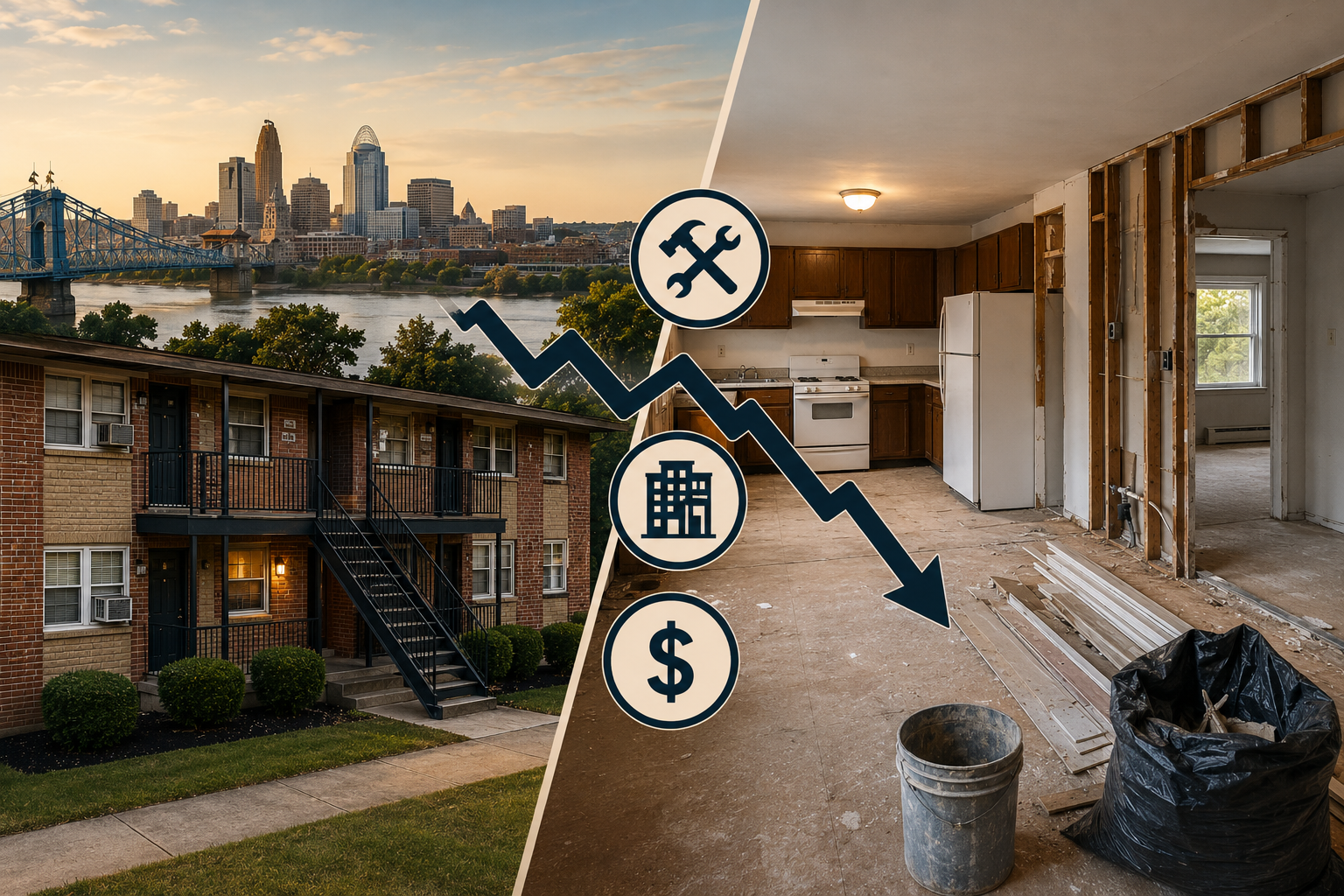
JD Schmerge brokers Greater Cincinnati multifamily and operates a 7-unit in South Covington. Why tenants aren't paying for upgraded finishes, why insurance and taxes now outweigh interest rates, and how much to renovate before selling.
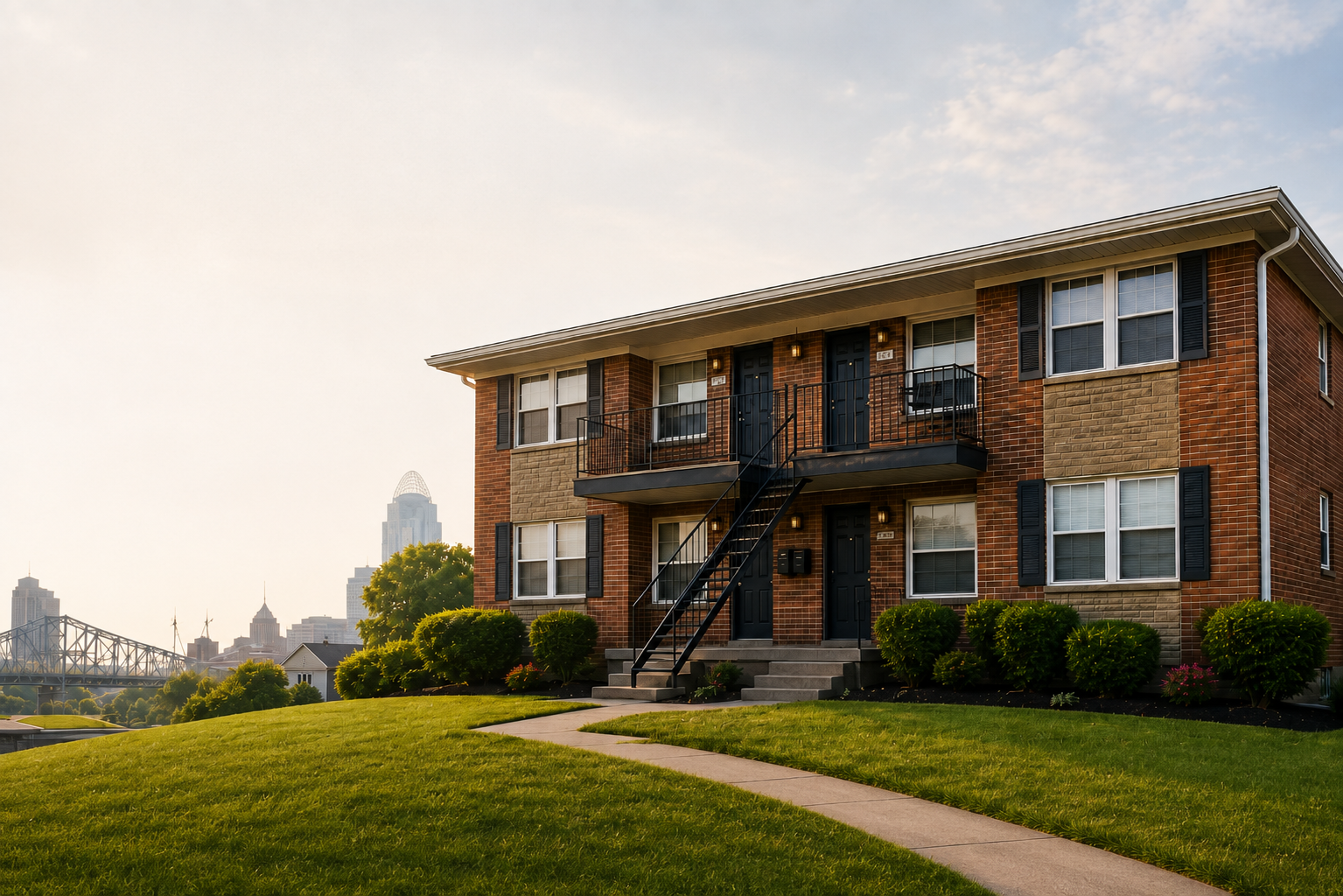
Bret Halsey went from pro soccer to 70-plus units in under three years, 14 of them fourplexes. How Cincinnati's repeating 1960s floor plans make the city's most common multifamily building the easiest one to underwrite.
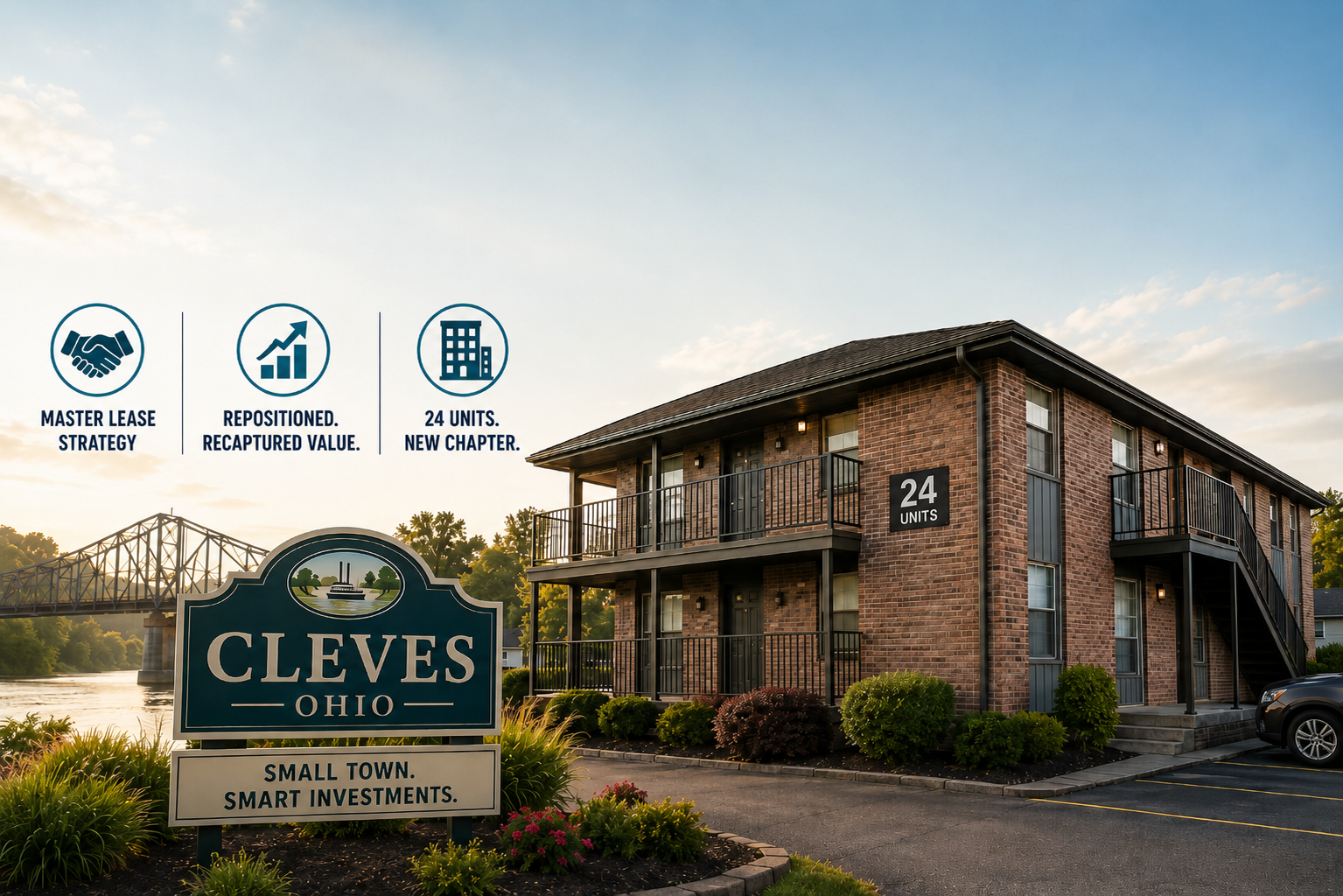
Nine of 24 units were paying rent. Slocomb Reed took over management three months before closing, cleared the building, and proved higher rents; all before owning a share of it.
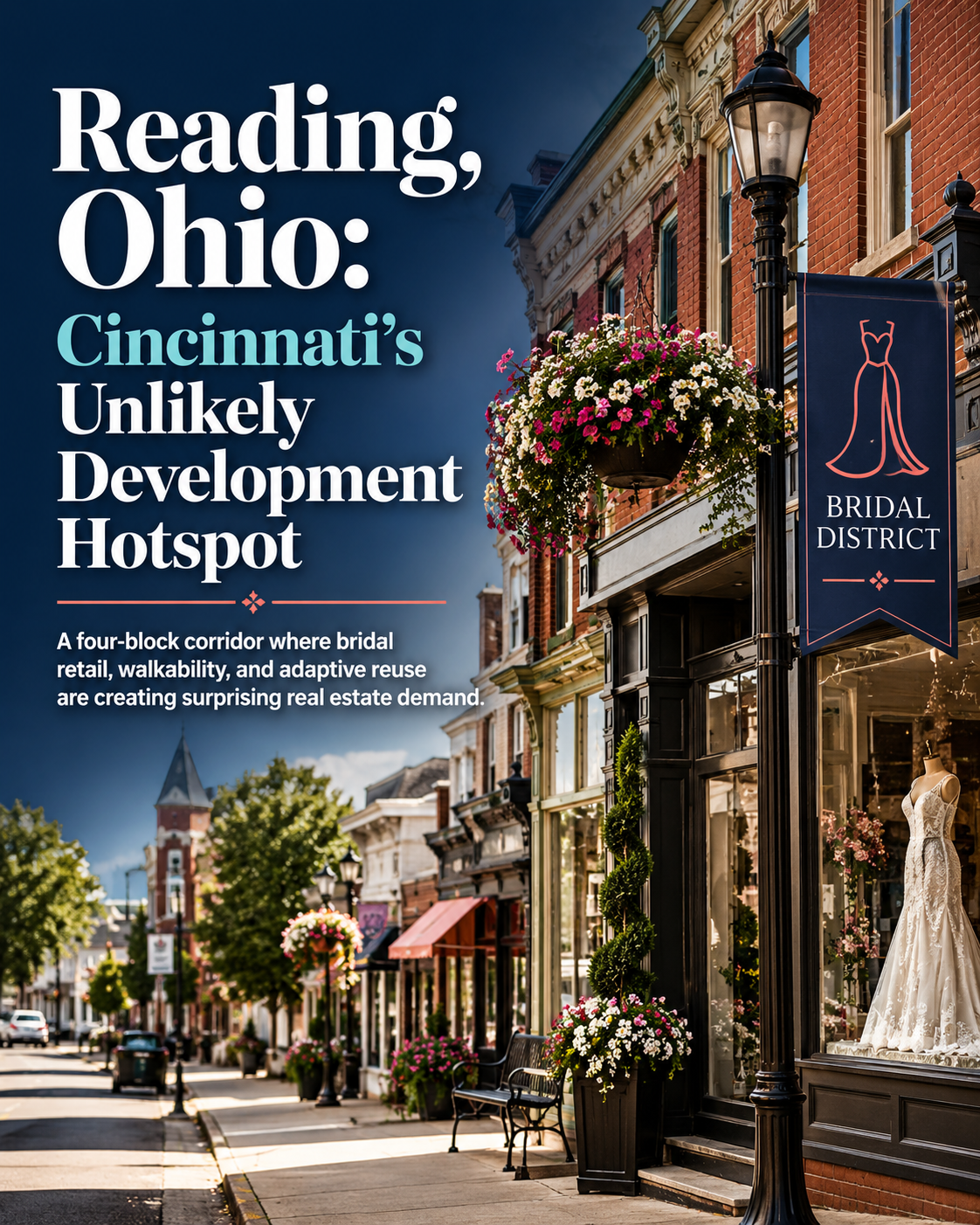
Reading, Ohio: Cincinnati's Unlikely Development Hotspot
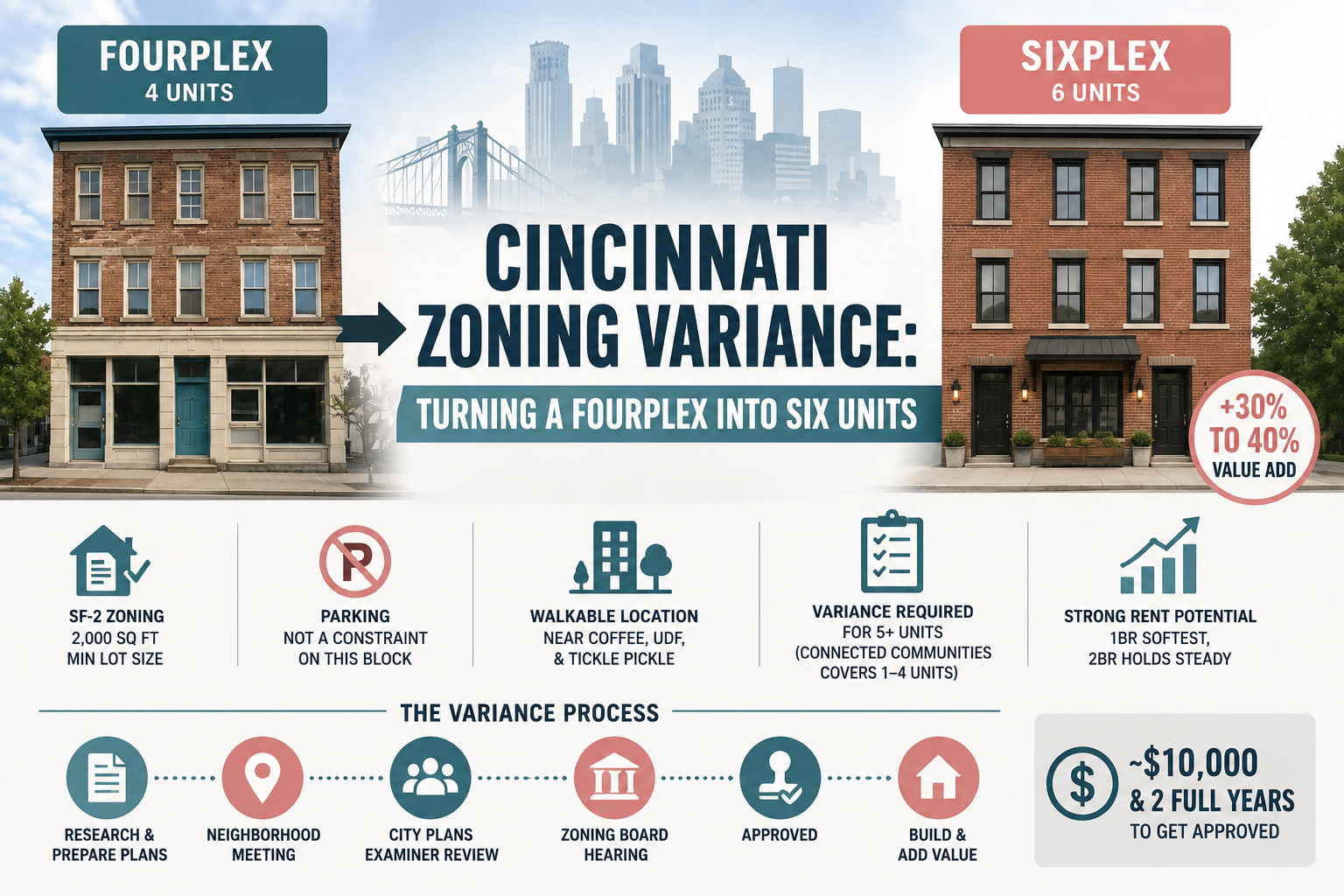
Two years, roughly $10,000 in zoning costs, and about 40 neighbor signatures. What Jeremy Komer's Northside conversion reveals about Cincinnati's variance process and the gap in Connected Communities.
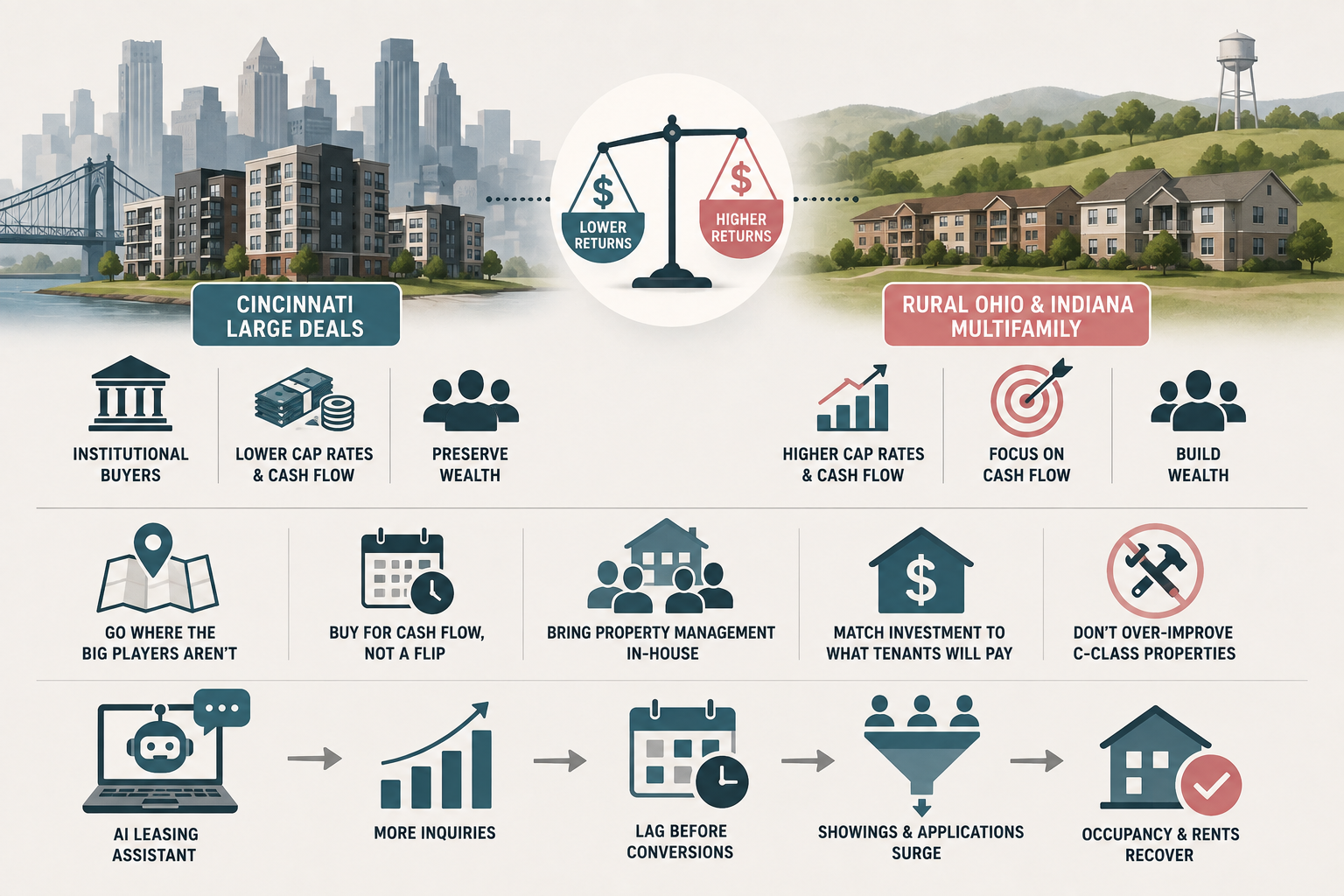
Lee Yoder holds 930 units, and almost none of them are near Cincinnati. Why institutional capital compresses returns above 100 units, and what he found in rural Ohio and Indiana instead.