
The critical point Reed makes is that this strategy's effectiveness doesn't depend on where Cincinnati sits in its market cycle. It depends entirely on an investor's ability to identify a specific deal, priced correctly relative to its as-improved value, and execute a business plan to close that gap. That distinction matters for anyone underwriting Cincinnati deals in 2026: the opportunity isn't a bet on citywide appreciation, it's a bet on the investor's own ability to force value into a specific property.
The Infinite Real Estate Glitch: Forced Appreciation Plus Leverage
A $180,000 all-in flip selling for just under $270,000, with no cash out of pocket. Slocomb Reed breaks down four Greater Cincinnati deals, and why none of them depended on the market going up.
A single-family flip near Winton Woods cost $180,000 all in, purchase price, rehab, and six months of carrying costs, entirely borrowed with no personal cash invested. It's selling for just under $270,000. Slocomb Reed calls this pattern the "infinite real estate glitch," and after a dozen years of investing across Greater Cincinnati, he broke down the two components that make it repeatable rather than lucky.
About This Post
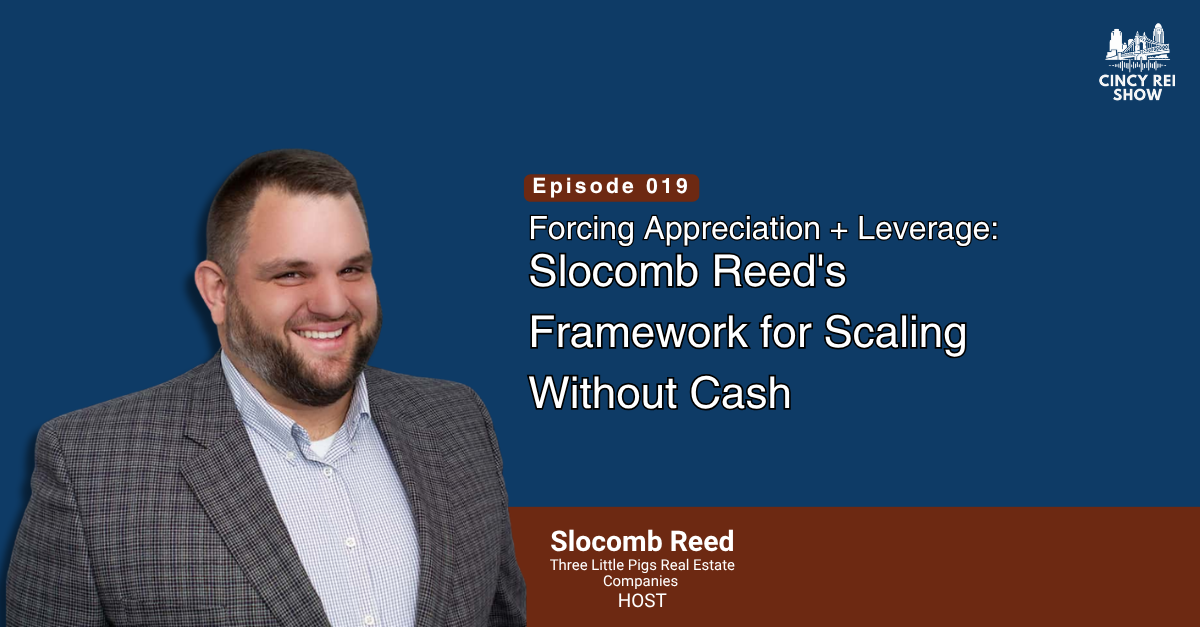
This analysis draws from a solo episode by Slocomb Reed, co-host of the Cincy REI Show and an active Cincinnati investor and property manager with a dozen years of experience across single-family, small multifamily, and larger apartment acquisitions. Reed walks through four of his own recent deals to illustrate how forced appreciation and leverage combine to remove most practical limits on how much real estate an experienced operator can acquire.
Listen to the full conversation on Spotify, Apple Podcasts, and YouTube. The full episode also covers Reed's approach to using cross-collateralized hard money loans and more detail on structuring equity partnerships with outside capital.
The Cincy REI Show publishes every Monday. New episodes cover neighborhood-level analysis, local investor strategies, and real deal stories from operators active in Greater Cincinnati.
Where These Deals Sit Across Greater Cincinnati
- The Winton Woods area, a single-family property on three-quarters of an acre backing directly onto Winton Woods with a creek running behind the lot. Reed acknowledges he likely overpaid slightly, motivated partly by his own attachment to the property, before ultimately deciding to sell rather than hold it.
- Mount Airy, zoned for Northwest schools, where Reed structured a sale-leaseback with a seller who wanted to remain in the home long-term rather than move out at closing.
- Rural Clermont County, far enough from Cincinnati's core that lot privacy and distance from neighbors matter more to buyers than square footage. Reed's renovation choices here, fencing the yard and maximizing privacy, were tailored specifically to that lifestyle expectation.
- A six-building portfolio of 1960s brick-bunker 12-unit apartment buildings, the same replicable Cincinnati architecture style found across the metro, acquired with Ian Cruz in 2025. Reed had executed this exact playbook on individual buildings a dozen times before, but never at six buildings simultaneously.
Why Cincinnati Supports This Strategy Regardless of Market Cycle
Reed frames Cincinnati real estate as what he calls an evergreen market: it doesn't produce the sharp appreciation spikes of faster-growing Sunbelt metros, but it also doesn't experience the same severe corrections. Citing a conversation with Joe Fairless, Reed notes that Midwestern markets like Cincinnati reward slow, steady, consistent execution rather than timing a boom.

What's Working in Cincinnati
Reed's framework rests on two components, plus a bonus extension of the second.
- Force appreciation through renovation or NOI improvement. This means buying a property, improving its condition or income, and creating a gap between what was spent acquiring and improving it and what the property is actually worth afterward. That gap is the source of nearly every other advantage in the framework.
- Use leverage aggressively once forced appreciation creates enough of a value cushion. Refinancing at 70% to 80% loan-to-value against the new, higher value, rather than the original purchase price, lets an investor pull out most or all of the capital originally invested, freeing it to redeploy into the next deal.
- Use cross-collateralization to eliminate upfront cash requirements entirely. On both the Winton Woods cottage and the Mount Airy sale-leaseback, Reed's lender accepted a second-position mortgage against another property with substantial existing equity in place of a traditional down payment, letting him borrow 100% of the purchase price, rehab cost, and even several months of carrying costs.
- Accept higher-cost debt in exchange for speed and reliability. Reed's typical hard money rate runs around 14% APR, deliberately choosing lenders known for speed and ease of execution over the cheapest available rate, since the deal's overall economics can absorb that cost when the forced appreciation margin is large enough.
- Bring in equity partners only on deals you've already proven, not new strategies. Reed's 50/50 partnership structure, where a capital partner funds a flip in exchange for a 50% split after their capital is returned, is reserved specifically for a business plan Reed has executed successfully before. He's explicit that outside equity should expand capacity to do what you're already good at, not fund a new, untested approach.
What is not working, or rather, what this framework explicitly is not: a bet on market timing or appreciation. Reed is direct that none of these four examples depended on Cincinnati property values rising broadly. Each one depended on the specific deal being priced below its achievable improved value at acquisition.
Lessons From the Field: The Sale-Leaseback a Wholesaler Couldn't Move Himself
A wholesaler brought Reed the Mount Airy Ranch specifically because he couldn't sell it through his own buyers list. The seller, an older homeowner, wanted to use the equity in his home to pay off his mortgage and other debts so he could live debt-free on Social Security and his pension, but only if he could remain living in the home afterward as a tenant.

The complication was structural: most buyers on a wholesaler's list want a vacant property they can immediately renovate and flip or rent to a new tenant, not one that comes with an existing owner who needs to convert into a paying tenant indefinitely. That narrowed the buyer pool to someone specifically willing to structure and manage a sale-leaseback.
Reed's decision rested on two things: recognizing, from touring the 2018 remodel, how much bonus equity existed in the deal relative to what the seller was asking, and qualifying for hard money financing that covered the full purchase price plus six months of interest payments, using cross-collateral from another multifamily property he already owned. That combination meant no cash out of pocket at closing.
The outcome was unusual even by Reed's own standard: he left the closing table with both the house and a check, since the loan proceeds exceeded the purchase price. Several months later, he executed a straightforward rate-and-term refinance into a 30-year fixed mortgage, paying off the hard money loan entirely. Some legitimate plumbing issues surfaced shortly after closing, which Reed addressed directly, but the deal otherwise required no additional capital beyond what was already borrowed.
- A deal a wholesaler can't move themselves can still be a strong deal for a buyer with a different structure available. The sale-leaseback requirement wasn't a flaw in the deal, it simply required a buyer equipped to manage an ongoing landlord-tenant relationship with the seller.
- Cross-collateralizing existing equity can eliminate a cash requirement entirely, even on a deal with an unconventional structure. The same technique that worked on a standard flip applied equally well here.
- Recognizing bonus equity requires firsthand property knowledge, not just comps. Touring the property and understanding the quality of a 2018 remodel gave Reed confidence in the deal's actual value that a desktop analysis alone might not have surfaced.
- A hard money bridge loan followed by a rate-and-term refinance is a repeatable two-step financing pattern. Reed used this same sequence, expensive short-term debt to close quickly, followed by a conventional refinance once the deal is stabilized, across multiple deal types in this episode.
- Inheriting a qualified, motivated tenant at closing can make an unconventional deal simpler to operate than a typical vacant acquisition. The seller-turned-tenant was already paying market rent from day one, without any leasing or vacancy period required.
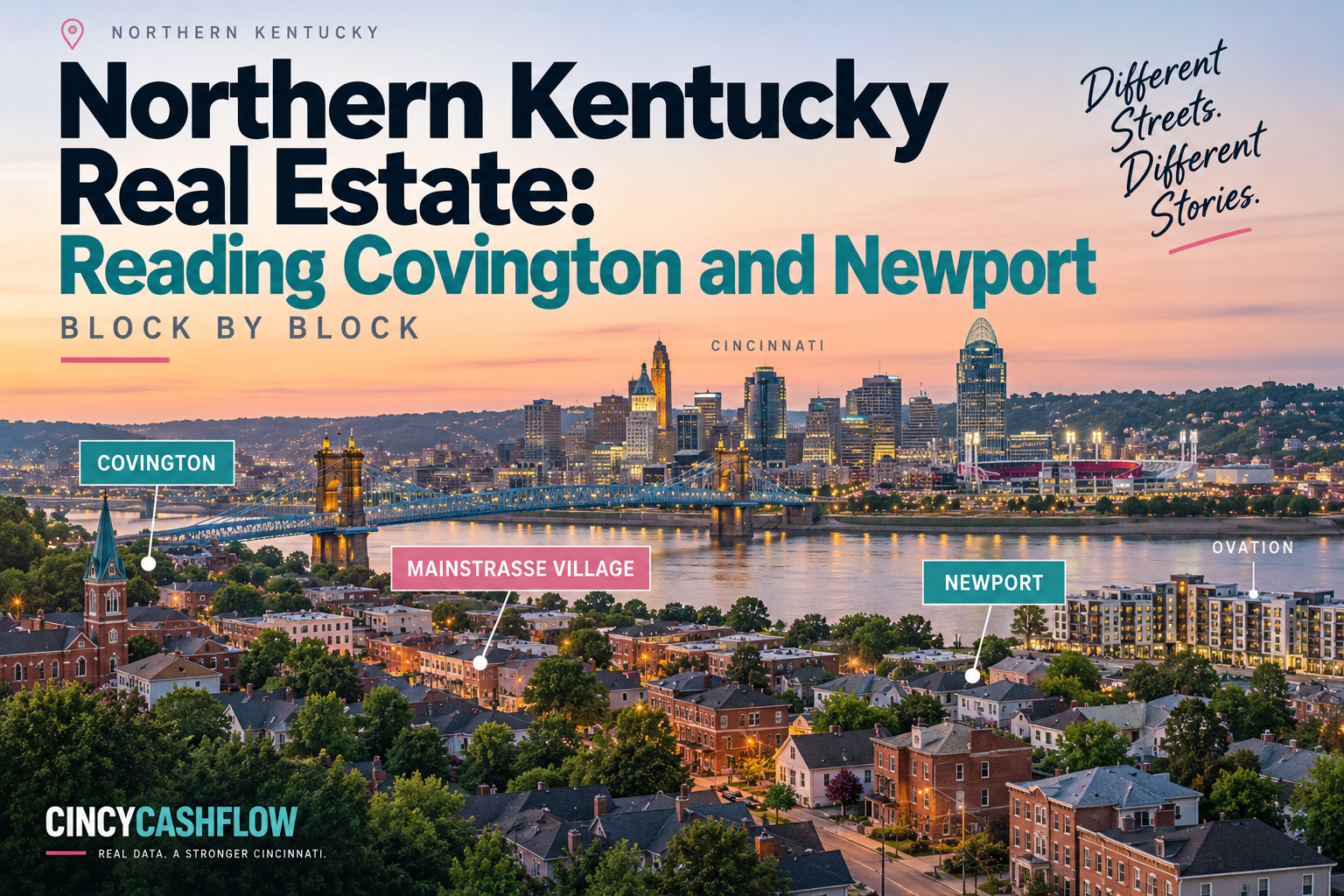
West Newport houses sold for $10,000 in 2016 and now go for $80,000 needing full rehabs. Garth Kukla on why proximity to a walkable corridor predicts Northern Kentucky value better than which city a property sits in.

The Hamilton County timeline from a missed rent payment to a set-out; and why TLP's Izzy Ong treats every case that reaches a magistrate as a failure of the process, not a win.

A $450,000 Loveland listing sold for $570,000 cash. Ethan Bishop on which Greater Cincinnati submarkets are drawing multiple offers, which have quietly cooled, and the two-generation demand pattern driving both.

Off-street parking, galvanized plumbing, school district lines that don't follow township borders, and a tax bill that can quadruple at closing. The Cincinnati-specific due diligence most investors skip.
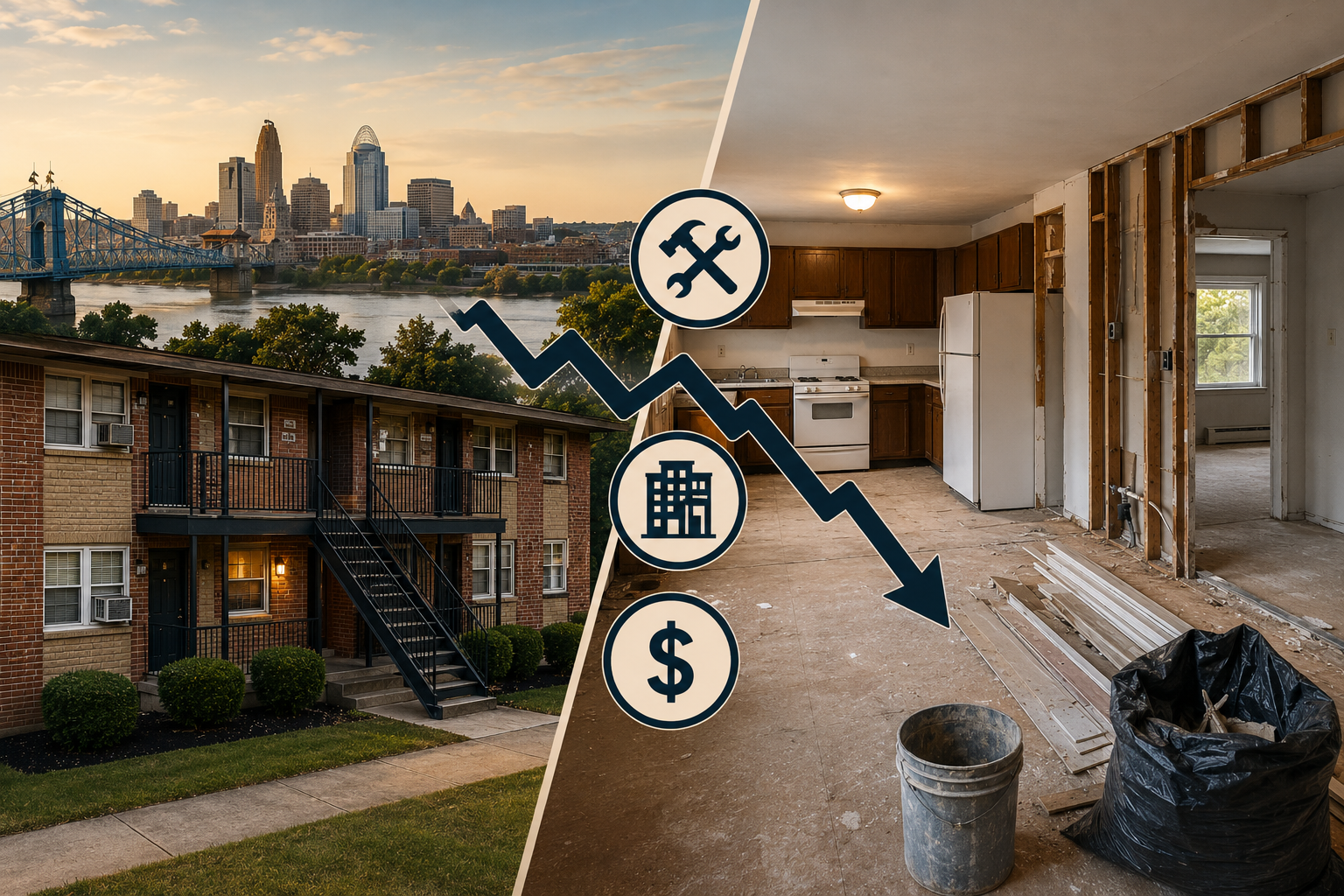
JD Schmerge brokers Greater Cincinnati multifamily and operates a 7-unit in South Covington. Why tenants aren't paying for upgraded finishes, why insurance and taxes now outweigh interest rates, and how much to renovate before selling.
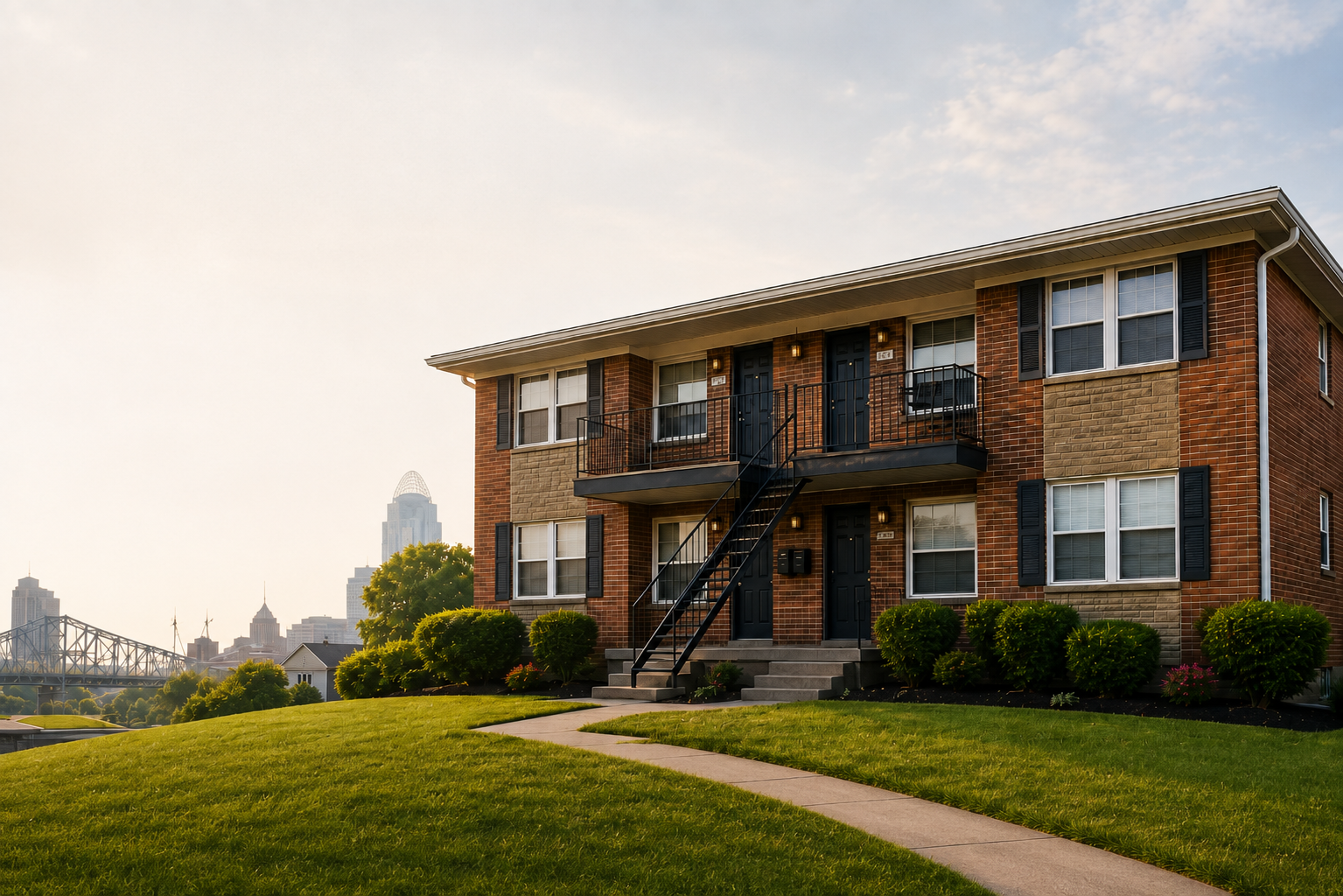
Bret Halsey went from pro soccer to 70-plus units in under three years, 14 of them fourplexes. How Cincinnati's repeating 1960s floor plans make the city's most common multifamily building the easiest one to underwrite.
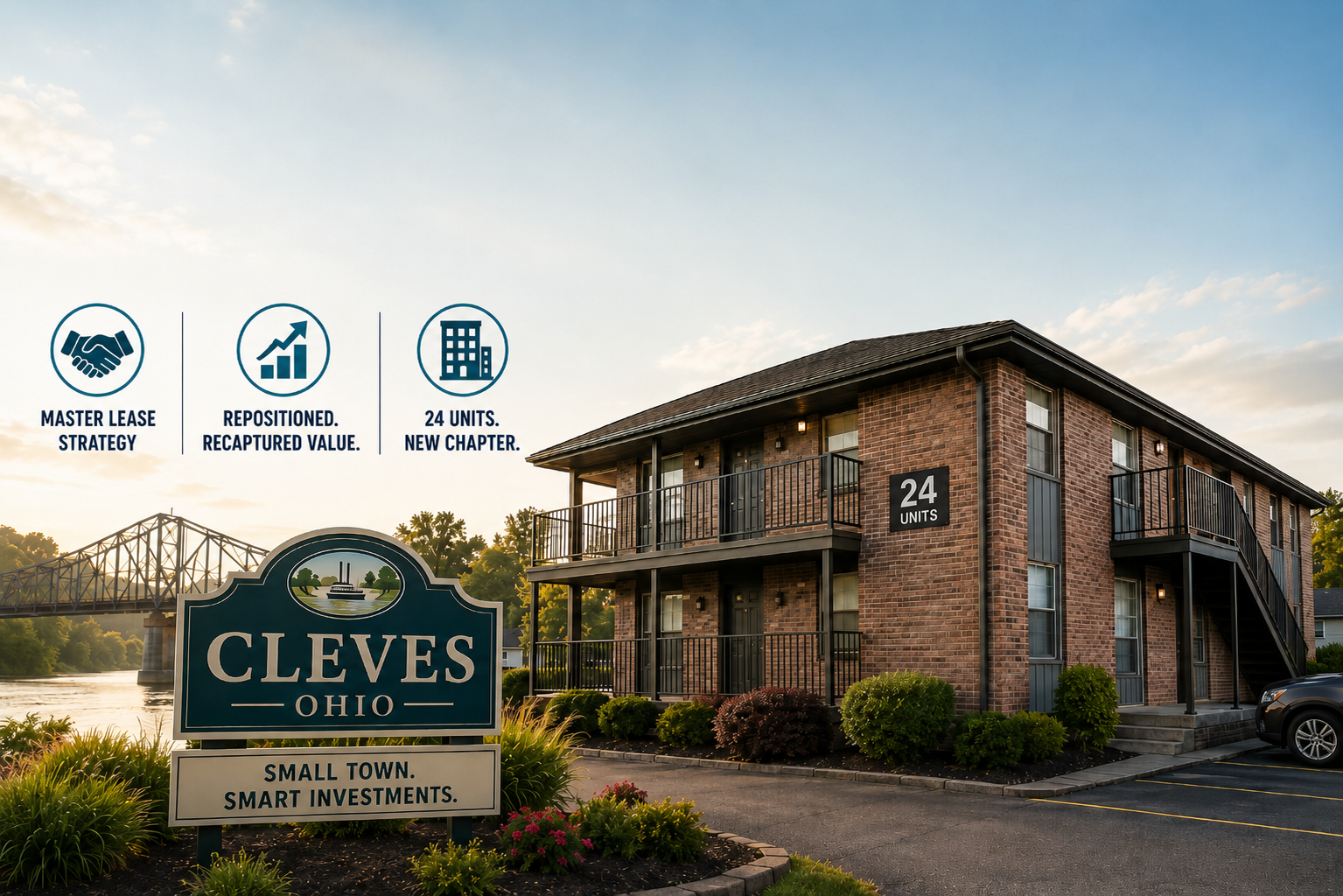
Nine of 24 units were paying rent. Slocomb Reed took over management three months before closing, cleared the building, and proved higher rents; all before owning a share of it.

Reading, Ohio: Cincinnati's Unlikely Development Hotspot
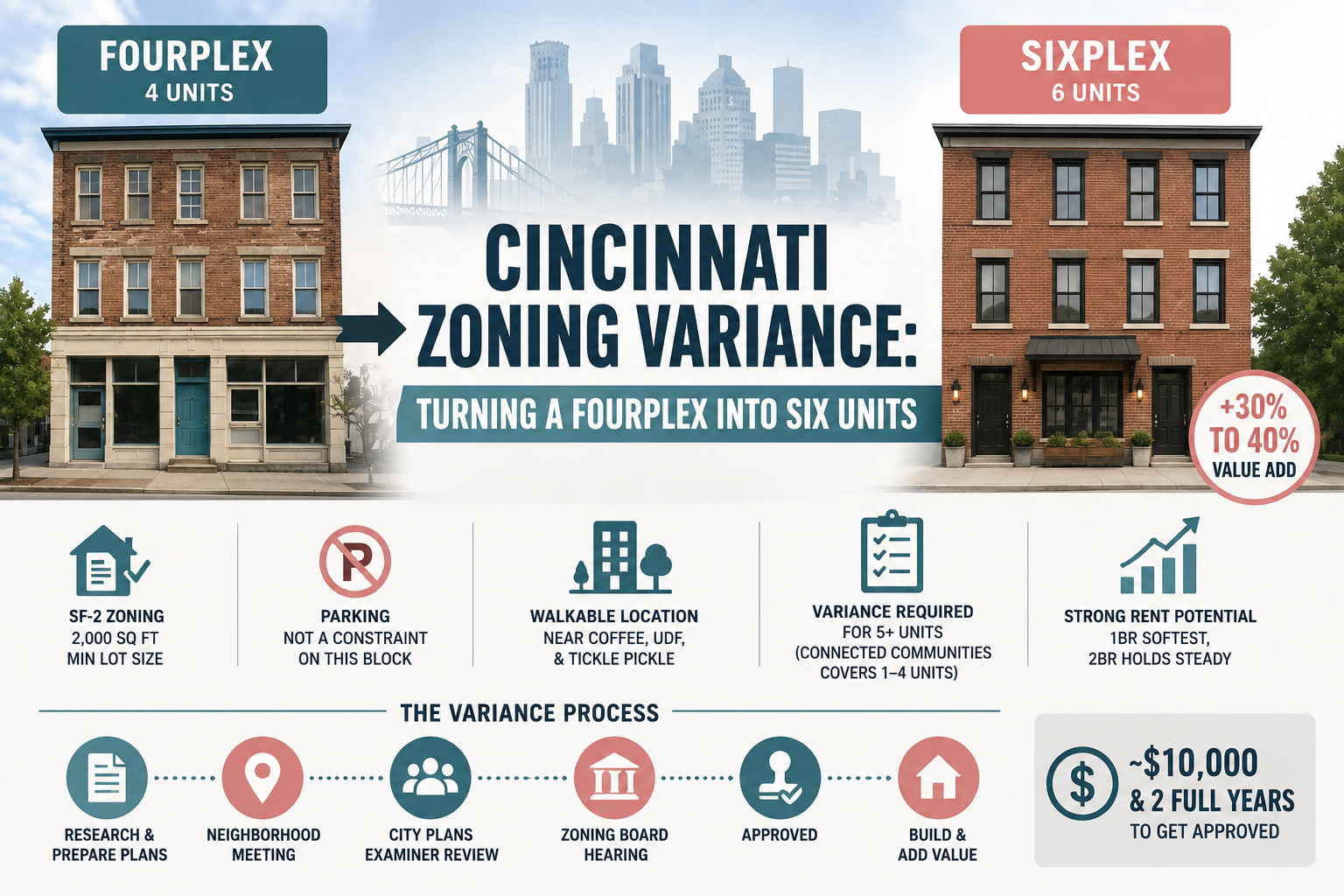
Two years, roughly $10,000 in zoning costs, and about 40 neighbor signatures. What Jeremy Komer's Northside conversion reveals about Cincinnati's variance process and the gap in Connected Communities.
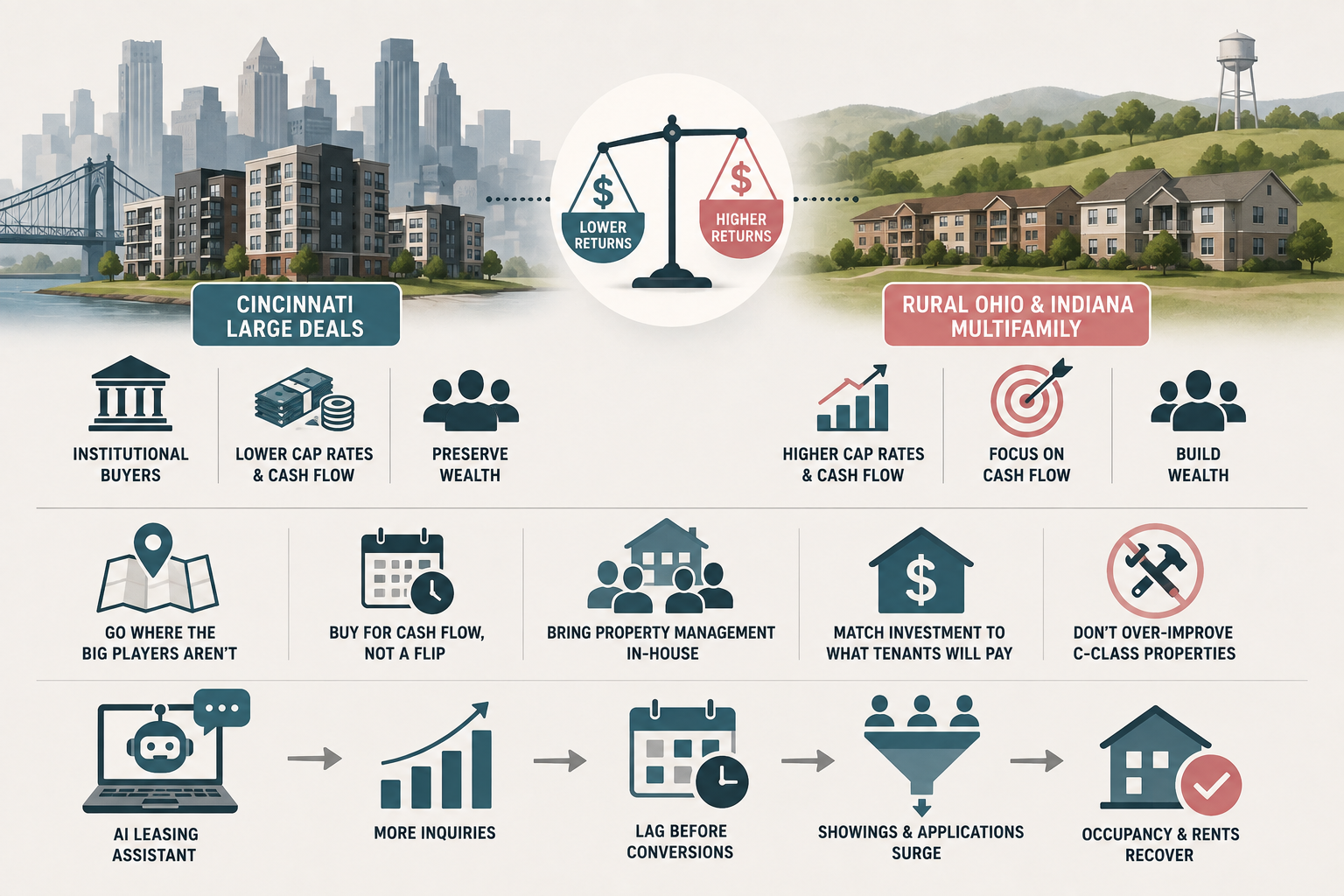
Lee Yoder holds 930 units, and almost none of them are near Cincinnati. Why institutional capital compresses returns above 100 units, and what he found in rural Ohio and Indiana instead.