What 300+ Transactions Reveal About Cincinnati’s Best Investment Strategies
Grant Smith, founding partner of
Sharper Capital Partners, is lending on 65 to 75 active projects at any given time across Greater Cincinnati and Northern Kentucky, roughly $15 million outstanding. Add in the 10 active flips running through his off-market buying company, Rowling Homes, and Smith is watching close to 80 deals move through the pipeline at once, giving him one of the more complete real-time pictures of where Cincinnati real estate investing strategies are actually working.
About This Post
This analysis draws from a conversation with
Grant Smith, founding partner of Sharper Capital Partners and co-owner of Rowling Homes, both active across Greater Cincinnati and Northern Kentucky. Smith's vantage point as a hard money lender tracking roughly 300 transactions, combined with his own flipping activity through Rowling Homes, gives him visibility into deal performance that most single-market investors do not have.
Listen to the full conversation on
Spotify,
Apple Podcasts, and
YouTube. The full episode also covers Smith's background moving from medical device sales into private lending, and more detail on how Rowling Homes sources and dispositions off-market deals.
The Cincy REI Show publishes every Monday. New episodes cover neighborhood-level analysis, local investor strategies, and real deal stories from operators active in Greater Cincinnati.
Mapping Greater Cincinnati: Where Flips Work and Where BRRR Wins
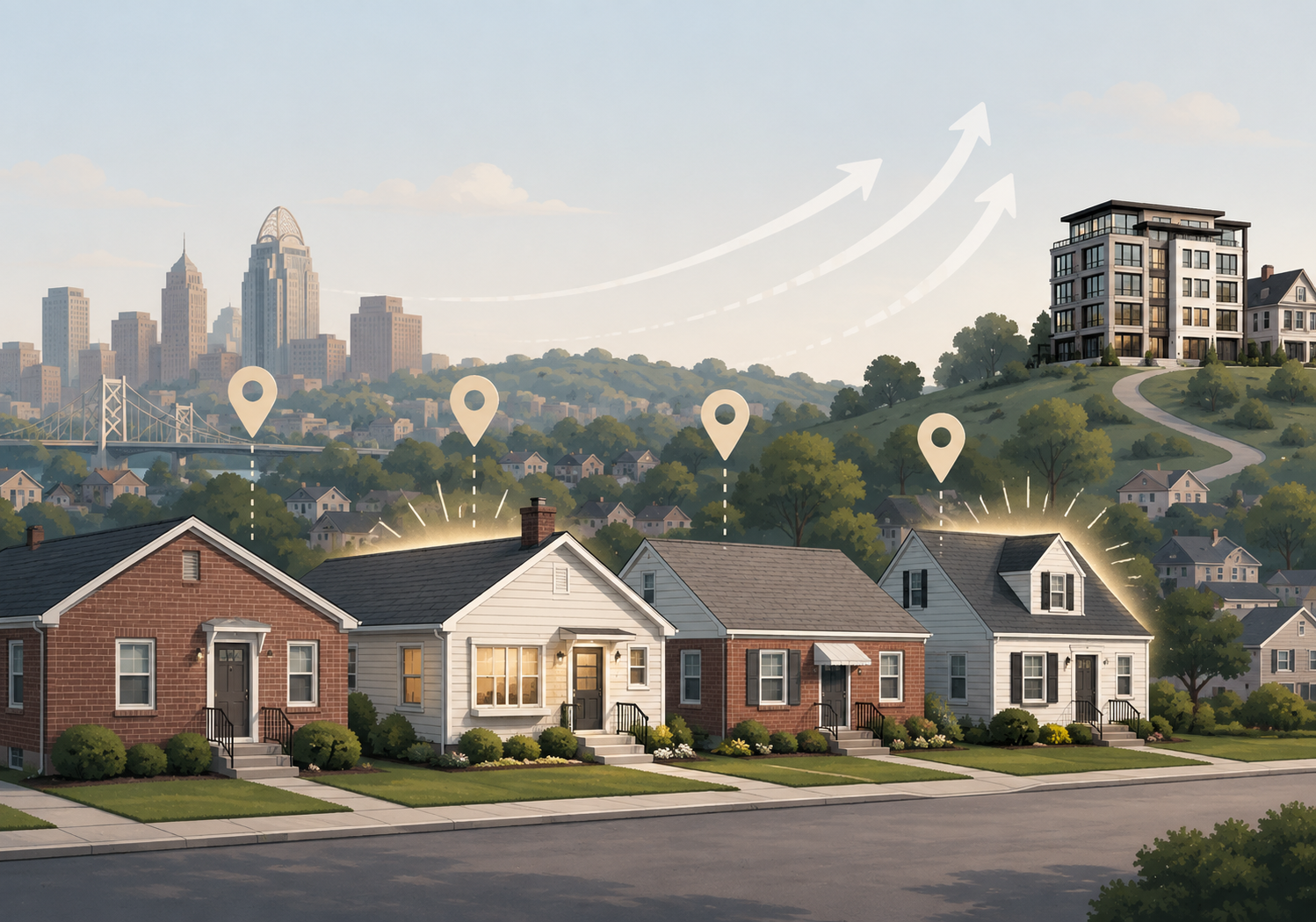
- Middletown skews heavily toward the rental side. About 80% of Smith's loan volume there exits via refinance, meaning investors are running the BRRR model and holding rather than flipping.
- The City of Hamilton runs closer to even, with roughly a 50-50 split between properties that refinance into rentals and properties that sell on market as flips.
- The corridor between I-75 and I-71, stretching from Avondale up through
Kennedy Heights and
Deer Park, is mostly flip activity in Smith's portfolio, as is most territory further east.
- Kennedy Heights and Pleasant Ridge have been the most active flip markets in the last six months specifically. Smith attributes this to appreciation spillover: buyers priced out of Oakley and Pleasant Ridge are moving to Kennedy Heights next, with Deer Park and Silverton picking up overflow demand from the other direction.
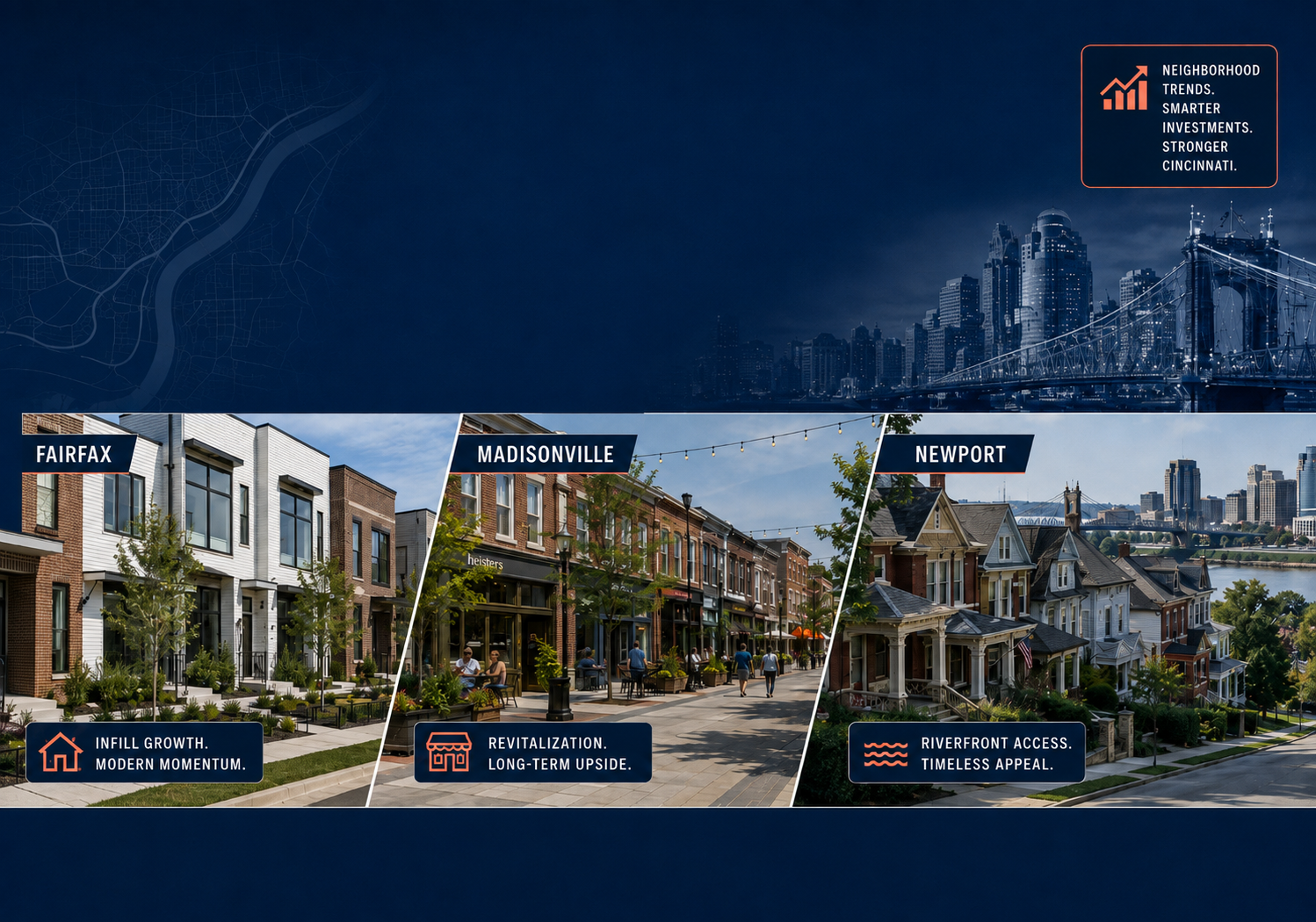
Madisonville, just southeast, has already been through a similar overhaul.
- Cheviot and Westwood on the west side still see a decent amount of flip activity, but once you move further south into
Price Hill, the market is almost entirely rentals until you reach
Delhi, where flips reappear.
- Springfield Township, near Winton Woods, is where Smith is currently lending on Ian's own deal. Originally underwritten to a $225,000 ARV for a BRRR exit, the property may be worth $250,000 to $275,000, which changes the math enough that leaving that equity in a refinance stops making sense compared to selling.
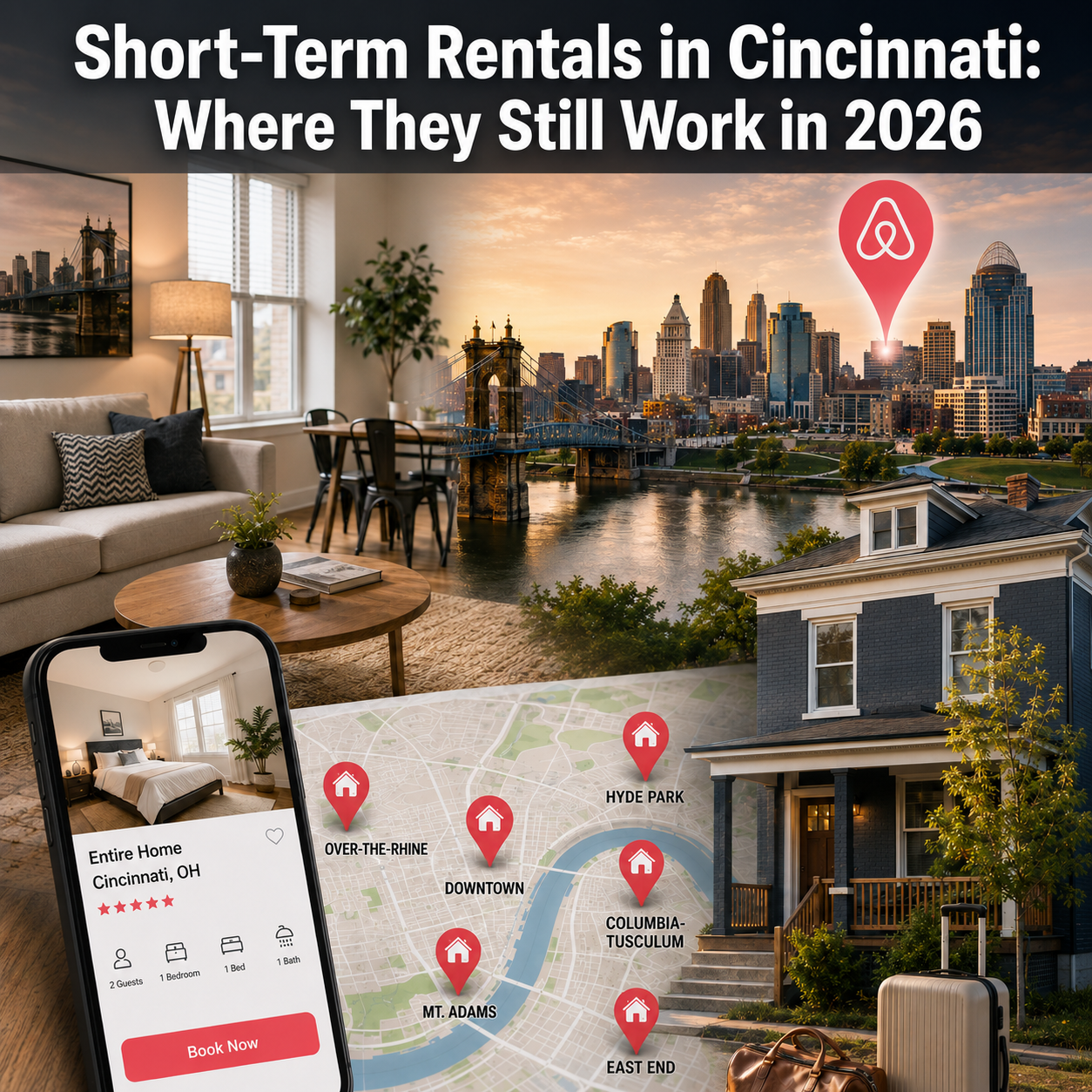
- Hamilton's west side, particularly around the Rossville Historic District, has seen a wave of activity tied to the Spooky Nook Sportsplex development. That includes Airbnb conversions, some of which saturated the short-term rental supply, alongside straightforward flips along the Main Street and High Street corridor.
- Norwood was a hot BRRR and flip market when Smith's portfolio was scaling in 2022, though activity there has cooled since.
- Harrison is a narrow but real opportunity. Smith knows operators clearing $40,000 to $60,000 on individual flips there, but says he knows only a handful of buyers willing to work that market at all.
- Hyde Park still sees flip and renovation activity despite ARVs running $600,000 and higher. At that price point, cost of capital becomes the deciding factor, which favors investors using private money or cash over standard hard money.
- Covedale, further west, sees less lending interest specifically because property values run low enough that a stuck deal leaves little room to hedge the downside from a lender's perspective, even though Smith notes real activity still happens there outside his loan data.
- East Price Hill shows a different pattern entirely: heavily Section 8, dominated by a small number of operators with large portfolios and specific expertise in that model.
- Clermont County properties carry their own diligence risk. Many run on septic systems, and Smith flags this as a common blind spot for investors buying off-market or without inspections.
Why Cincinnati's Sub-$250K Housing Stock Keeps Producing Deals
The larger pattern Smith points to is a nationwide housing shortage that has been building since 2010. Building new affordable housing at scale has not kept pace, so renovating existing 80-to-100-plus-year-old housing stock has become the faster path to adding usable inventory back into the market, even with the added complexity those older homes carry.
What's Working in Cincinnati
Smith frames investor success around four competitive advantages, and in his experience, most successful operators are strong in at least one.
- Deal-finding skill. Some investors simply have a sharper ability to source good deals, whatever channel they use to find them.
- Construction advantage. This does not require doing the labor yourself. It means managing a reliable crew of subcontractors directly, which keeps renovation costs down.
- Capital advantage. Buying with private money or cash instead of hard money, or hard money instead of conventional financing, changes what a deal can support, especially at higher price points like Hyde Park.
- Management advantage. For buy-and-hold investors, operational efficiency after acquisition, from leasing to maintenance, drives the return as much as the purchase price does.
Smith is clear that area matters less than operator expertise matched to that specific area. He describes investors who dominate a single neighborhood, like Harrison or East Price Hill, simply because they know that street and that tenant base better than anyone else competing there.
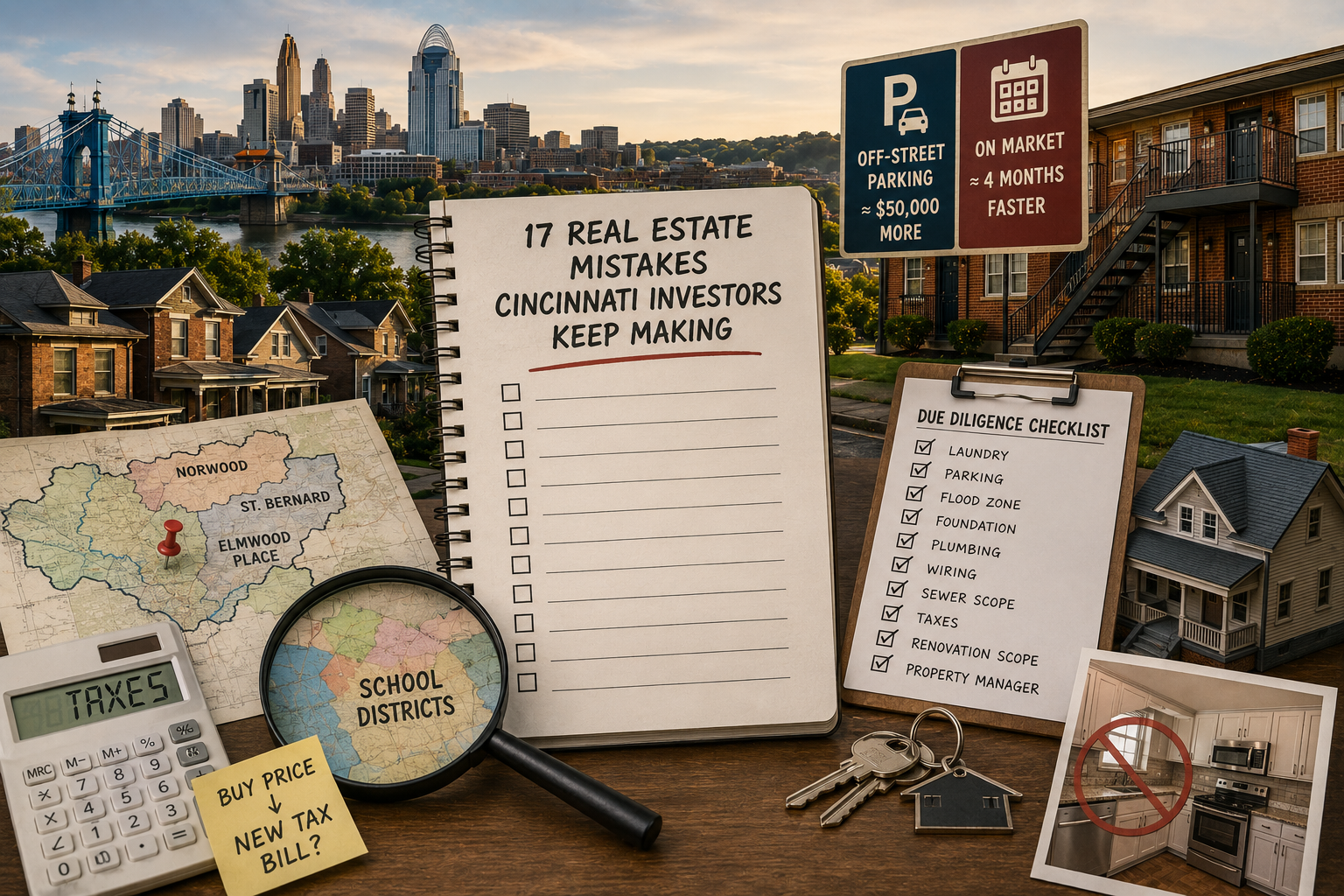
Underwriting is where Smith sees the most consistent mistakes. His rule: underwrite for what you cannot see, not just what is visible during a walkthrough, and calibrate your risk tolerance to the home's actual age. A house built after 1970 carries a different risk profile than one built in 1940 or earlier. Ian's own Northside rehab illustrated this directly. Once the plaster came down, a load-bearing wall that had been rotting for over a century was fully exposed, on a house whose true build date is uncertain because a labor strike destroyed the original property records.
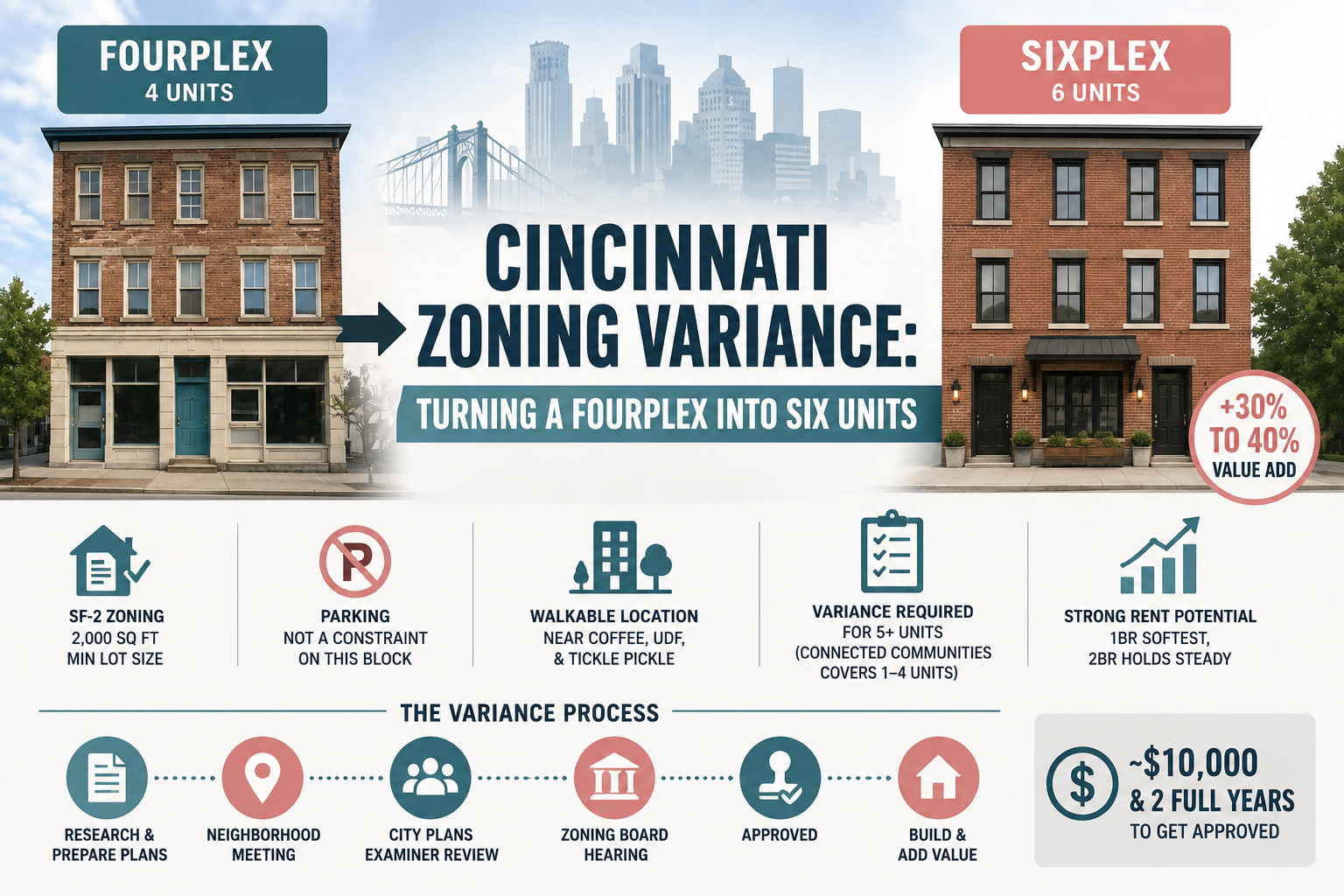
Zoning and code nuance is the other recurring trap. Smith and his partner have twice used Ohio Revised Code provisions to recombine adjacent parcels into a single legal duplex rather than pay to separate shared sewer and water lines under newer plumbing codes, a workaround that required real convincing with city inspectors both times.
Lessons From the Field: When a Zoning Fix Leads to Frozen Pipes
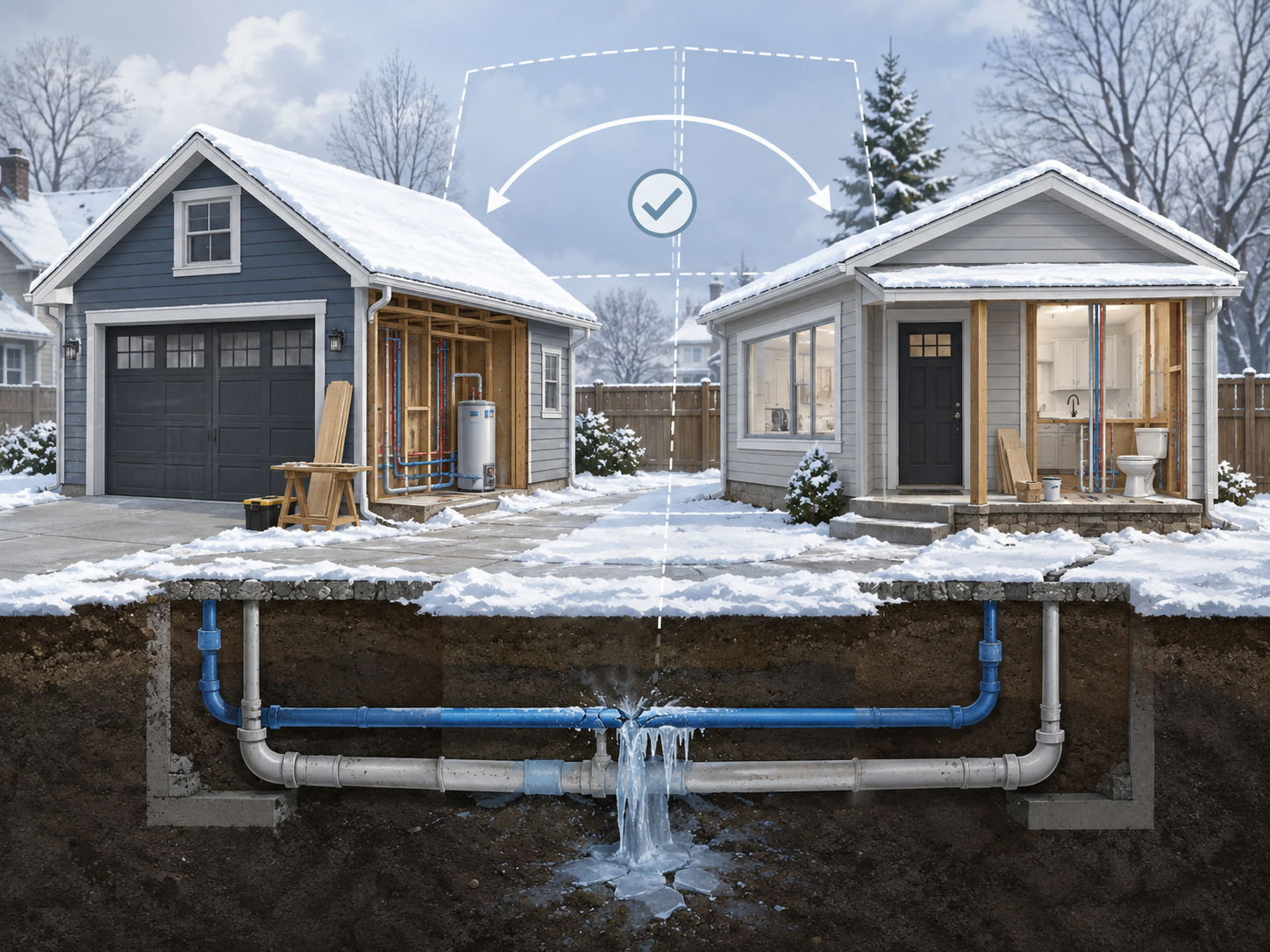
Smith and his Rowling Homes partner picked up a three-parcel property in Butler County built as a garage house and a smaller adjoining house. The two structures shared common sewer and water lines but had separate electric, and zoning allowed the property to be treated either as two separate single-family homes or as a duplex.
- Code changes can override your original business plan mid-renovation. The sewer separation requirement only surfaced once plumbing work was underway, not during due diligence.
- A zoning workaround is not free, even when it works. Recombining the parcels avoided a costly sewer separation, but it added its own time and approval cost.
- A paused renovation carries its own risk. Leaving plumbing incomplete during a cold spell directly caused the frozen pipe failure.
- Multi-parcel and shared-utility properties need extra scrutiny before close. The same Ohio Revised Code issue had already shown up once, in Middletown, and still caught the team again in Hamilton.
- Treat expensive lessons as tuition, not a reason to stop. Smith's framing: investors who quit after one hard deal are walking away from the exact experience that makes the next deal profitable.