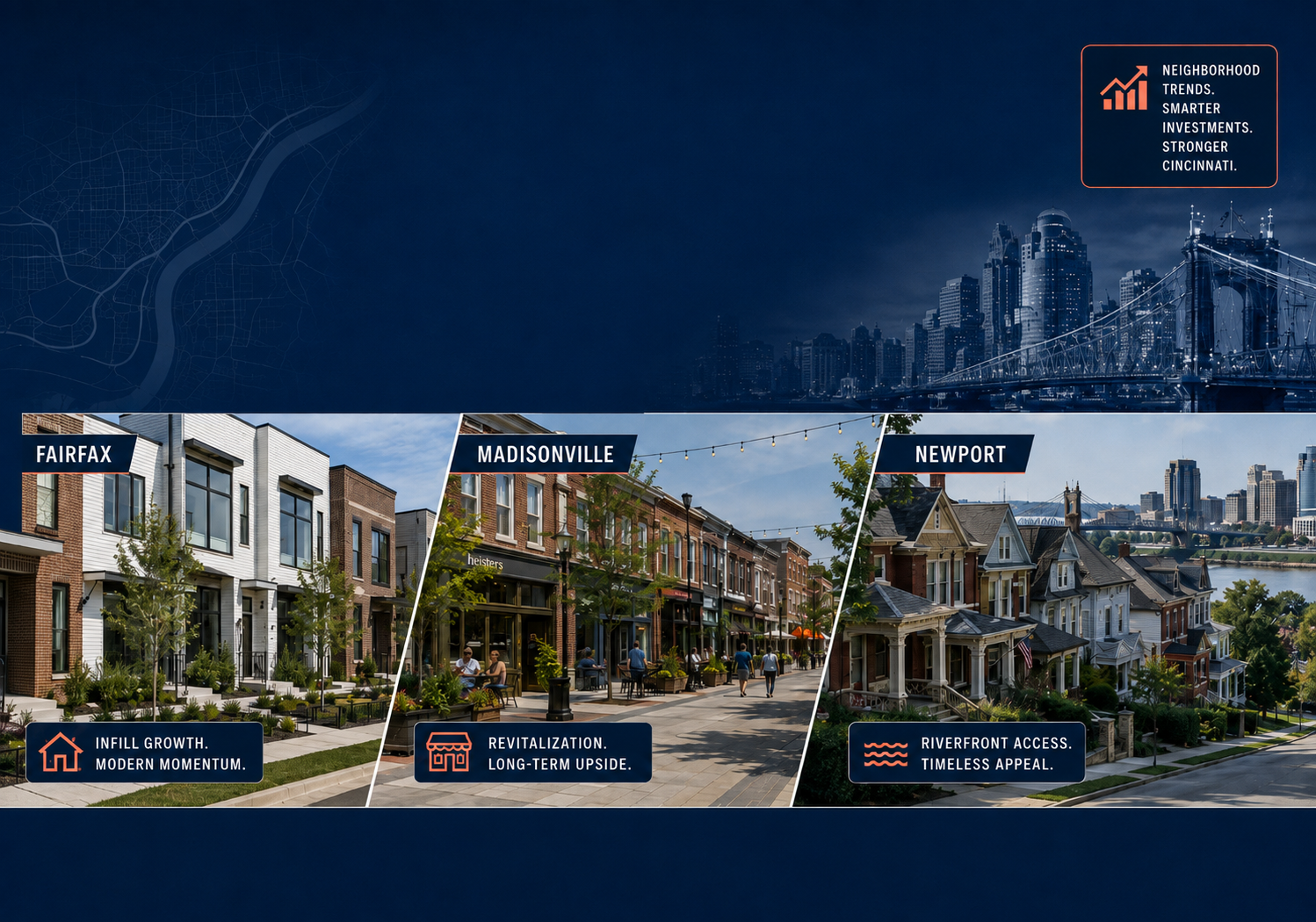
How to Find Cash-Flowing Furnished Rentals in the Cincinnati Market in 2026
How to Find Cash-Flowing Furnished Rentals in the Cincinnati Market in 2026

Cincinnati short-term rental operator Yiwei Cheng breaks down what's working in 2026: which neighborhoods are still viable, what regulations have changed, how to evaluate property specs, and why midterm rentals are reshaping the furnished rental playbook.
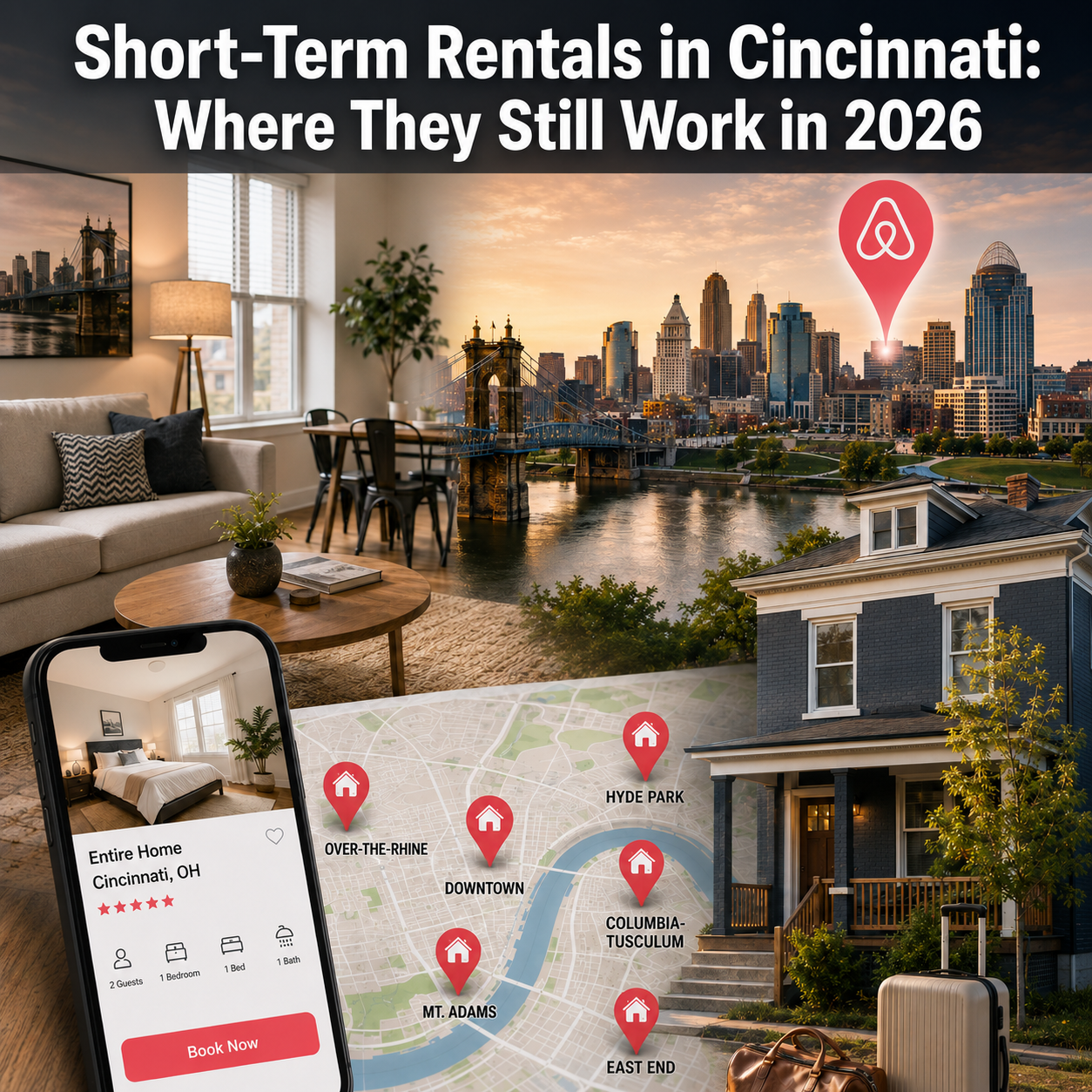
The Cincinnati furnished rental market has about 3,000 active listings right now, per AirDNA. Supply is essentially flat year-over-year, up just 0.4%, after peaking at 3,583 in July 2024. Rates have softened. A one-bedroom in Norwood that commanded $1,700 per month a couple years ago is booking closer to $1,500 today. The townships that drove suburban STR growth over the past four years have largely shut the door.
This is not a catastrophe. It is a market that has repriced.
The Cincy REI Show brought in Yiwei Cheng, owner of Pink Cash Cow Property Management, to walk through what that repricing means for investors evaluating furnished rentals in Greater Cincinnati right now. Yiwei has managed roughly 30 properties across the market and set up over 40 since 2019. She started with arbitrage, survived a multi-year zoning lawsuit in Symmes Township, and has built a portfolio spanning downtown condos to large suburban homes in Mason and Loveland.
Hosts Slocomb Reed and Ian Cruz, CPA run The Cincy REI Show as the definitive on-the-ground resource for Cincinnati real estate investing, featuring local operators, property managers, attorneys, and investors who are actively transacting in the market.
Where Cincinnati Furnished Rentals Are Still Viable After Suburban Bans Reshaped the Map
Regulation is the first filter. Before evaluating a property's bedroom count or amenity profile, investors need to confirm whether short-term rentals are legally allowed at that address.
City of Cincinnati proper: STRs are explicitly permitted under city law. You register, pay lodging taxes, and operate. This is the most stable regulatory environment in the Greater Cincinnati market.
Viable suburban areas (as of early 2026):
- Loveland: STRs allowed, active supply, strong clustering near the bike trail
- City of Mason: permits required but allowed, large-home inventory performs well, especially around the Western & Southern Open tennis tournament
- Mason-adjacent townships: Yiwei has operated a property here for five years with no active regulation against STRs
Areas where the door has closed or is closing:
- Blue Ash: banned
- Terrace Park: banned
- Mariemont: banned
- West Chester Township: moratorium recently passed after hundreds of active listings
- Liberty Township: moratorium recently passed
- Symmes Township: new permits denied; three grandfathered properties remain after a multi-year court win at the First District Court of Appeals
- Newport: technically allows one zoning classification for STRs, but residential availability in that zone is minimal
- Covington: allowed with a stacked licensing requirement covering multiple permits and inspections before the STR license itself
- Bellevue: allowed only as a primary residence with day limits
The pattern is consistent. When a township faces neighbor complaints and lacks the authority to levy taxes like a city, it reaches for zoning mechanisms and variance requirements, then denies all permits. West Chester and Liberty followed the same path Blue Ash and Terrace Park took before them.
For investors already operating in West Chester or Liberty, Yiwei's read is direct: if you were operating prior to the moratorium, the grandfathering argument is worth exploring with a zoning attorney. That is the same legal theory that produced the Symmes Township win.
For midterm rentals (30 days or more), the regulatory question changes entirely. Ohio rental code governs monthly tenancy, and no township can restrict that. Converted inventory in West Chester and Liberty is already flowing toward furnished midterm and long-term rentals as a result.
Higher Supply, Softer Rates, and Township Bans Are Reshaping How Cincinnati Furnished Rental Deals Underwrite
Three structural shifts are hitting the Cincinnati STR market simultaneously in 2026.
1. Supply plateaued after a surge Listings roughly doubled between 2020 and 2023. The market has since plateaued around 3,000 to 3,600 listings. New supply is still trickling in, but the dramatic growth phase is over.
2. Rates have softened from peak years Operators who anchored expectations to 2021 or 2022 revenue are getting reset. A two-bedroom property that generated $4,500 per month may be producing $3,000 or less today. Nightly rates in peak season are compressing. Investors evaluating entry points need to underwrite to current achievable rates, not peak comps.
3. Guest expectations have risen In 2020 and 2021, demand was high enough that substandard properties still booked. Properties on busy roads, with one bathroom, or awkward layouts filled regardless. That is no longer true. Guests are filtering on bathroom count, parking availability, and layout before booking. Properties that don't clear those bars either price to the bottom or sit empty.
What this means for underwriting:
- Pro forma STR revenue against current AirDNA actuals, not 2022 comps
- Model a comparison against long-term rental rates before committing to the STR strategy
- Factor in management intensity for amenities like hot tubs: the revenue upside is real, but so is the labor cost
- Account for regulatory risk in any non-Cincinnati proper location; township ordinances can change within 60 days, as Yiwei witnessed firsthand