

School quality tracks value, with one exception. For three-bedroom-and-up properties, rents and values across Greater Cincinnati follow the State of Ohio's A-through-F school ratings. Cincinnati Public Schools is the exception and has to be judged school by school. Walnut Hills High School ranks as the top public high school in the region. It is a CPS magnet school, and students test in starting in seventh grade. Families buy in Hyde Park to attend Kilgore Elementary, which is also CPS. Suburban districts including Madeira, Mariemont (which covers Fairfax) and Indian Hill round out the top of the list.
Investing in Cincinnati: Neighborhoods, Taxes, and Rent Growth
Cincinnati ranked fifth nationally for home price growth in April 2026, but the number that matters is replacement cost: whole neighborhoods still sell for less than it costs to build. Ian Cruz and Slocomb Reed answer the questions out-of-state investors ask first.
Before the Great Recession, Cincinnati was a steady 2% appreciation market. In April 2026 it ranked fifth in the country for home price growth, at 6.7% year over year. The number that matters more to investors is replacement cost: whole neighborhoods of existing homes still sell for less than it would cost to build them. In a live listener Q&A, the hosts of the Cincy REI Show answered the questions investors new to Greater Cincinnati ask most: where to buy, how to estimate property taxes, what rent growth to underwrite, and where rehab budgets break.
About This Post
This analysis draws from a live listener Q&A with Ian Cruz and Slocomb Reed, co-founders of Three Little Pigs Investment Services. Reed owns Three Little Pigs Property Management in Cincinnati and is a licensed realtor. Cruz runs acquisitions and investor relations from San Jose, California. Between them, they see the market from the ground and from an out-of-state investor's seat.
Listen to the full conversation on Spotify, Apple Podcasts, and YouTube. The full episode also covers entity transfers and how to think about Cincinnati's east side and west side as a first-time buyer.
The Cincy REI Show publishes every Monday. New episodes cover neighborhood-level analysis, local investor strategies, and real deal stories from operators active in Greater Cincinnati.
Where to Buy in Greater Cincinnati as a New Investor
Growth in Cincinnati doesn't follow a compass direction. Good, average and weak pockets sit side by side inside the I-275 loop, and plotted on a map, the weak ones wouldn't make sense. The corridors below have held up over the last decade.
- The Montgomery Road Corridor is the default answer for a five-to-10-year buy-and-hold. It runs from Evanston through Norwood, Pleasant Ridge, Kennedy Heights, Silverton, Deer Park and Kenwood, then out to the suburbs. Values there have risen steadily for a decade. Kennedy Heights read as depressed 10 years ago, and it doesn't anymore. Investors have called the corridor overpriced for years, and it keeps appreciating on solid demand.
- Hyde Park, Oakley and the areas east and northeast of them have strong appreciation potential and rentable multifamily, but little to no positive cash flow. In Reed's words, you can pay California prices for Cincinnati real estate, and you will get California cash flow for it.
- Walnut Hills has seen major redevelopment. Trendy coffee shops, restaurants and bars moved in near Woodburn Avenue, and five years of new construction to the southeast raised the neighborhood's appeal. A newer I-75 interchange makes it quick to reach downtown and the hospitals in Clifton and Corryville.
- The southern Northern Kentucky suburbs near the Ark Encounter have little lodging nearby. Well-run four- and five-bedroom short-term rentals there are performing strongly.
Northside, where Reed is based, makes his point. Pick almost any direction from there and you will find a decent neighborhood with deals that hit your return metrics. Most local investors have strong opinions about which side of town is best, and those opinions mostly track where they happen to have experience.
Why Cincinnati Real Estate Still Trades Below Replacement Cost
The 6.7% home price growth figure needs context. New construction enters the market well above Cincinnati's average home price, and that pulls the headline number up. Existing homes aren't rising 6.7% across the board.
The more useful signal for investors:
- Existing homes sell below replacement cost. If a house sells for $250,000 and would cost $300,000 to build, nobody builds another one, so that inventory is capped.
- Model 3% appreciation, loosely. It is a reasonable number for a pro forma. Reed warns that the more precise a forecast gets, the more certain it is to be wrong, and actual results depend on the submarket.
- Affordability drives migration. A Bank of America study tied migration to affordability, which favors the Midwest broadly. After COVID, remote workers earning New York and Los Angeles salaries started choosing Ohio and Kentucky.
- Cincinnati has never had a Sun Belt cycle. It fell less than the Sun Belt in the Great Recession, recovered more slowly, and has posted positive appreciation every year since COVID, cooling since its peak.

What's Working in Cincinnati
How to estimate property taxes on a Cincinnati deal:
- Use the auditor's calculator. On hamiltoncountyauditor.org, pull up the parcel, enter your purchase price and read the projected tax liability. Bell Moving and Storage publishes a Hamilton County property tax rate guide that walks through the math.
- Know the reappraisal calendar. Hamilton County does a full reappraisal with physical inspection every six years and an update every three years in between. The last full reappraisal was in 2023, so the next one is 2029. Hamilton County posts its 2026 update values in December. Butler County's 2026 values are already published.
- Watch the millage rate as well as the valuation. Some levies are fixed budgets, so a 30% jump in assessed value does not mean a 30% jump in taxes. Butler County Auditor Nancy Nix regularly posts on Facebook about offsets that limit the actual increase. Follow both county auditors.
- Expect your purchase price to become the new value. If you buy above the current assessed value, plan for the next reassessment to catch up to it.
- A low basis can stay low. Reassessments without a recorded sale usually apply a percentage change across similar parcels in the same census tract. After a BRRR with a cash-out refinance, your assessed value can stay below market for years.
For entity transfers, often called a drop and swap, look into Ohio House Bill 126 before making the move.
Short-term rentals: what drives demand.
- Bedroom count wins. Four- and five-bedroom properties outperform one- to three-bedroom units for vacation and entertainment stays. Bathrooms have to match, and a five-bedroom sleeping 10 needs more than one and a half baths.
- Medical stays are year-round demand. Clifton and Corryville hold Cincinnati Children's, UC Medical Center, the VA hospital, Jewish Hospital and Good Samaritan. Outpatient surgery patients often need a place to stay overnight and come back for follow-ups.
- Attractions drive the calendar. Kings Island in Mason, Great Wolf Lodge, the downtown stadiums, the Duke Energy Convention Center and the Cincinnati Zoo all draw visitors. The Ark Encounter and the Creation Museum in Northern Kentucky are major draws that out-of-town investors often overlook.
- Summer carries the year. The local rule is that you make your money in summer and try to break even in the off-season.
- Underwrite a fallback. A listener brought a Walnut Hills triplex set up as a short-term rental, with a five-bedroom main unit, a two-bedroom attic unit, basement units and three kitchens. The location near the hospitals and the zoo is strong. At the asking price, though, it would not work as a long-term rental. Before buying any short-term rental, confirm it at least breaks even as a long-term, mid-term or rent-by-the-room property.
Where BRRR budgets break. On a supposedly light-to-medium rehab, the blowouts are inside the walls and underground. The real mistake is calling an older house a light rehab in the first place.
- Structural issues are usually worse than they looked, and there are often more of them than were found.
- Sewer lines in older neighborhoods are often clay. Have them scoped before closing.
- Opened walls in homes from the 1940s and earlier, and through the Vietnam War era, hide pipe, wiring and ductwork problems you can't price until you see them.
- Floor plan changes raise costs. Moving plumbing or electrical fixtures, or changing the layout, will cost more than what is visible.
Most of Cincinnati's housing stock was built before 1978. Before you commit to a budget, establish the condition of the foundation and sewer lines and whether you will be opening walls.
Lessons From the Field: When Cincinnati Rents Went Backward
In July 2022, Cincinnati rents rose 39% year over year, the fastest pace in the country. For some trailing 12-month period in every year since, Cincinnati has ranked first in the nation for rent growth. Some of those headlines described single-family rents only. Local apartment owners saw nothing close to the 15%-plus figures that made the news.
Starting in August 2024, the rental market went flat. In parts of the Three Little Pigs portfolio, and in some of the third-party properties Reed's company manages, rents fell outright. The softness lasted through the end of 2025.
The explanation Reed and Cruz share with Robbie Hendricks of Venture Real Estate Company: three or four years of rent growth got priced into one or two years leading into 2024, and the market spent the next stretch absorbing it.
Rents have since rebounded. The experience changed how Three Little Pigs underwrites. Their deals are built to hit their returns from the purchase discount and from bringing a property up to current market rents. Rent growth is treated as a bonus.
- Flat is not the worst case. Build in scenarios where rents fall for a stretch.
- Your returns should survive five years of flat values and rents. Growth should add upside and should not be what makes the deal work.
- Separate single-family and multifamily data. The two moved very differently in Cincinnati over the last few years.
- Underwrite by submarket. New supply on the east side and zero new supply in the northwest produce different rent forecasts inside the same metro.
- Price renewals against competing inventory. If comparable units are sitting vacant nearby, a rent increase can cost you the tenant.

$110,000 from a wholesaler, $21,000 of work, a $200,000 appraisal. Ben Austin on the West Side streets he won't cross, and why he buys every property with two exits so he can decide later whether to flip or hold.

Venture has gone full cycle 32 times without missing pro forma. This year it offered rent concessions for the first time in 13 years. Robbie Hendricks on new supply, an 18-month soft stretch, and why every underwrite now assumes 0% rent growth.

How to Find Cash-Flowing Furnished Rentals in the Cincinnati Market in 2026

Contingent offers are back for the first time in five years and showings have slowed. Rebecca Sequeira, who has made money on every flip since 2016, on what she still buys, what she puts in every house, and when she cuts the price.

Self-manage if you're trying to save money. Hire out if you're trying to save time. Bri Leichliter built a Cincinnati property management company, sold it, and still owns five units — here's the math behind that split.

Houses that sold for $30,000 in Madisonville now trade at $125,000 to $150,000 still needing full renovations. A property manager with 700-plus units on where the next wave is going, and why the 12-unit building is the target.

Suburban office trades near a 10 cap while retail and industrial compress to six and seven. Tanh Truong on why half-empty office in Blue Ash is the one Cincinnati asset class where basis is still negotiable.
$1,900 in Winton Woods, $1,643 in Oak Hills, same bedroom count. What a 100-plus unit portfolio across nine districts reveals about which Cincinnati houses should stay rentals and which should be sold.

The renovation ran 2.5x over budget and produced 3x the rent bump. John Casmon on the Boone County data behind an 81-unit Florence buy, and the census-tract tool he uses instead of radius reports.

Cincinnati built almost no new apartments for 24 years. Gil Richards on the abatement math, which buildings qualify for historic credits, and why downtown is formally classified as Difficult to Develop.
Section 8 in Cincinnati: Why CMHA and Butler Metro Produce Different Returns

A rate cap that cost $30,000 renewed at $1.3 million. Joe Fairless on the first two losing sales in Ashcroft Capital's history and why Greater Cincinnati never had the spread to lose.

A $180,000 all-in flip selling for just under $270,000, with no cash out of pocket. Slocomb Reed breaks down four Greater Cincinnati deals, and why none of them depended on the market going up.

West Newport houses sold for $10,000 in 2016 and now go for $80,000 needing full rehabs. Garth Kukla on why proximity to a walkable corridor predicts Northern Kentucky value better than which city a property sits in.

The Hamilton County timeline from a missed rent payment to a set-out; and why TLP's Izzy Ong treats every case that reaches a magistrate as a failure of the process, not a win.

A $450,000 Loveland listing sold for $570,000 cash. Ethan Bishop on which Greater Cincinnati submarkets are drawing multiple offers, which have quietly cooled, and the two-generation demand pattern driving both.

Off-street parking, galvanized plumbing, school district lines that don't follow township borders, and a tax bill that can quadruple at closing. The Cincinnati-specific due diligence most investors skip.
JD Schmerge brokers Greater Cincinnati multifamily and operates a 7-unit in South Covington. Why tenants aren't paying for upgraded finishes, why insurance and taxes now outweigh interest rates, and how much to renovate before selling.
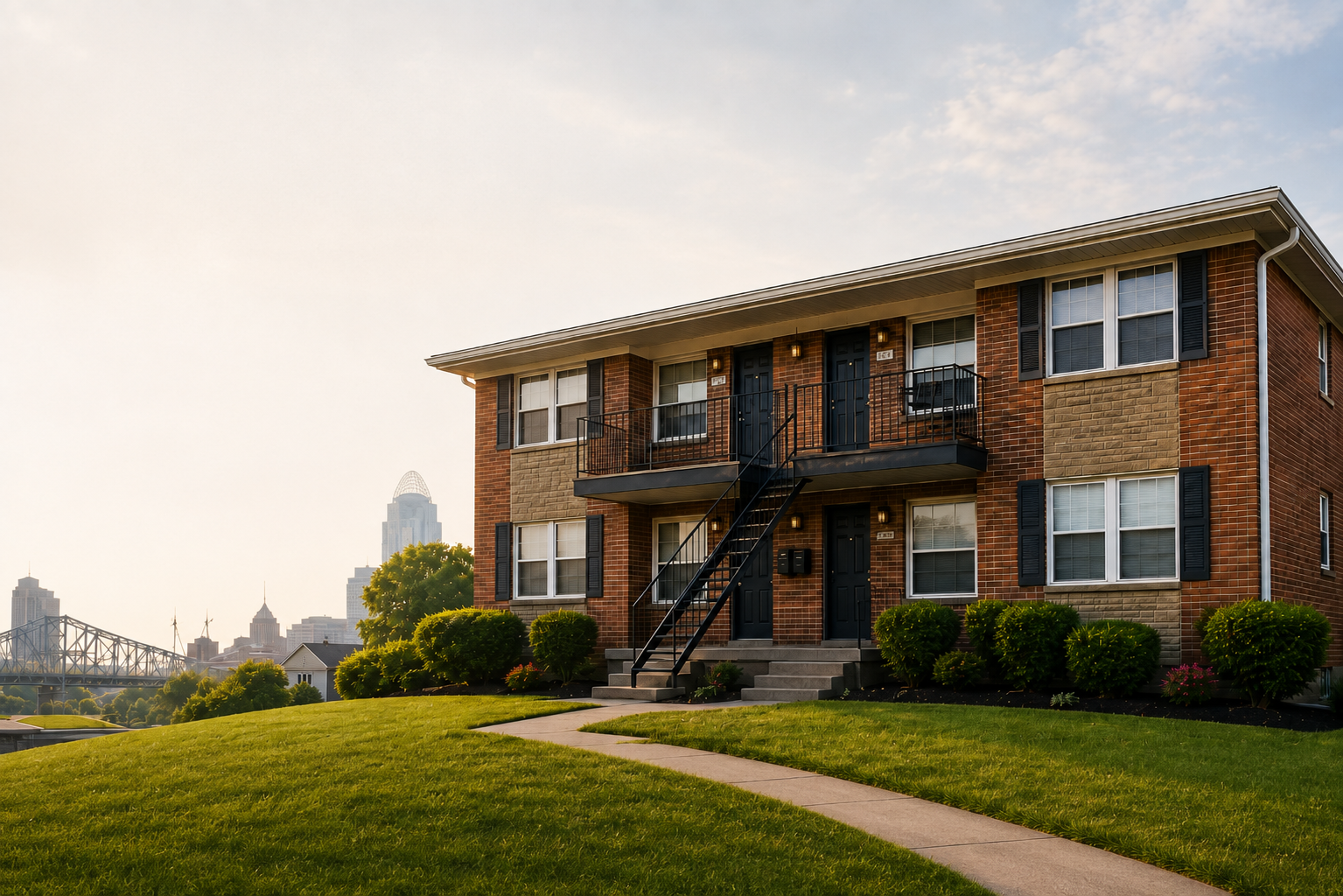
Bret Halsey went from pro soccer to 70-plus units in under three years, 14 of them fourplexes. How Cincinnati's repeating 1960s floor plans make the city's most common multifamily building the easiest one to underwrite.
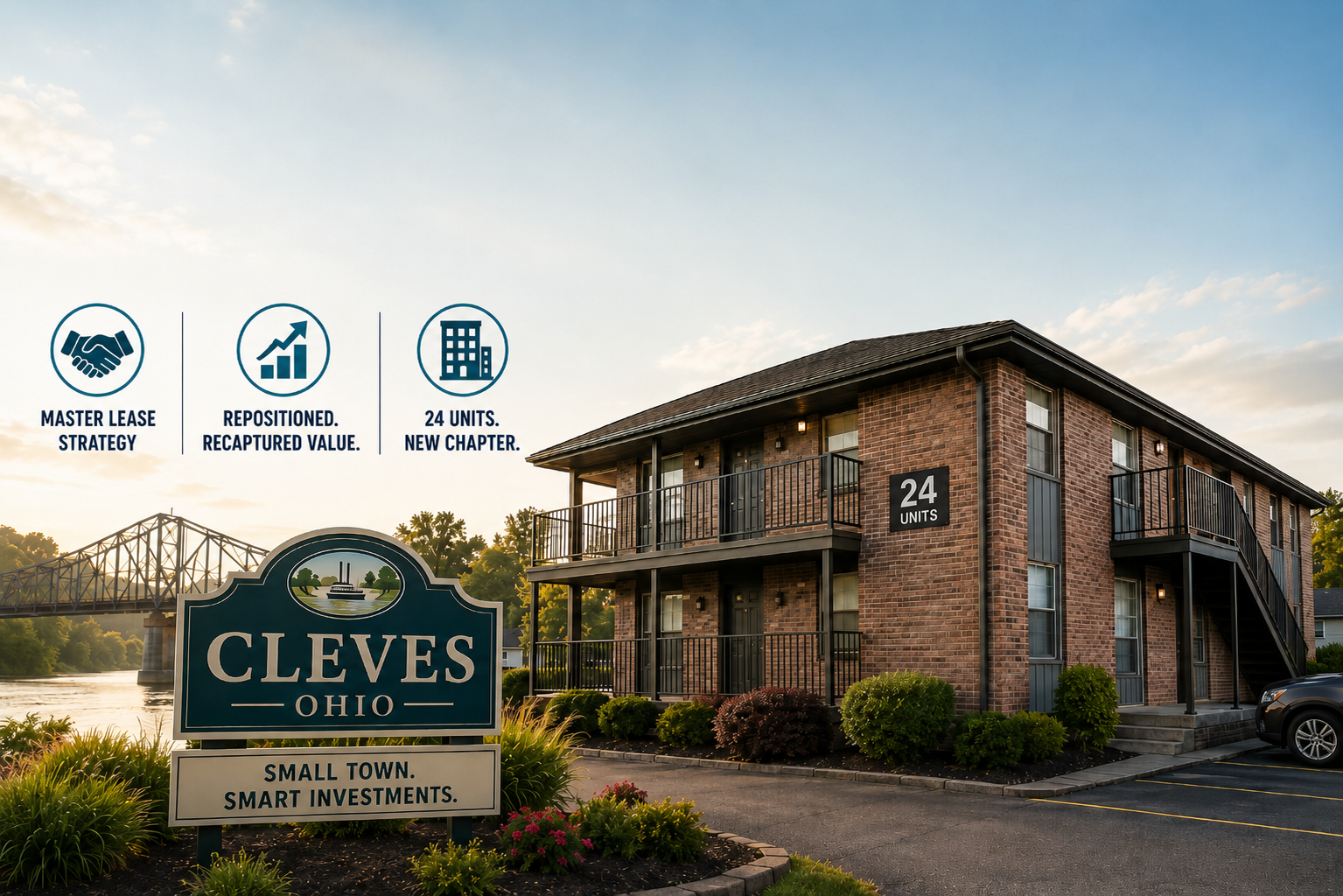
Nine of 24 units were paying rent. Slocomb Reed took over management three months before closing, cleared the building, and proved higher rents; all before owning a share of it.

Reading, Ohio: Cincinnati's Unlikely Development Hotspot
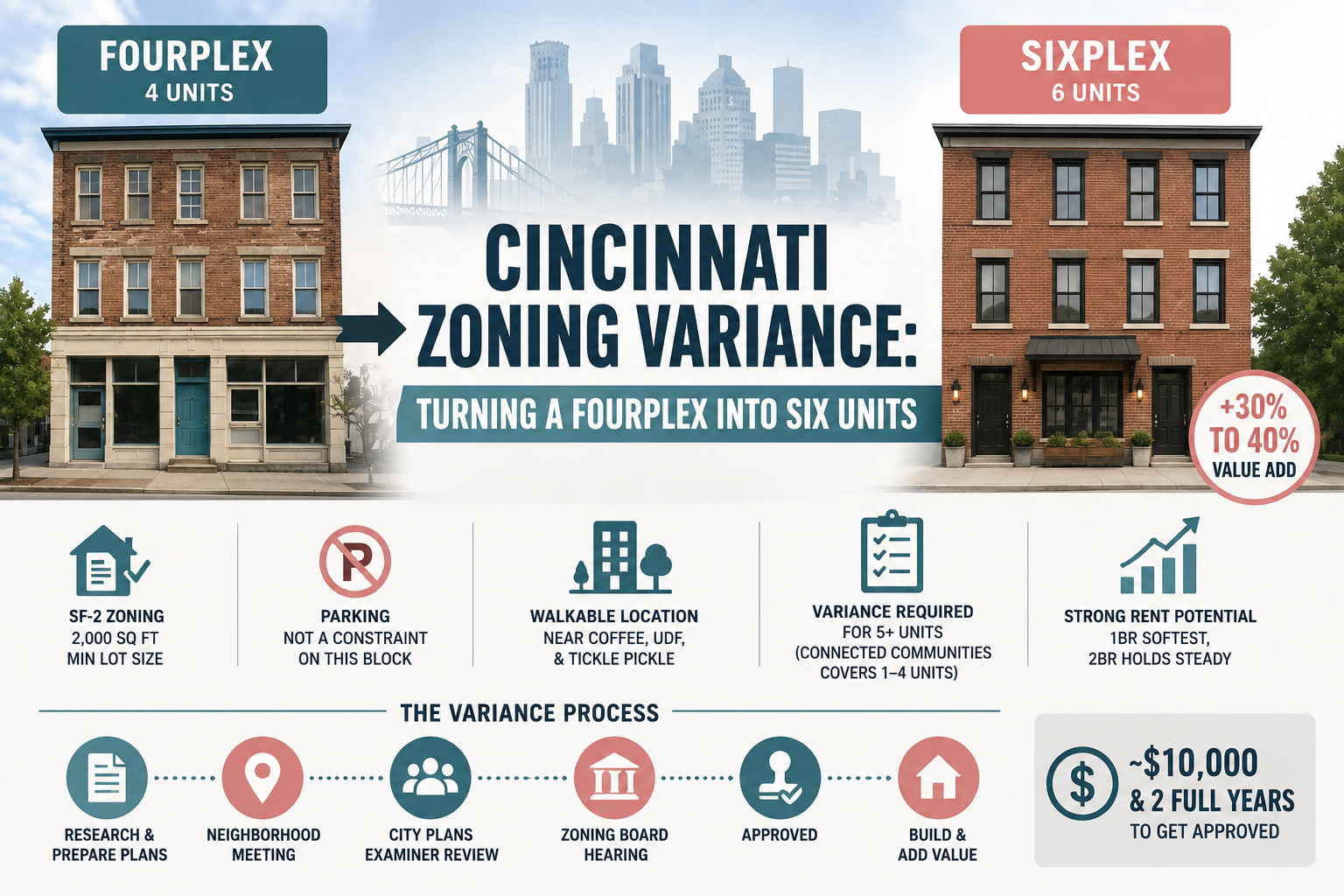
Two years, roughly $10,000 in zoning costs, and about 40 neighbor signatures. What Jeremy Komer's Northside conversion reveals about Cincinnati's variance process and the gap in Connected Communities.
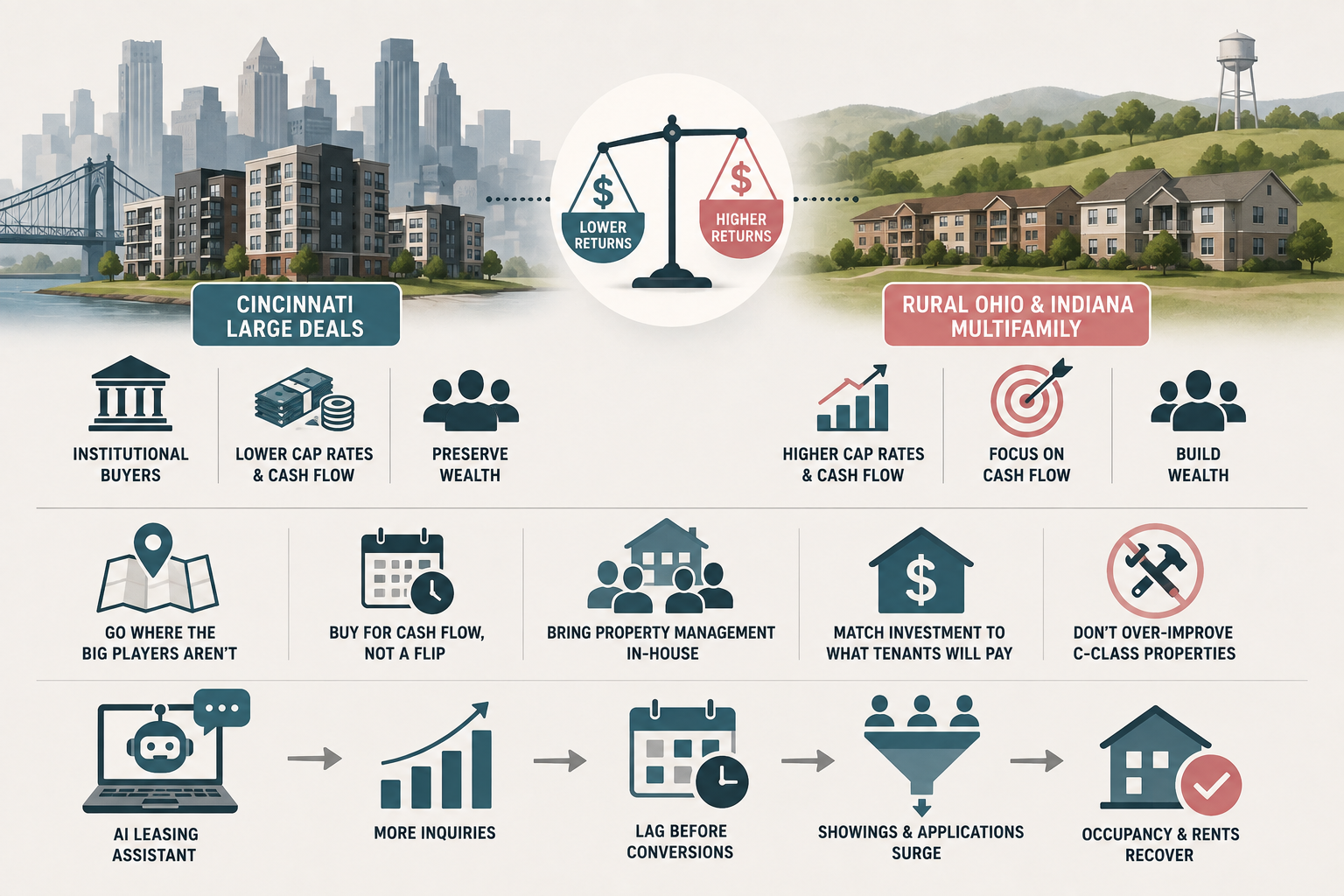
Lee Yoder holds 930 units, and almost none of them are near Cincinnati. Why institutional capital compresses returns above 100 units, and what he found in rural Ohio and Indiana instead.

How Ian Cruz and Slocomb Reed used four defined roles to scale from an 8-unit Northside deal to 73 units in under two years — plus what Cincinnati's rental data shows right now.

Hedge funds are gone, rates broke the buy-and-hold math, and Cincinnati's off-market deal flow now turns block by block. Where the deals are and what buyers inherit when they sign.
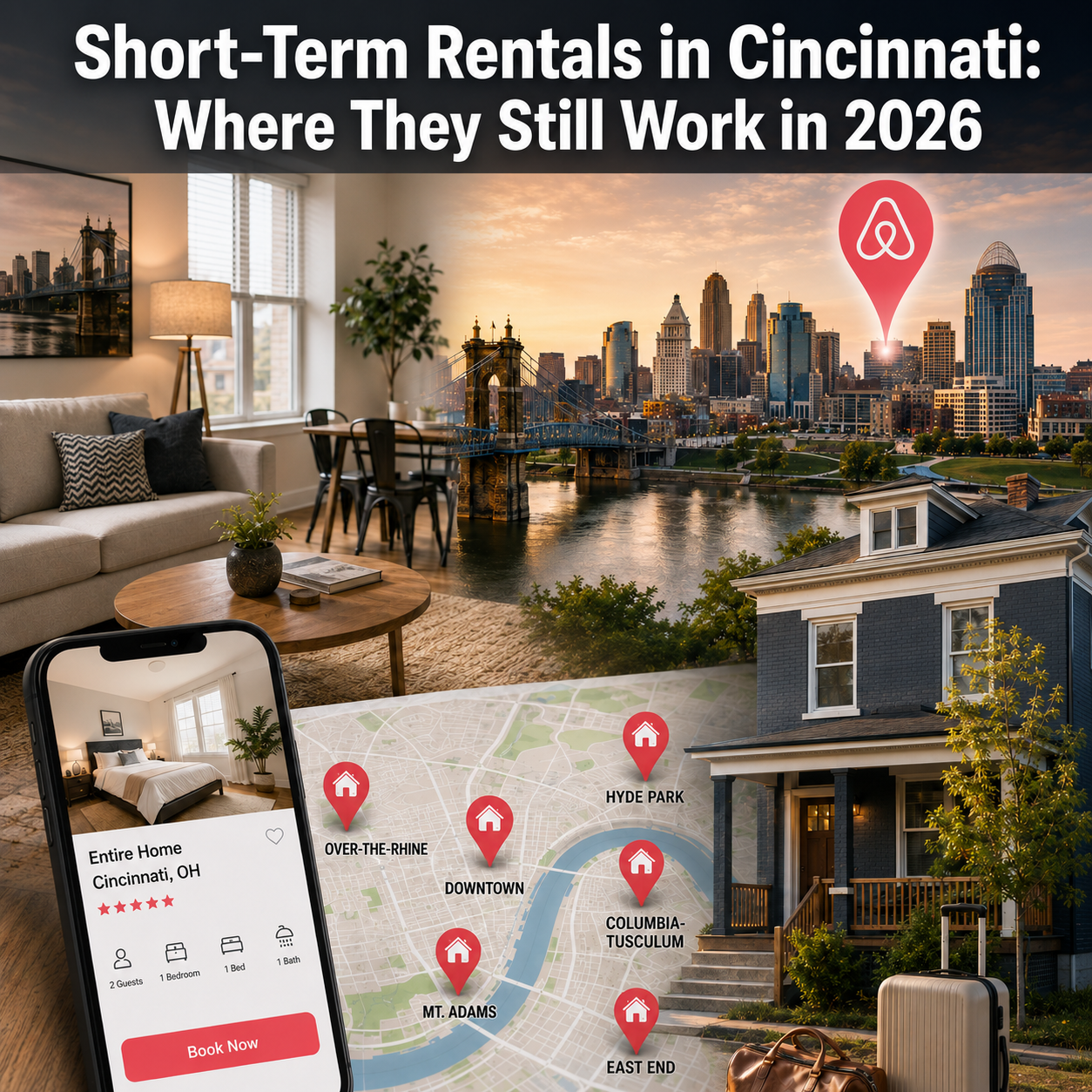
A neighborhood-by-neighborhood map of where short-term rentals are legal in Greater Cincinnati; and what the flattening market means for the ones that are.
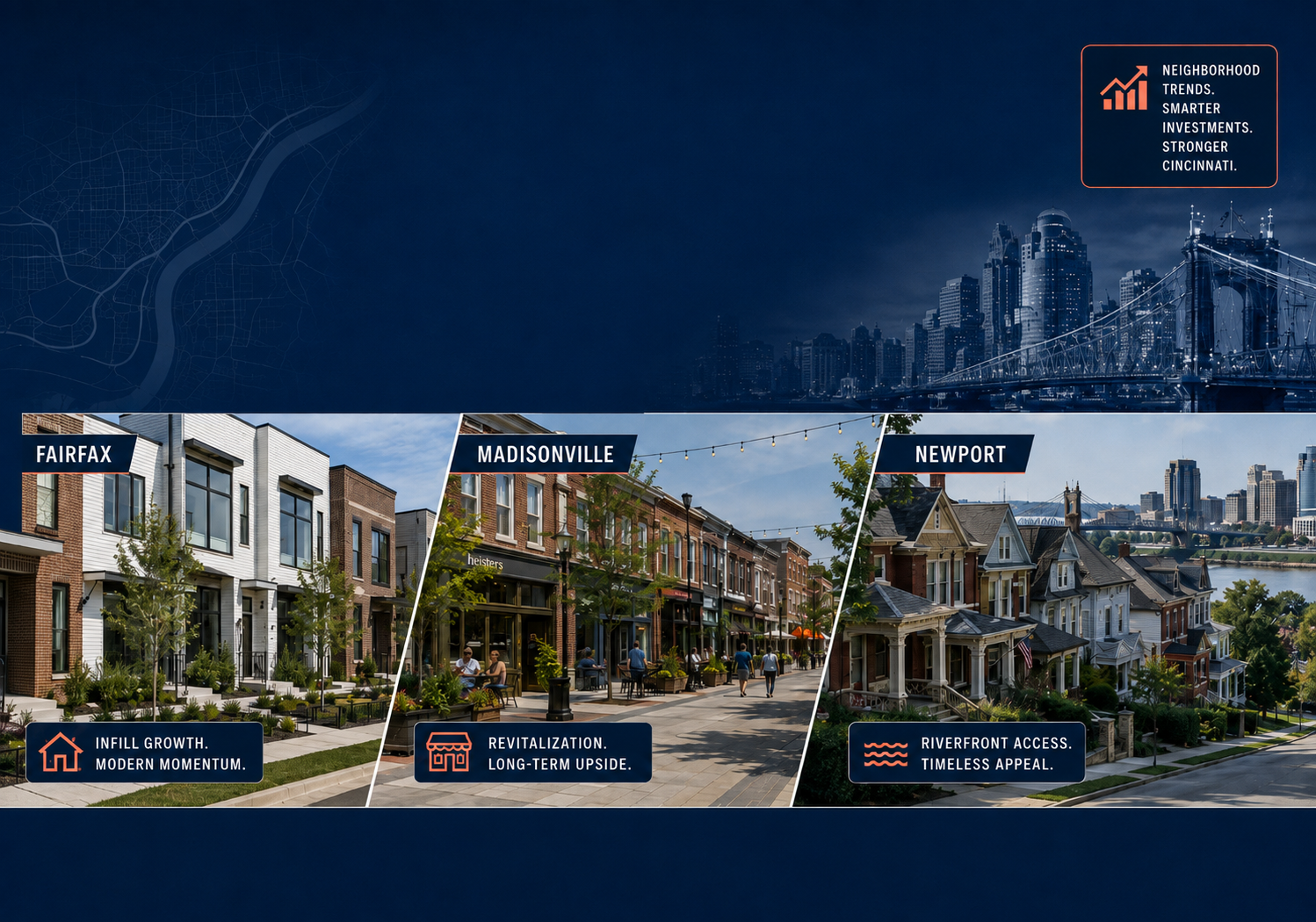
Where Cincinnati Investors Are Still Finding Margin

What 300+ Transactions Reveal About Cincinnati’s Best Investment Strategies

Madisonville, Fairfax, and Newport: Where Cincinnati Investors Are Finding Margin in 2026

Flip vs. BRRR: Which Cincinnati Neighborhoods Favor Which Strategy