
Emerging Cincinnati Neighborhoods: Camp Washington to Covington
Camp Washington went from $20,000 houses to $200,000 houses. Madisonville tripled in four years. Tony Ferrari picked both before the market did — and he has already named the next two.

In 2016, houses in Camp Washington sold for $20,000 to $50,000. Now they sell for $150,000 to $200,000. Tony Ferrari opened his first coffee shop there in 2019, when locals told him it would close in two months. He opened his second in Madisonville in 2022, where values have since gone from about $150,000 to $400,000 to $500,000. He and his brother pick neighborhoods before the market does, and he has already named the next two.
About This Post
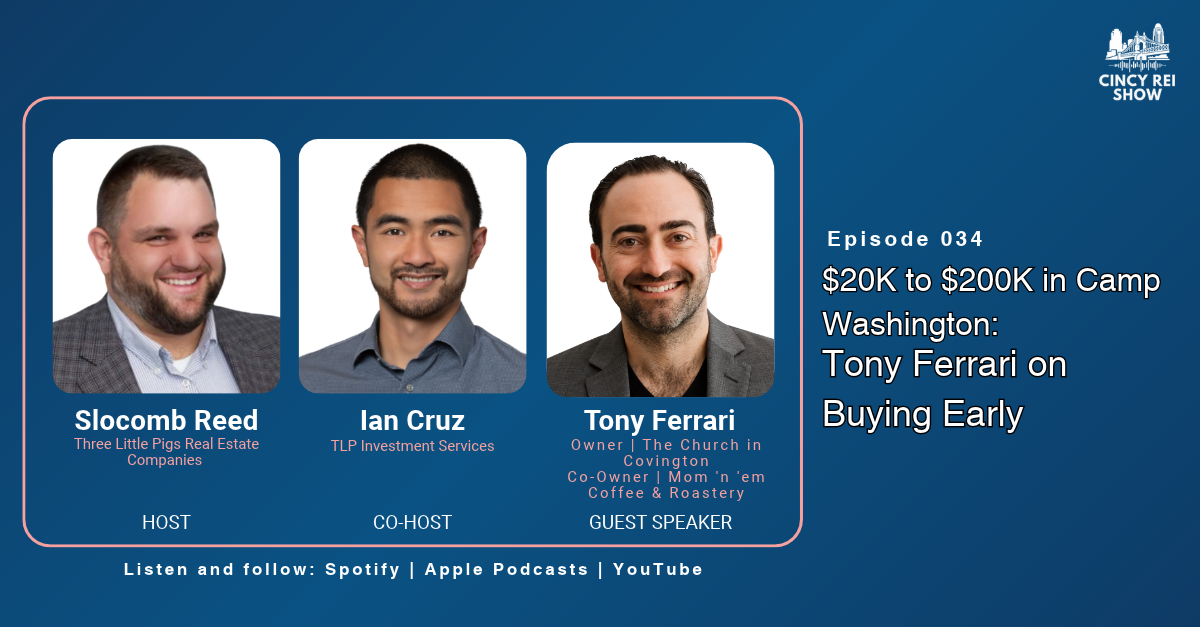
This analysis draws from a conversation with Tony Ferrari, co-owner of Mom 'n 'em Coffee and Roastery. He and his brother own and manage about 18 rental doors and several commercial buildings around Greater Cincinnati. He also owns The Church, a converted church in Covington that runs as a short-term rental and event venue. Ferrari grew up in North Avondale, trained as a chef and lived in San Francisco before moving back. He buys in neighborhoods where he plans to live and work.
Listen to the full conversation on Spotify, Apple Podcasts, and YouTube. The full episode also covers his favorite Cincinnati restaurants and how he and his brother first scouted neighborhoods on trips back from San Francisco.
The Cincy REI Show publishes every Monday. New episodes cover neighborhood-level analysis, local investor strategies, and real deal stories from operators active in Greater Cincinnati.
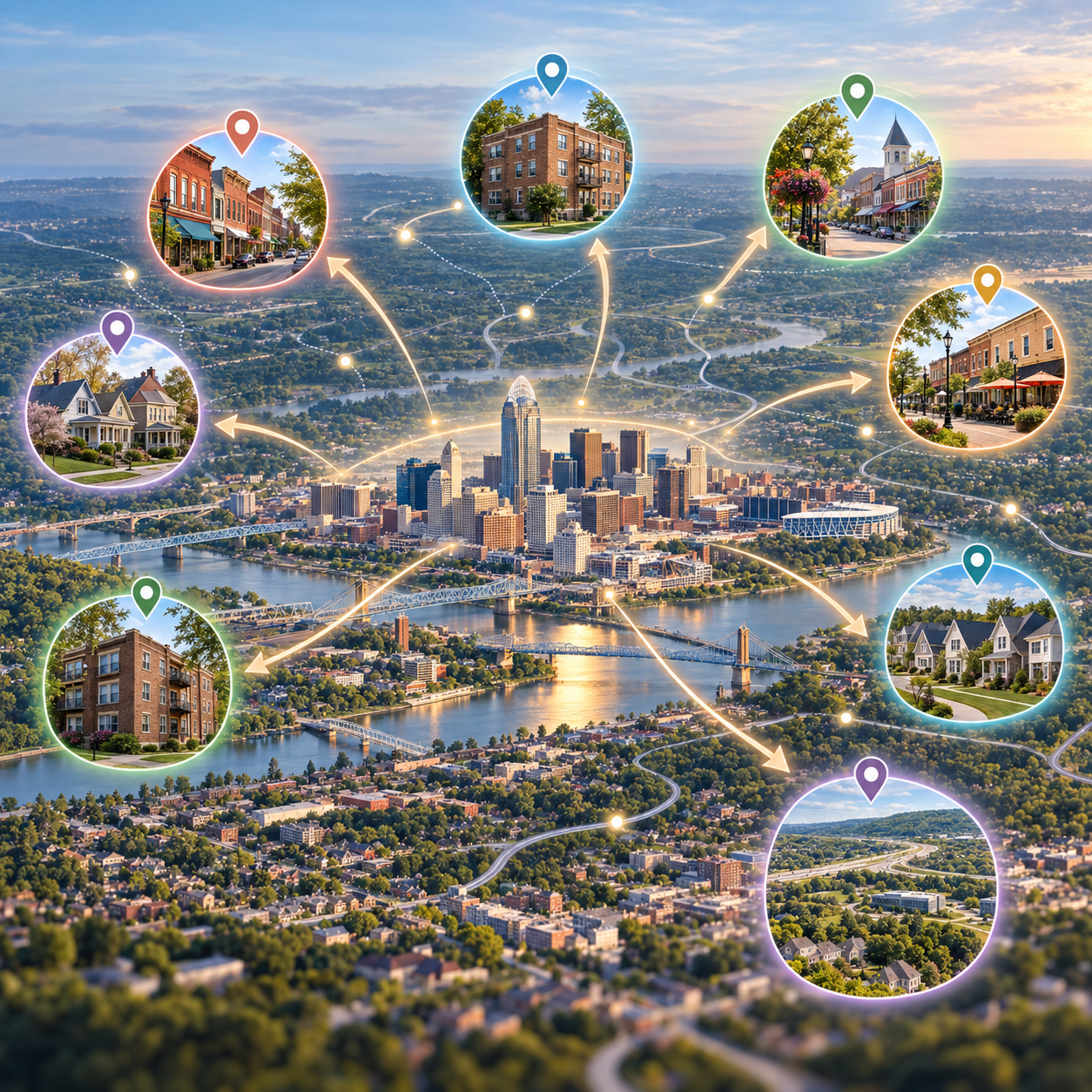
Camp Washington, Madisonville, Westwood: Where Early Buyers Got In
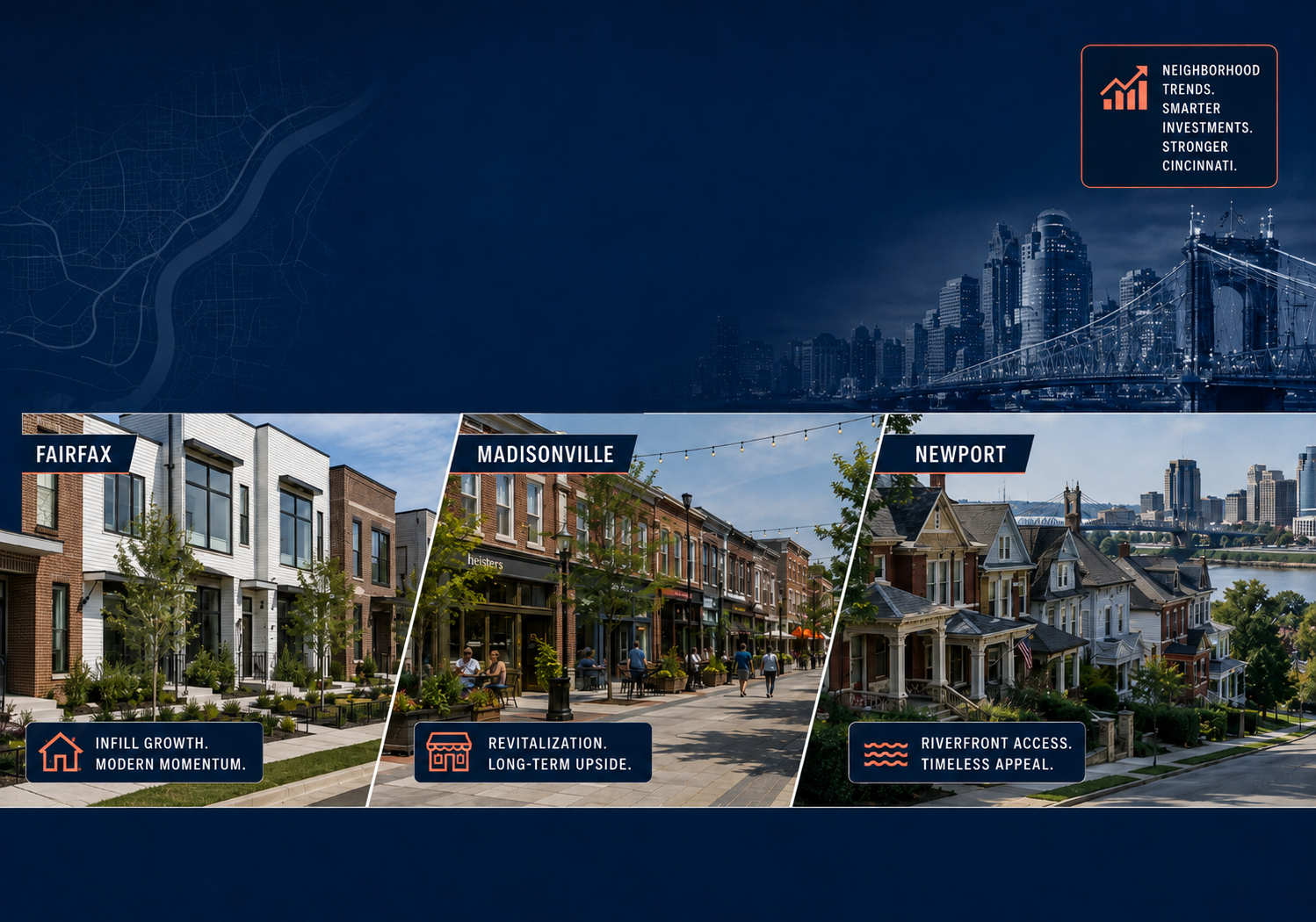
- Camp Washington houses sold for $20,000 to $50,000 in 2016 through 2018. Today they sell for $150,000 to $200,000. It is still an entry-level residential neighborhood with rental opportunities, and vacant lots are now being developed. Host Slocomb Reed says redevelopment north of Hopple Street is about 10 years ahead of the area south of it, and Ferrari agrees. The American Sign Museum and Neon Works anchor the north end. The neighborhood sits by the Hopple Street exit on I-75, across from UC and the Clifton hospitals, near the zoo, and a straight shot downtown on Spring Grove Avenue.
- Madisonville went from about $150,000 to $400,000 to $500,000 during the four years Mom 'n 'em has been on Whetsel Avenue. Commuters from Indian Hill, Loveland, Blue Ash and Kenwood drive through it, and I-71 feeds straight onto Red Bank Road. Ferrari chose a standalone building with a yard, off the new-apartment corridor on Madison Road.
- Westwood's Montana-Harrison-Boudinot triangle is where Ferrari just bought his home. He paid $300,000 for a house he estimates would sell for $700,000 on the east side. Much of the housing matches the construction in Hyde Park and the older parts of Oakley. It is within walking distance of Nation, West Side Brewing, Muse, Fable, Ivory House and Dora Park, which has live music on weekends. Reed notes that many buyers priced out of Northside moved here, and longtime residents joke they knew Northside had arrived when backyard chickens showed up. Westwood is Cincinnati's largest neighborhood and very mixed, so the specific blocks matter.
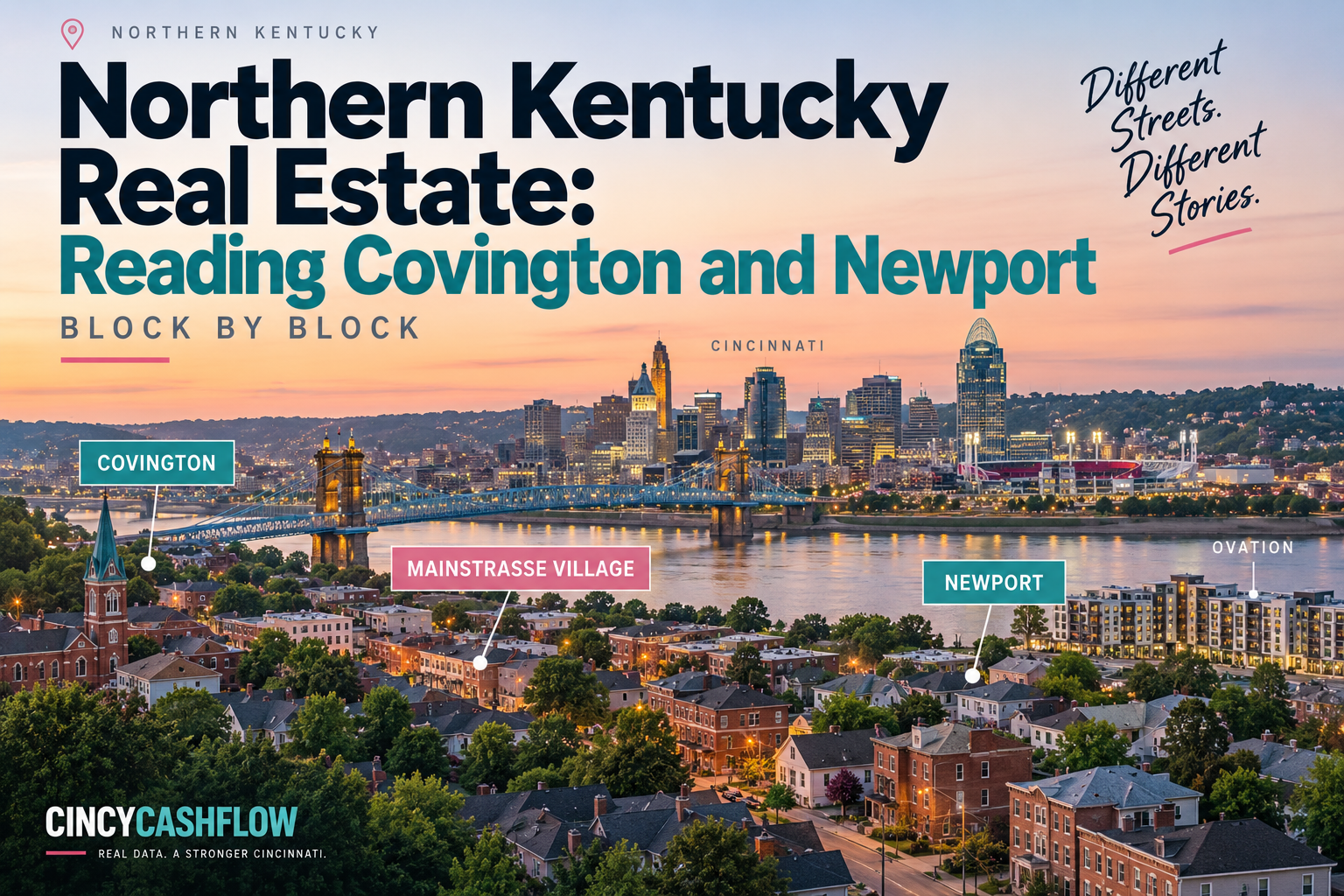
- Covington redevelopment has reached 15th Street. Everything north of 15th is renovated. South of it, empty storefronts on Madison Avenue and Scott Street are starting to fill. Wallace Woods, just south, is nearly impossible to buy into under $300,000. Ferrari says the stretch between 15th Street and Wallace Woods is the entry point for the next two to three years.
Why Cincinnati's Next Neighborhoods Follow the Makers
Reed paraphrased Barbara Corcoran's advice for finding appreciation in New York: follow the arts crowd. Artists are trend-setters, and they can only live where rent is cheap. Camp Washington fits the pattern exactly. It has an arts and industry district where artists live and work in the same building, and groups like Wave Pool drew makers there early.
The signals Ferrari watches for:
- Makers and owner-occupants. Camp Washington is full of potters, clothing makers, furniture builders and roasters working with their hands. Few corporate tenants means the neighborhood keeps its character as values rise.
- Commuter traffic. Both of his coffee shops sit on routes where commuters are funneled through the neighborhood. Pass-through traffic supports a local business before the neighborhood has much residential demand.
- Walking distance to a wealthier neighbor. Westwood's triangle costs half what similar houses cost on the east side. His Reading four-family sits on the Amberley Village side. Lockland is a short walk across the railroad tracks to Wyoming.
- Historic buildings. Ferrari favors 1800s and early-1900s neighborhoods with few new builds. When I-75 split Camp Washington, it stalled a wealthy streetcar neighborhood, and much of its architecture survived intact.
- The market dismissing it. People told him he would never make it in Camp Washington. In Madisonville, Reed points out, investors had already caught on by 2022, and Ferrari got the last building available.
Madisonville shows how far values have moved. Reed and co-host Ian Cruz recently bought an 80-property scattered-site portfolio that includes a house across the street from his coffee shop. The previous owner bought it in 2010 for $10,000, gutted it and permitted all-new electrical, plumbing and HVAC. As a three-bedroom, two-and-a-half-bath, it is worth in the high $300,000s today. Finishing the attic as a third-floor suite could push it into the mid-$400,000s.
This is paragraph text. Click it or hit the Manage Text button to change the font, color, size, format, and more. To set up site-wide paragraph and title styles, go to Site Theme.
What's Working in Cincinnati
Ferrari's playbook for early-stage neighborhoods:
- Go door to door before you build. In Camp Washington, the Ferraris asked neighbors whether they wanted a coffee shop. Only two people raised concerns, both about parking.
- Own the building. Ferrari turns down lease offers in busy districts and new mixed-use projects. Owning lets him ride the appreciation his own business helps create.
- Expect the city approval process to take time. The original Camp Washington plan was an Airstream coffee bar on a double lot. The city resisted for a couple of years. Converting the house into the shop won approval, and construction took about a year and a half.
- Stay in the community. His brother and mother live in Camp Washington. Ferrari's advice to investors there: join the neighborhood, and don't own it from a distance.
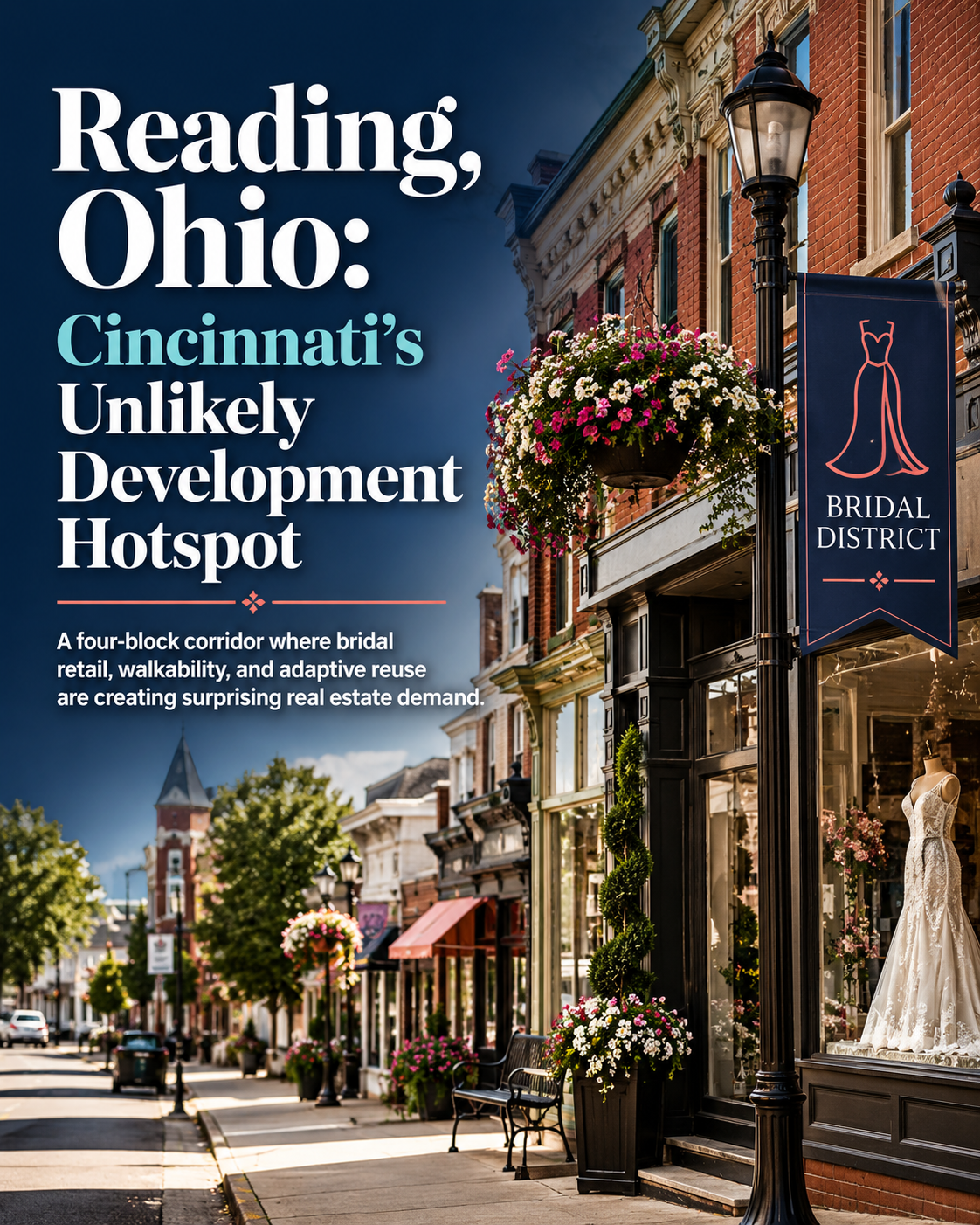
- Trust the numbers, then commit. He hesitated on his Reading four-family, wondering if Reading was ready, and bought it anyway. Seven months later he wants more of Reading.
His 10-year picks. Reed asked Ferrari to name the neighborhood he would invest in today and not check on until 2036.
- Reading, on the Amberley Village side near the Ridge Avenue exit off the Cross County Highway. His four-family there has good tenants on a street marked with a "Welcome to Amberley Village" sign.
- Lockland, a small, partly industrial village with solid residential pockets. Wyoming is a walk across the tracks. It has no avocado-toast café yet.
What doesn't work: buying into a neighborhood you never visit. The areas where Ferrari has done well reward owners who show up and help build the community.
Lessons From the Field: How a Covington Church Became a Short-Term Rental
Ferrari always wanted to live in an old church, firehouse or car dealership. Banks laugh at those loans, and zoning usually gets in the way.
He found a church at 15th and Scott, between Scott Street and Greenup Street in Covington. For years, he left notes in the mailbox a few times a year and never got a reply. Then it hit the market at a price he considered absurd for a building that needed that much renovation. He passed.
The price dropped. Through a family friend, he reached the owner directly. The owner's first question was whether Ferrari's grandfather had been a barber. He had, and he had cut the owner's hair until he passed away. The owner turned down Ferrari's first offer, then accepted it the next day, because he trusted the family to take care of the building.
The family renovated it and lived there for a year and a half. Duke Energy bills and cleaning a space that size with two young kids proved too much, so they moved to Northside.
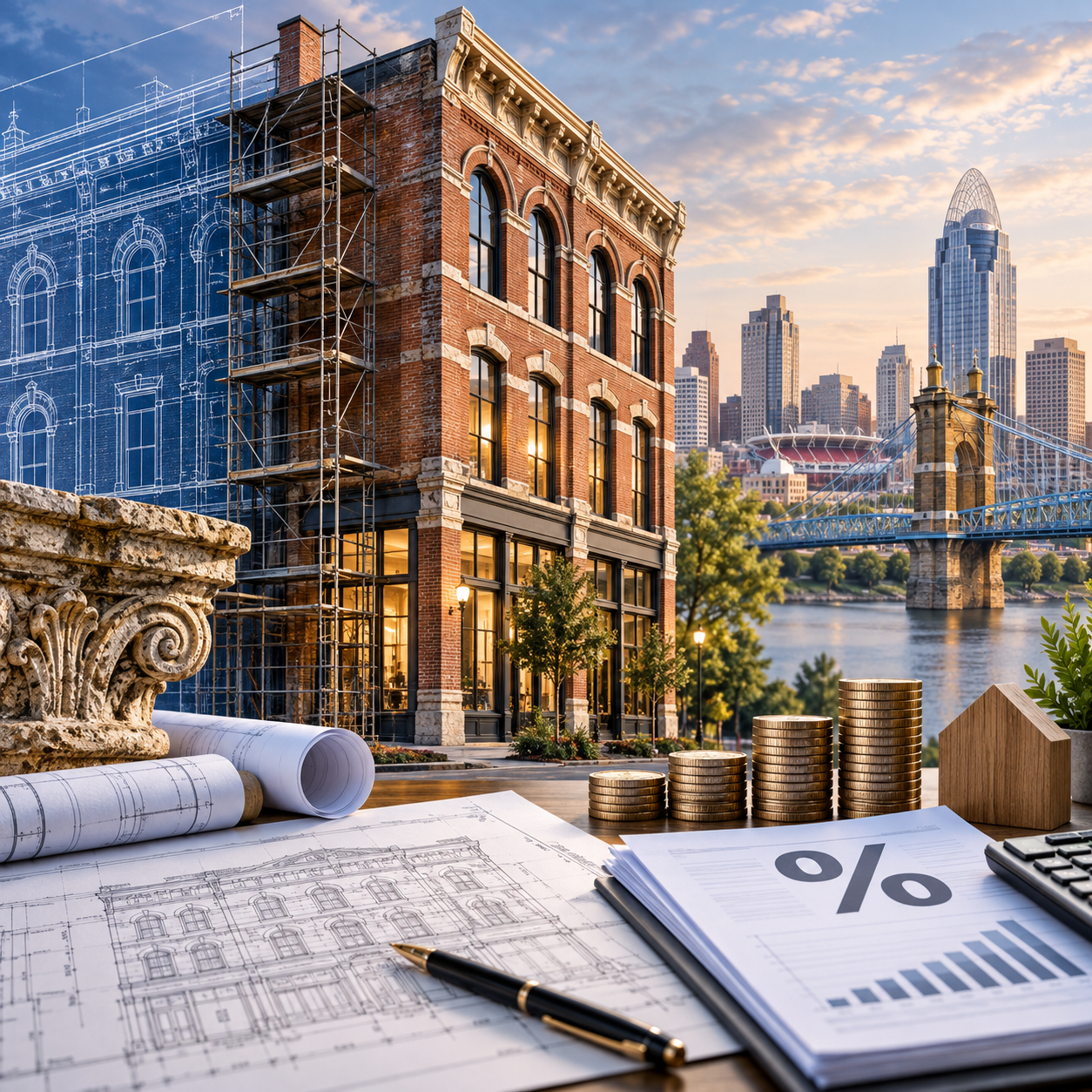
He converted the church into a short-term rental. It fits a large group or a couple on a weekend getaway. On open dates, it hosts Mom 'n 'em events and weddings, including outdoor ceremonies on the adjoining lot. He has held it for three years, and the redevelopment he expected is now moving south toward it.
- Persistence finds off-market deals. Years of mailbox notes put Ferrari first in line when the price dropped.
- Personal connections close deals. A shared family history turned a rejected offer into an accepted one.
- A space that doesn't work as a home may work as a business. The size and utility costs that were too much for a family made it stand out as a rental and venue.
- One-of-a-kind properties need multiple revenue streams. Nightly stays, events and weddings cover the carrying costs of an unusual building.
- Buy just past where redevelopment has stopped. Owning at the southern edge of renovated Covington put him ahead of the next wave.